Und dann auf "Zum Home-Bildschirm [+]".

Stöbern
genialokal zum Startbildschirm hinzufügen
Installieren Sie die genialokal App auf Ihrem Startbildschirm für einen schnellen Zugriff und eine komfortable Nutzung.
Installieren Sie die genialokal App auf Ihrem Startbildschirm für einen schnellen Zugriff und eine komfortable Nutzung.
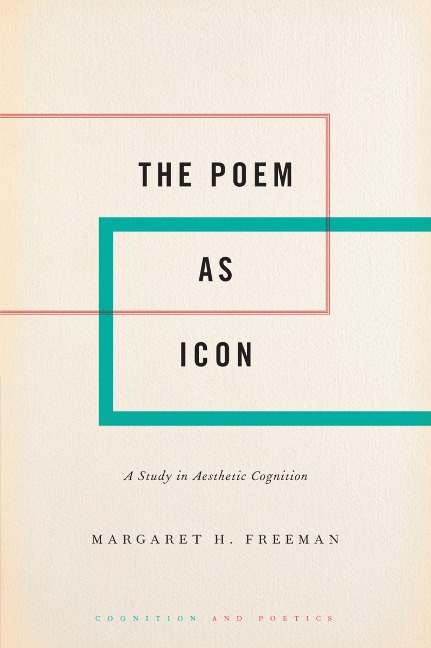
Poetry is the most complex and intricate of human language used across all languages and cultures. Its relation to the worlds of human experience has perplexed writers and readers for centuries, as has the question of evaluation and judgment: what makes a poem "work" and endure. The Poem as Icon focuses on the art of poetry to explore its nature and function: not interpretation but experience; not what poetry means but what it does. Using both historic and contemporary approaches of embodied cognition from various disciplines, Margaret Freeman argues that a poem's success lies in its ability to become an icon of the felt "being" of reality. Freeman explains how the features of semblance, metaphor, schema, and affect work to make a poem an icon, with detailed examples from various poets. By analyzing the ways poetry provides insights into the workings of human cognition, Freeman claims that taste, beauty, and pleasure in the arts are simply products of the aesthetic faculty, and not the aesthetic faculty itself. The aesthetic faculty, she argues, should be understood as the science of human perception, and therefore constitutive of the cognitive processes of attention, imagination, memory, discrimination, expertise, and judgment.
Margaret H. Freeman is Professor Emerita, Los Angeles Valley College; past president of the Emily Dickinson International Society (1988-1992); co-director of Myrifield Institute for Cognition and the Arts (myrifield.org); and co-editor of the Oxford University Press series Cognition and Poetics. Her research interests include aesthetics, cognitive poetics, linguistics, literature, and philosophy.
Preface
Chapter 1 Poetic Cognition 1. Iconicity and the Being of Reality 2. Toward a Theory of Aesthetic Cognition 3. The Sentience of Cognition 4. Developing a Multidisciplinary Terminology 5. Outline of Chapters
Chapter 2 Icon 1. What Is an Icon? 1.1 The semiotic icon 1.2 The religious icon 1.3 The linguistic icon 1.4 The popular icon 2. The Slippery Slopes of Meaning 2.1 Reification as cognitive economy 2.2 The form-content dichotomy 3. Iconicity in the Arts 4. Iconicity in Literary Criticism
Chapter 3 Semblance 1. Beyond Mimesis 2. Manifestation 3. The In-visibility of Being 4. The Ontology of Poetic Perception as Iconic of Reality 4.1 Prosodic structure 4.2 Prepositional use 4.3 Concealed images 4.4 Sound patterning
Chapter 4 Metaphor 1. Metaphor as Actual World Formation 2. Metaphor as Possible World Formation 3. Metaphor in the Literary Arts 4. The Semeosis of Poetic Metaphor 5. Metaphoring as Cognitive Processing 6. The Hierarchy of Cognitive Metaphoring 7. The Ontology of Poetic Metaphor 8. The Role of Metaphor in Poetic Iconicity
Chapter 5 Schema 1. Probing Sensate Cognition 2. Schema as Correlation Between Self and World 3. Schema as Constraint on Experience 4. The Role of Schema in Imagination and Language 5. Schema as Internalizing Sensate Structure in Poetry 6. PATH and VERTICALITY Schemata in Li Bai's Shudaoan 7. The Poetic Use of Schema 8. Schema as Defining a Poetics
Chapter 6 Affect 1. The Synaesthetics of Affect 2. Sonic and Structural Prosodies 3. The Import of Affect 4. Schema Theory and the Structure of Affects 5. The Force Dynamics of Affective Schemata 5.1 The level of hearer/reader - poem 5.2 The level of physical - force elements 5.3 The level of sound - sight 5.4 The level of internal sensibility - external stimuli 5.5 The level of interior memory - interior emotion 6. Emotive - Conceptual Schemata
Chapter 7 The Poem as Icon 1. A Case Study of Two Poems 1.1 Prosodic details in Smith's sonnet 1.2 Prosodic details in Shelley's sonnet 2. The Workings of Poetic Iconicity 2.1 The trap of the gap 2.2 Closing the gap 3. The Poetic Icon 3.1 I Seventy Years Later 3.2 II The Poem as Icon 3.3 III Forms of the Rock in a Night-Hymn 4. The Transformative Power of the Icon
Chapter 8 Aesthetic Cognition 1. The Aesthetic Faculty 2. Aesthetic Function 3. Aesthetic Iconicity in the Arts 4. Aesthetic Evaluation 5. Iconic Aesthetics in "Dover Beach"
Afterword 1. Poetry in Context 2. Eve's Dilemma 3. A Theory of Everything? 4. Poetry as an Icon of the Being of Reality
Glossary References Index
Dieses eBook wird im PDF-Format geliefert und ist mit einem Adobe Kopierschutz (DRM) versehen. Sie können dieses eBook mit allen Geräten lesen, die das PDF-Format und den Adobe Kopierschutz (DRM) unterstützen.
Zum Beispiel mit den folgenden Geräten:
• tolino Reader
Laden Sie das eBook direkt über den Reader-Shop auf dem tolino herunter oder übertragen Sie das eBook auf Ihren tolino mit einer kostenlosen Software wie beispielsweise Adobe Digital Editions.
• Sony Reader & andere eBook Reader
Laden Sie das eBook direkt über den Reader-Shop herunter oder übertragen Sie das eBook mit der kostenlosen Software Sony READER FOR PC/Mac oder Adobe Digital Editions auf ein Standard-Lesegeräte mit epub- und Adobe DRM-Unterstützung.
• Tablets & Smartphones
Möchten Sie dieses eBook auf Ihrem Smartphone oder Tablet lesen, finden Sie hier unsere kostenlose Lese-App für iPhone/iPad und Android Smartphone/Tablets.
• PC & Mac
Lesen Sie das eBook direkt nach dem Herunterladen mit einer kostenlosen Lesesoftware, beispielsweise Adobe Digital Editions, Sony READER FOR PC/Mac oder direkt über Ihre eBook-Bibliothek in Ihrem Konto unter „Meine eBooks“ - „online lesen“.
Schalten Sie das eBook mit Ihrer persönlichen Adobe ID auf bis zu sechs Geräten gleichzeitig frei.
Bitte beachten Sie, dass die Kindle-Geräte das Format nicht unterstützen und dieses eBook somit nicht auf Kindle-Geräten lesbar ist.