Und dann auf "Zum Home-Bildschirm [+]".

Stöbern
genialokal zum Startbildschirm hinzufügen
Installieren Sie die genialokal App auf Ihrem Startbildschirm für einen schnellen Zugriff und eine komfortable Nutzung.
Installieren Sie die genialokal App auf Ihrem Startbildschirm für einen schnellen Zugriff und eine komfortable Nutzung.
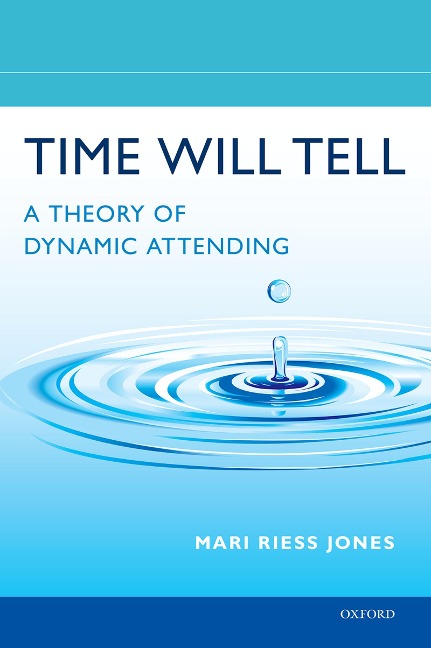
Attention is a central concept in psychology. The term 'attention' itself has persisted, even though it implies a static, insulated capacity that we use when it is necessary to focus upon some relevant or stimulating event. Riess Jones presents a different way of thinking about attention; one that describes it as a continuous activity that is based on energy fluctuating in time. A majority of attention research fails to examine influence of event time structure (i.e., a speech utterance) on listeners' moment-to-moment attending. General research ignores listeners endowed with innate, as well as acquired, temporal biases. Here, attending is portrayed as a dynamic interaction of an individual within his or her surroundings.
Importantly, this interaction involves synchronicity between an attender and external events. This emphasis on time and synchronicity distinguishes the author's theory, called Dynamic Attending Theory (DAT), from other approaches to attending which characterize attention metaphorically as a filter, resource pool, spotlight, and so on. Recent research from neuroscience has lent support to Riess Jones' theory, and the goal of this book is to bring this new research as well as her own to the wide audience of psychologists interested in attention more broadly.
Professor Jones received a B.A. from the University of California, Riverside, and her PhD from the University of Massachusetts before moving to Ohio where she was hired as a visiting Assistant Professor in the Psychology Department of the Ohio State University. In 1971 she gained a permanent position in this department, and spent the rest of her career at this university. After 38 years, she retired in 2006 to write this book.
Table of Contents
Chapter 1: Overview
Part I: Theoretical Framework
Chapter 2: Time... and how we study it
Chapter 3: The Tunable Brain
Chapter 4: Tuning into world events: A General Attending Hypothesis
Chapter 5: The temporal niche: An Aging Hypothesis
Chapter 6: Tuning into very fast events: Pitch perception
Chapter 7: Tuning into Slow events
Chapter 8: Parallelism: Expectancy and production profiles Part II Applications of Theoretic constructs: To domains of music and speech
Chapter 9: Meter and rhythm: How we hear them Chapter 10: Learning time patterns Chapter 11: Musical Melodies Chapter 12: Speech Timing Chapter 13: Melodies of Speech
Chapter 14: Learning speech: From phonemes to syllables to words Chapter 15: Concluding Speculations
Dieses eBook wird im PDF-Format geliefert und ist mit einem Adobe Kopierschutz (DRM) versehen. Sie können dieses eBook mit allen Geräten lesen, die das PDF-Format und den Adobe Kopierschutz (DRM) unterstützen.
Zum Beispiel mit den folgenden Geräten:
• tolino Reader
Laden Sie das eBook direkt über den Reader-Shop auf dem tolino herunter oder übertragen Sie das eBook auf Ihren tolino mit einer kostenlosen Software wie beispielsweise Adobe Digital Editions.
• Sony Reader & andere eBook Reader
Laden Sie das eBook direkt über den Reader-Shop herunter oder übertragen Sie das eBook mit der kostenlosen Software Sony READER FOR PC/Mac oder Adobe Digital Editions auf ein Standard-Lesegeräte mit epub- und Adobe DRM-Unterstützung.
• Tablets & Smartphones
Möchten Sie dieses eBook auf Ihrem Smartphone oder Tablet lesen, finden Sie hier unsere kostenlose Lese-App für iPhone/iPad und Android Smartphone/Tablets.
• PC & Mac
Lesen Sie das eBook direkt nach dem Herunterladen mit einer kostenlosen Lesesoftware, beispielsweise Adobe Digital Editions, Sony READER FOR PC/Mac oder direkt über Ihre eBook-Bibliothek in Ihrem Konto unter „Meine eBooks“ - „online lesen“.
Schalten Sie das eBook mit Ihrer persönlichen Adobe ID auf bis zu sechs Geräten gleichzeitig frei.
Bitte beachten Sie, dass die Kindle-Geräte das Format nicht unterstützen und dieses eBook somit nicht auf Kindle-Geräten lesbar ist.