Und dann auf "Zum Home-Bildschirm [+]".

Stöbern
genialokal zum Startbildschirm hinzufügen
Installieren Sie die genialokal App auf Ihrem Startbildschirm für einen schnellen Zugriff und eine komfortable Nutzung.
Installieren Sie die genialokal App auf Ihrem Startbildschirm für einen schnellen Zugriff und eine komfortable Nutzung.
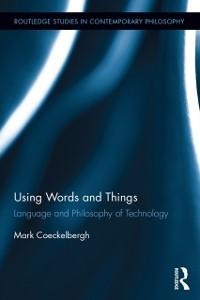
This book offers a systematic framework for thinking about the relationship between language and technology and an argument for interweaving thinking about technology with thinking about language. The main claim of philosophy of technology-that technologies are not mere tools and artefacts not mere things, but crucially and significantly shape what we perceive, do, and are-is re-thought in a way that accounts for the role of language in human technological experiences and practices. Engaging with work by Wittgenstein, Heidegger, McLuhan, Searle, Ihde, Latour, Ricoeur, and many others, the author critically responds to, and constructs a synthesis of, three "extreme", idealtype, untenable positions: (1) only humans speak and neither language nor technologies speak, (2) only language speaks and neither humans nor technologies speak, and (3) only technology speaks and neither humans nor language speak. The construction of this synthesis goes hand in hand with a narrative about subjects and objects that become entangled and constitute one another. Using Words and Things thus draws in central discussions from other subdisciplines in philosophy, such as philosophy of language, epistemology, and metaphysics, to offer an original theory of the relationship between language and (philosophy of) technology centered on use, performance, and narrative, and taking a transcendental turn.
Mark Coeckelbergh is Professor of Philosophy of Media and Technology at the Department of Philosophy, University of Vienna, and (part-time) Professor of Technology and Social Responsibility at De Montfort University, UK. His publications include Growing Moral Relations (2012), Human Being @ Risk (2013), Environmental Skill (2015), Money Machines (2015), New Romantic Cyborgs (2017), and numerous articles in the area of philosophy of technology.
Chapter 1: Introduction: Words and Things Part I: Humans Speak (Subjects versus Objects) Chapter 2: Speaking with and about Technology Chapter 3: Giving Meaning to Technology: A Searlean Social Ontology of Technological Artefacts Part II: Language Speaks (Subjects Change Objects) Chapter 4: Language and the Social Construction of Artefacts Chapter 5: All about Language: Postmodern Interpretations, or the Muting of Humans and Technology Part III: Technology Speaks (Objects Change Subjects) Chapter 6: What Technology Tells Us (To Do) (Part 1): Media, Artefacts, Networks Chapter 7: What Technology Tells Us (To Do) (Part 2): Narrative Technologies, or Interpreting and Materializing Ricoeur Part IV: Humans, Language, and Technology Speak (Subjects and Objects Entangled) Chapter 8: Using and Performing with Words and Things
Dieses eBook wird im PDF-Format geliefert und ist mit einem Adobe Kopierschutz (DRM) versehen. Sie können dieses eBook mit allen Geräten lesen, die das PDF-Format und den Adobe Kopierschutz (DRM) unterstützen.
Zum Beispiel mit den folgenden Geräten:
• tolino Reader
Laden Sie das eBook direkt über den Reader-Shop auf dem tolino herunter oder übertragen Sie das eBook auf Ihren tolino mit einer kostenlosen Software wie beispielsweise Adobe Digital Editions.
• Sony Reader & andere eBook Reader
Laden Sie das eBook direkt über den Reader-Shop herunter oder übertragen Sie das eBook mit der kostenlosen Software Sony READER FOR PC/Mac oder Adobe Digital Editions auf ein Standard-Lesegeräte mit epub- und Adobe DRM-Unterstützung.
• Tablets & Smartphones
Möchten Sie dieses eBook auf Ihrem Smartphone oder Tablet lesen, finden Sie hier unsere kostenlose Lese-App für iPhone/iPad und Android Smartphone/Tablets.
• PC & Mac
Lesen Sie das eBook direkt nach dem Herunterladen mit einer kostenlosen Lesesoftware, beispielsweise Adobe Digital Editions, Sony READER FOR PC/Mac oder direkt über Ihre eBook-Bibliothek in Ihrem Konto unter „Meine eBooks“ - „online lesen“.
Schalten Sie das eBook mit Ihrer persönlichen Adobe ID auf bis zu sechs Geräten gleichzeitig frei.
Bitte beachten Sie, dass die Kindle-Geräte das Format nicht unterstützen und dieses eBook somit nicht auf Kindle-Geräten lesbar ist.