Und dann auf "Zum Home-Bildschirm [+]".

Stöbern
genialokal zum Startbildschirm hinzufügen
Installieren Sie die genialokal App auf Ihrem Startbildschirm für einen schnellen Zugriff und eine komfortable Nutzung.
Installieren Sie die genialokal App auf Ihrem Startbildschirm für einen schnellen Zugriff und eine komfortable Nutzung.
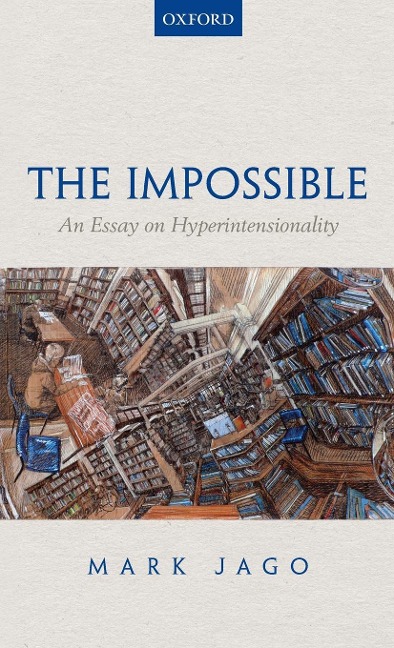
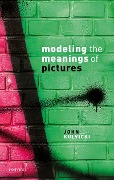
Mark Jago presents an original philosophical account of meaningful thought: in particular, how it is meaningful to think about things that are impossible. We think about impossible things all the time. We can think about alchemists trying to turn base metal to gold, and about unfortunate mathematicians trying to square the circle. We may ponder whether god exists; and philosophers frequently debate whether properties, numbers, sets, moral and aesthetic qualities, and qualia exist. In many philosophical or mathematical debates, when one side of the argument gets things wrong, it necessarily gets them wrong. As we consider both sides of one of these philosophical arguments, we will at some point think about something that's impossible. Yet most philosophical accounts of meaning and content hold that we can't meaningfully think or reason about the impossible. In The Impossible, Jago argues that we often gain new information, new beliefs and, sometimes, fresh knowledge through logic, mathematics and philosophy. That is why logic, mathematics, and philosophy are useful. We therefore require accounts of knowledge and belief, of information and content, and of meaning which allow space for the impossible. Jago's aim in this book is to provide such accounts. He gives a detailed analysis of the concept of hyperintensionality, whereby logically equivalent contents may be distinct, and develops a theory in terms of possible and impossible worlds. Along the way, he provides a theory of what those worlds are and how they feature in our analysis of normative epistemic concepts: knowledge, belief, information, and content.
Mark Jago is Lecturer in Philosophy at the University of Nottingham. Before that, he was a postdoctoral fellow at Macquarie University in Sydney, Australia. He mainly writes on metaphysics, logic, epistemology, and philosophy of language.
- Introduction - 1: The Possible Worlds Approach - 2: Hyperintensionality - 3: Hyperintensionality and Structure - 4: Impossible Worlds - 5: Constructing Worlds - 6: The Problem of Bounded Rationality - 7: Epistemic Space - 8: Epistemic Content
Dieses eBook wird im PDF-Format geliefert und ist mit einem Adobe Kopierschutz (DRM) versehen. Sie können dieses eBook mit allen Geräten lesen, die das PDF-Format und den Adobe Kopierschutz (DRM) unterstützen.
Zum Beispiel mit den folgenden Geräten:
• tolino Reader
Laden Sie das eBook direkt über den Reader-Shop auf dem tolino herunter oder übertragen Sie das eBook auf Ihren tolino mit einer kostenlosen Software wie beispielsweise Adobe Digital Editions.
• Sony Reader & andere eBook Reader
Laden Sie das eBook direkt über den Reader-Shop herunter oder übertragen Sie das eBook mit der kostenlosen Software Sony READER FOR PC/Mac oder Adobe Digital Editions auf ein Standard-Lesegeräte mit epub- und Adobe DRM-Unterstützung.
• Tablets & Smartphones
Möchten Sie dieses eBook auf Ihrem Smartphone oder Tablet lesen, finden Sie hier unsere kostenlose Lese-App für iPhone/iPad und Android Smartphone/Tablets.
• PC & Mac
Lesen Sie das eBook direkt nach dem Herunterladen mit einer kostenlosen Lesesoftware, beispielsweise Adobe Digital Editions, Sony READER FOR PC/Mac oder direkt über Ihre eBook-Bibliothek in Ihrem Konto unter „Meine eBooks“ - „online lesen“.
Schalten Sie das eBook mit Ihrer persönlichen Adobe ID auf bis zu sechs Geräten gleichzeitig frei.
Bitte beachten Sie, dass die Kindle-Geräte das Format nicht unterstützen und dieses eBook somit nicht auf Kindle-Geräten lesbar ist.