Und dann auf "Zum Home-Bildschirm [+]".

Stöbern
genialokal zum Startbildschirm hinzufügen
Installieren Sie die genialokal App auf Ihrem Startbildschirm für einen schnellen Zugriff und eine komfortable Nutzung.
Installieren Sie die genialokal App auf Ihrem Startbildschirm für einen schnellen Zugriff und eine komfortable Nutzung.
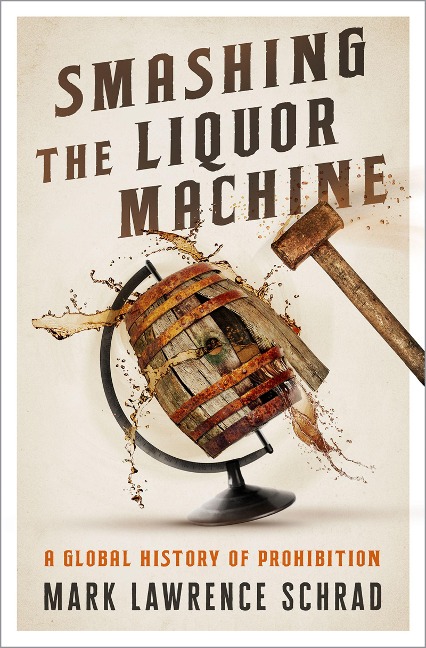
This is the history of temperance and prohibition as you've never read it before: redefining temperance as a progressive, global, pro-justice movement that affected virtually every significant world leader from the eighteenth through early twentieth centuries. When most people think of the prohibition era, they think of speakeasies, rum runners, and backwoods fundamentalists railing about the ills of strong drink. In other words, in the popular imagination, it is a peculiarly American history. Yet, as Mark Lawrence Schrad shows in Smashing the Liquor Machine, the conventional scholarship on prohibition is extremely misleading for a simple reason: American prohibition was just one piece of a global phenomenon. Schrad's pathbreaking history of prohibition looks at the anti-alcohol movement around the globe through the experiences of pro-temperance leaders like Vladimir Lenin, Leo Tolstoy, Thomás Masaryk, Kemal Atatürk, Mahatma Gandhi, and anti-colonial activists across Europe, Asia, Africa, and the Middle East. Schrad argues that temperance wasn't "American exceptionalism" at all, but rather one of the most broad-based and successful transnational social movements of the modern era. In fact, Schrad offers a fundamental re-appraisal of this colorful era to reveal that temperance forces frequently aligned with progressivism, social justice, liberal self-determination, democratic socialism, labor rights, women's rights, and indigenous rights. Placing the temperance movement in a deep global context, forces us to fundamentally rethink its role in opposing colonial exploitation throughout American history as well. Prohibitionism united Native American chiefs like Little Turtle and Black Hawk; African-American leaders Frederick Douglass, Ida Wells, and Booker T. Washington; suffragists Elizabeth Cady Stanton, Susan B. Anthony, and Frances Willard; progressives from William Lloyd Garrison to William Jennings Bryan; writers F.E.W. Harper and Upton Sinclair, and even American presidents from Thomas Jefferson and Abraham Lincoln to Theodore Roosevelt and Woodrow Wilson. Progressives rather than puritans, the global temperance movement advocated communal self-protection against the corrupt and predatory liquor machine that had become exceedingly rich off the misery and addictions of the poor around the world, from the slums of South Asia to the beerhalls of Central Europe to the Native American reservations of the United States. Unlike many traditional "dry" histories, Smashing the Liquor Machine gives voice to minority and subaltern figures who resisted the global liquor industry, and further highlights that the impulses that led to the temperance movement were far more progressive and variegated than American readers have been led to believe.
Mark Lawrence Schrad is an Associate Professor of Political Science at Villanova University. His most recent book, Vodka Politics: Alcohol, Autocracy, and the Secret History of the Russian State (Oxford, 2014) has been translated into Polish, Slovak, Lithuanian, and Chinese. He is also the author of The Political Power of Bad Ideas: Networks, Institutions, and the Global Prohibition Wave (Oxford, 2010).
Chapter 1: Introduction-Everything You Know About Prohibition Is Wrong
Part I: The Continental Empires Chapter 2: Two Tolstoys and a Lenin-Temperance and Prohibition in Russia Chapter 3: The Temperance Internationale-Social Democrats Against the Liquor Machine in Sweden and Belgium Chapter 4: Temperance, Liberalism, and Nationalism in the German and Austro-Hungarian Empires
Part II: The British Empire Chapter 5: Temperance and Self-Determination in the British Isles Chapter 6: Black Man's Burden, White Man's Liquor in Southern Africa Chapter 7: Gandhi, Indian Nationalism, and Temperance Resistance Against the Raj Chapter 8: The Dry Man of Europe-Ottoman Prohibition Against British Domination
Part III: The United States Chapter 9: First Peoples, First Prohibitionists Chapter 10: Liquor and the Ethnic Cleansing of North America Chapter 11: "All Great Reforms Go Together"-Temperance and Abolitionism Chapter 12: The Empire Club Strikes Back Chapter 13: A Tale of Two Franceses-Temperance and Suffragism in the United States Chapter 14: The Progressive Soul of American Prohibition Chapter 15: Prohibition Against American Imperialism Chapter 16: A People's History of American Prohibition Chapter 17: Conclusion-Where Did We Go Wrong?
Dieses eBook wird im PDF-Format geliefert und ist mit einem Adobe Kopierschutz (DRM) versehen. Sie können dieses eBook mit allen Geräten lesen, die das PDF-Format und den Adobe Kopierschutz (DRM) unterstützen.
Zum Beispiel mit den folgenden Geräten:
• tolino Reader
Laden Sie das eBook direkt über den Reader-Shop auf dem tolino herunter oder übertragen Sie das eBook auf Ihren tolino mit einer kostenlosen Software wie beispielsweise Adobe Digital Editions.
• Sony Reader & andere eBook Reader
Laden Sie das eBook direkt über den Reader-Shop herunter oder übertragen Sie das eBook mit der kostenlosen Software Sony READER FOR PC/Mac oder Adobe Digital Editions auf ein Standard-Lesegeräte mit epub- und Adobe DRM-Unterstützung.
• Tablets & Smartphones
Möchten Sie dieses eBook auf Ihrem Smartphone oder Tablet lesen, finden Sie hier unsere kostenlose Lese-App für iPhone/iPad und Android Smartphone/Tablets.
• PC & Mac
Lesen Sie das eBook direkt nach dem Herunterladen mit einer kostenlosen Lesesoftware, beispielsweise Adobe Digital Editions, Sony READER FOR PC/Mac oder direkt über Ihre eBook-Bibliothek in Ihrem Konto unter „Meine eBooks“ - „online lesen“.
Schalten Sie das eBook mit Ihrer persönlichen Adobe ID auf bis zu sechs Geräten gleichzeitig frei.
Bitte beachten Sie, dass die Kindle-Geräte das Format nicht unterstützen und dieses eBook somit nicht auf Kindle-Geräten lesbar ist.