Und dann auf "Zum Home-Bildschirm [+]".

Stöbern
genialokal zum Startbildschirm hinzufügen
Installieren Sie die genialokal App auf Ihrem Startbildschirm für einen schnellen Zugriff und eine komfortable Nutzung.
Installieren Sie die genialokal App auf Ihrem Startbildschirm für einen schnellen Zugriff und eine komfortable Nutzung.
Ihr gewünschter Artikel ist in 0 Buchhandlungen vorrätig - wählen Sie hier eine Buchhandlung in Ihrer Nähe aus:

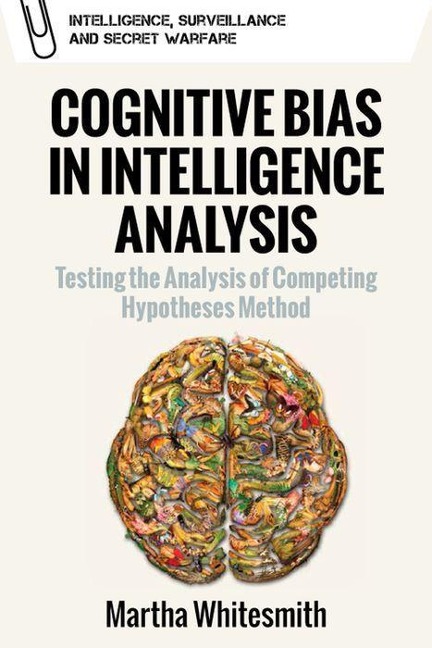
Tests whether the analysis of competing hypotheses reduces cognitive bias, and proposes a more effective approach - Reveals that a key element of current training provided to the UK and US intelligence communities (and likely all 5-EYES and several European agencies) does not have a proven ability to mitigate cognitive biases - Demonstrates that judging the credibility of information from human sources means that intelligence analysis faces greater complexity and cognitive strain than non-intelligence analysis - Explains the underlying causes cognitive biases, based on meta-analyses of existing research - Shows that identifying the ideal conditions for intelligence analysis is a more effective way of reducing the risk of cognitive bias than the use of ACH Recent high-profile intelligence failures - from 9/11 to the 2003 Iraq war - prove that cognitive bias in intelligence analysis can have catastrophic consequences. This book critiques the reliance of Western intelligence agencies on the use of a method for intelligence analysis developed by the CIA in the 1990s, the Analysis of Competing Hypotheses (ACH). The author puts ACH to the test in an experimental setting against two key cognitive biases with unique empirical research facilitated by UK's Professional Heads of Intelligence Analysis unit at the Cabinet Office, and finds that the theoretical basis of the ACH method is significantly flawed. Combining the insight of a practitioner with over 11 years of experience in intelligence with both philosophical theory and experimental research, the author proposes an alternative approach to mitigating cognitive bias that focuses on creating the optimum environment for analysis, challenging current leading theories.
Martha Whitesmith is Senior Intelligence Analyst at the Ministry of Defence.
Introduction Part One: Intelligence, Bias and Belief Acquisition: A Theoretical Perspective Chapter One: Intelligence and Belief Acquisition A Taxonomy of Intelligence How can Knowledge be Acquired? Chapter Two: The Efficacy of ACH in Establishing Epistemic Justification and Mitigating Cognitive Bias The Analysis of Competing Hypotheses (ACH) Method Consistency of Information as an Indicator of Truth Diagnostic Value of Information as an Indicator of Truth Subjective Bayesianism as an Indicator of Truth Credibility of Information as an Indicator of Truth ACH and the Mitigation of Cognitive Bias Intelligence, Bias and Belief Acquisition: A Theoretical Perspective Part Two: Intelligence, Bias and Belief Acquisition: An Empirical Perspective 125 Chapter Three: The Efficacy of ACH in Mitigating Serial Position Effects and Confirmation Bias in an Intelligence Analysis Scenario Procedure Results Discussion and Conclusions Chapter Four: Predicting Serial Position Effects Predicting Serial Position Effects An Examination of Previous Serial Position Effects Prediction Models The Impact of Analytical Conditions on Serial Position Effects Chapter Five: Predicting Confirmation Bias An Examination of Previous Confirmation Bias Prediction Models The Impact of Analytical Conditions on Confirmation Bias Intelligence, Bias and Belief Acquisition: An Empirical Perspective Chapter 6: Reducing the Risk of Cognitive Bias in Intelligence Analysis Recommendations for Future Research and Best Practice for Intelligence Analysis Appendices References Bibliography