Und dann auf "Zum Home-Bildschirm [+]".

Stöbern
genialokal zum Startbildschirm hinzufügen
Installieren Sie die genialokal App auf Ihrem Startbildschirm für einen schnellen Zugriff und eine komfortable Nutzung.
Installieren Sie die genialokal App auf Ihrem Startbildschirm für einen schnellen Zugriff und eine komfortable Nutzung.
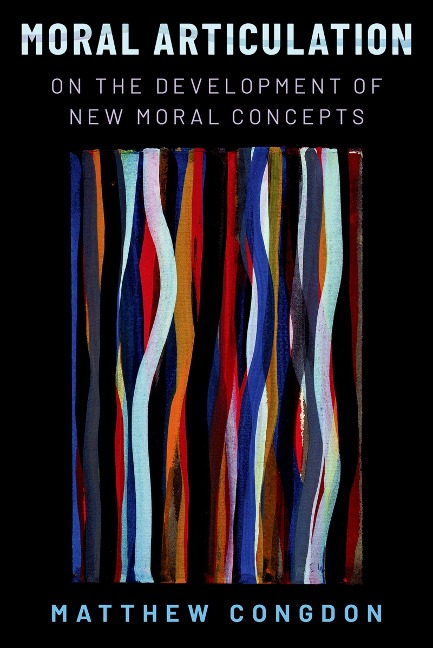
This book explores the historical development of new moral concepts. Starting from examples of new moral terms invented in the twentieth century, like 'sexual harassment', 'genocide', 'racism', and 'hate speech', this book asks: what we are doing when we bring ethically significant acts and events under new descriptions? Are we simply naming moral phenomena that already exist, fully formed and intact, prior to their expression in language? Or are moral phenomena sensitive to the descriptions under which they fall, such that new modes of moral expression can reshape the phenomena they bring to light? Moral Articulation outlines an ethical framework that allows us to embrace a version of the latter, transformative view without sacrificing notions of moral truth, objectivity, and knowledge. The book presents a view of moral meaningfulness as extending beyond what we can presently put into words, urging that expansions in our moral vocabularies often begin in dissonant experiences of conceptual and linguistic limits. Resisting a tendency in contemporary ethics to start with situations and dilemmas whose descriptions are already given, this book argues that the struggle to piece together a discursively articulate picture of a situation is an ethical task in its own right. The result is a picture of ethical life that emphasizes the role of language in shaping who we are.
Matthew Congdon is Assistant Professor of Philosophy at Vanderbilt University. His work has appeared in The Philosophical Quarterly, Analysis, The European Journal of Philosophy, Episteme, and Philosophical Topics, among another publications.
Acknowledgments Introduction 1. Changing Our Concepts §1.1. Discursive Breakdown §1.2. Meaning and Discourse §1.3. The Discursive Theory of Meaning as a Questionable Supposition of Much Contemporary Ethical Theory §1.4. Changing Conceptual Schemes §1.5. The Expressive Logic of Articulation §1.6. Conclusion 2. Thinking Beyond Language §2.1. Concepts and Language §2.2. Concepts and Reality §2.3. Dissonance in the Space of Reasons 3. Creative Resentments §3.1. The Problem §3.2. Norm-Creative Resentments §3.3. The Prior Norm Requirement §3.4. The Articulation Model of Emotion §3.5. Conclusion 4. Is Morality Loopy? §4.1. A Problem in Critical Social Philosophy §4.2. Hacking on Child Abuse: A Case Study in Causal Discursive Construction §4.3. Rational Discursive Construction §4.4. From Intimate Articulation to Moral Articulation §4.5. Some Formal Features of Moral Articulation §4.6. Conclusion 5. Changing Our Nature §5.1. The Immutability Thesis §5.2. Human Natural History §5.3. Articulating Our Nature 6. Moral Progress and Immanent Critique §6.1. An Inescapable Circularity? §6.2. Five Theses on Moral Progress Conclusion Bibliography Index
Dieses eBook wird im PDF-Format geliefert und ist mit einem Adobe Kopierschutz (DRM) versehen. Sie können dieses eBook mit allen Geräten lesen, die das PDF-Format und den Adobe Kopierschutz (DRM) unterstützen.
Zum Beispiel mit den folgenden Geräten:
• tolino Reader
Laden Sie das eBook direkt über den Reader-Shop auf dem tolino herunter oder übertragen Sie das eBook auf Ihren tolino mit einer kostenlosen Software wie beispielsweise Adobe Digital Editions.
• Sony Reader & andere eBook Reader
Laden Sie das eBook direkt über den Reader-Shop herunter oder übertragen Sie das eBook mit der kostenlosen Software Sony READER FOR PC/Mac oder Adobe Digital Editions auf ein Standard-Lesegeräte mit epub- und Adobe DRM-Unterstützung.
• Tablets & Smartphones
Möchten Sie dieses eBook auf Ihrem Smartphone oder Tablet lesen, finden Sie hier unsere kostenlose Lese-App für iPhone/iPad und Android Smartphone/Tablets.
• PC & Mac
Lesen Sie das eBook direkt nach dem Herunterladen mit einer kostenlosen Lesesoftware, beispielsweise Adobe Digital Editions, Sony READER FOR PC/Mac oder direkt über Ihre eBook-Bibliothek in Ihrem Konto unter „Meine eBooks“ - „online lesen“.
Schalten Sie das eBook mit Ihrer persönlichen Adobe ID auf bis zu sechs Geräten gleichzeitig frei.
Bitte beachten Sie, dass die Kindle-Geräte das Format nicht unterstützen und dieses eBook somit nicht auf Kindle-Geräten lesbar ist.