Und dann auf "Zum Home-Bildschirm [+]".

Stöbern
genialokal zum Startbildschirm hinzufügen
Installieren Sie die genialokal App auf Ihrem Startbildschirm für einen schnellen Zugriff und eine komfortable Nutzung.
Installieren Sie die genialokal App auf Ihrem Startbildschirm für einen schnellen Zugriff und eine komfortable Nutzung.
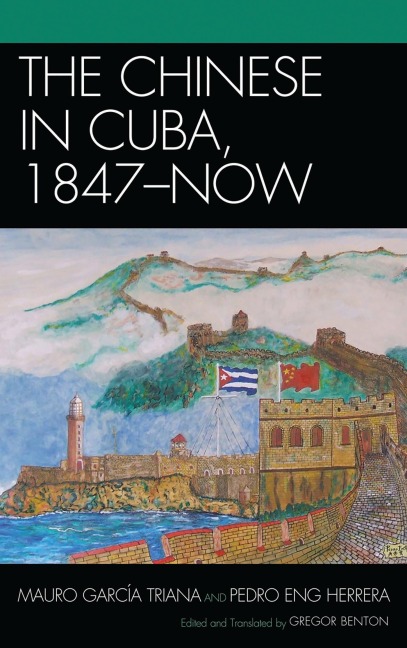
This book deals with Chinese immigrants' role in the struggle for Cuban liberation and in Cuba's twentieth-century revolutionary social movement; the history of the Chinese economy in Cuba; and the Chinese contribution to Cuban music, painting, food, sport, and language. The centerpiece of the book is a translation of a study by Mauro García Triana and Pedro Eng Herrera on the history of the Chinese presence in Cuba. Over many years, García and Eng have collaborated closely on scholarly research on the Chinese contribution to Cuban life and politics, although their work is not widely known. Both are well equipped for such an enterprise: Eng as a Cuban of Chinese descent and a participant in the ethnic-Chinese revolutionary movement in Cuba, starting in the 1950s; García as a participant in the struggle against Batista and Cuban Ambassador to China during the period of the Cultural Revolution.
The study is supplemented by an extensive collection of archival photographs and of paintings on Cuban-Chinese themes by Pedro Eng, who is not just a chronicler of the community but a well-known worker-artist who paints in a style described by commentators as "naive." The volume has three appendices: excerpts from the Cuba Commission's 1877 report on Chinese emigration to Cuba; the rebel leader Gonzalo de Quesada y Aróstegui's pamphlet "The Chinese and Cuban Independence," translated from his book Mi primera ofrenda (My first offering), first published in 1892; and the chapter on "Coolie Life in Cuba" from Duvon Clough Corbitt's Study of the Chinese in Cuba, 1847-1947 (Wilmore 1971).
Gregor Benton is professor of Chinese history at the School of History and Archaeology at Cardiff University.
Part 1 Editor's Introduction
Part 2 Preface
Part 3 Authors' Introduction
Part 4 Part 1: The Chinese in Cuba's War of Independence
Chapter 5 Appendix: Cubans in a Japanese Internment Camp in Hong Kong
Part 6 Part 2: Chinese Business in Cuba in Twentieth Century
Part 7 Part 3: Chinese in Cuban Cultural Life
Part 8 Appendices
Chapter 9 1. Chinese Emigration, the Cuba Commission. Report of the Commission Sent by China to Ascertain the Condition of Life of Chinese Coolies in Cuba (1877)
Chapter 10 2. Gonzalo de Quesada, The Chinese and Cuban Independence (1892)
Chapter 11 3. Duvon Clough Corbitt, Coolie Life in Cuba (1971)
Dieses eBook wird im PDF-Format geliefert und ist mit einem Adobe Kopierschutz (DRM) versehen. Sie können dieses eBook mit allen Geräten lesen, die das PDF-Format und den Adobe Kopierschutz (DRM) unterstützen.
Zum Beispiel mit den folgenden Geräten:
• tolino Reader
Laden Sie das eBook direkt über den Reader-Shop auf dem tolino herunter oder übertragen Sie das eBook auf Ihren tolino mit einer kostenlosen Software wie beispielsweise Adobe Digital Editions.
• Sony Reader & andere eBook Reader
Laden Sie das eBook direkt über den Reader-Shop herunter oder übertragen Sie das eBook mit der kostenlosen Software Sony READER FOR PC/Mac oder Adobe Digital Editions auf ein Standard-Lesegeräte mit epub- und Adobe DRM-Unterstützung.
• Tablets & Smartphones
Möchten Sie dieses eBook auf Ihrem Smartphone oder Tablet lesen, finden Sie hier unsere kostenlose Lese-App für iPhone/iPad und Android Smartphone/Tablets.
• PC & Mac
Lesen Sie das eBook direkt nach dem Herunterladen mit einer kostenlosen Lesesoftware, beispielsweise Adobe Digital Editions, Sony READER FOR PC/Mac oder direkt über Ihre eBook-Bibliothek in Ihrem Konto unter „Meine eBooks“ - „online lesen“.
Schalten Sie das eBook mit Ihrer persönlichen Adobe ID auf bis zu sechs Geräten gleichzeitig frei.
Bitte beachten Sie, dass die Kindle-Geräte das Format nicht unterstützen und dieses eBook somit nicht auf Kindle-Geräten lesbar ist.