Und dann auf "Zum Home-Bildschirm [+]".

Stöbern
genialokal zum Startbildschirm hinzufügen
Installieren Sie die genialokal App auf Ihrem Startbildschirm für einen schnellen Zugriff und eine komfortable Nutzung.
Installieren Sie die genialokal App auf Ihrem Startbildschirm für einen schnellen Zugriff und eine komfortable Nutzung.

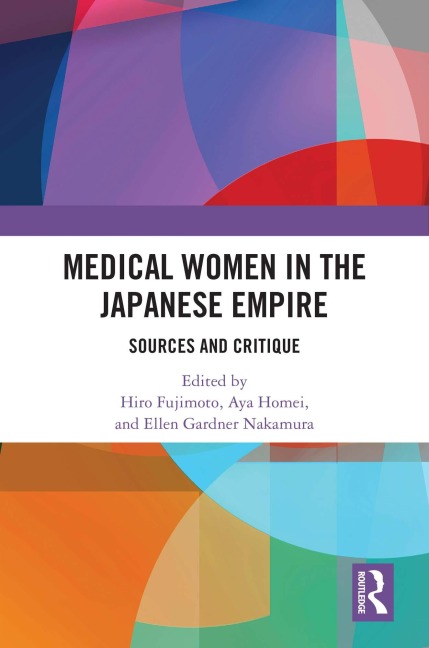
Fujimoto, Homei, and Nakamura bring together the perspectives of women engaging in professional medical work across the expanse of the modern Japanese Empire (1868-1945). Through translations of primary source documents in three East Asian languages, this collection provides a window into the experiences of women working in a variety of medical professions, including doctors, nurses, midwives, and nutritionists. The voices of these women, collected from books, magazines, diaries, roundtable discussions, and oral histories, speak of the challenges, hopes, triumphs, and at times despair that women faced in their medical studies and workplaces. While the women represent a kaleidoscope of political views both critical and supportive of the Japanese empire, this book demonstrates the significance of the Japanese nation and empire for many of these women. Their stories show how they pushed boundaries, traversed national or regional borders in search of medical opportunities, or attempted to carve out new spaces for women through their service as medical professionals. This work, which includes little studied sources never before accessible in English, will appeal to scholars and students of history, Asian studies, gender history/studies, and the history of science, technology, and medicine.
Hiro Fujimoto is Assistant Professor at the Heidelberg Centre for Transcultural Studies, Heidelberg University, Germany. He works on the history of medicine in modern Japan from global and gender perspectives. He wrote several articles in Japanese and English, including "Women, Missionaries, and Medical Professions" (Japan Forum, 2020). Aya Homei is Reader in Japanese Studies at the University of Manchester, United Kingdom. She researches the history of medicine and science in modern Japan, focusing on population and reproduction. Her recent publications include Science for Governing Japan's Population (2023). Ellen Gardner Nakamura is Senior Lecturer in Asian Studies at the University of Auckland, New Zealand. She specializes in the social history of medicine in nineteenth-century Japan. Her most recent monograph is Japanese Medical Lives in Transformation: Contesting Modernity in the Late Nineteenth Century (2025).
Introduction: Restoring the Voices of Medical Women in the Japanese Empire 1. Critique: Layers of Translation: A Linguistic Strategy for the Professionalization of Midwifery in the Early Meiji Period Text: A Manual for Midwives 2. Critique: With Scornful Laughter Rumbling in Her Ears: Ogino Ginko's Critics and Supporters Text: The Career of the First Modern Female Doctor 3. Critique: "Home Doctors": Yoshioka Yayoi's Strategy to Promote Women Doctors in Modern Japan Text: The Future of Women Doctors and Their Missions 4. Critique: Glass Ceilings and Factory Floors: Kondo Toshiko and the Dawn of Public Health Nutrition in Japan Text: Rootwork 5. Critique: Resilient Paths: Opportunities and Challenges for Chinese Women Doctors Trained in Imperial Japan Texts: About Myself; Discussing Medical Equipment on the Home Front in Light of Martyr Liang's Death; Impressions of a Woman Doctor Returning to China after Studying in Japan 6. Critique: Carving Space: Women Physicians in Colonial Korea Text: A Roundtable with Women Physicians 7. Critique: Navigating Gender and Medicine: A Comparative Study of Female Doctors in Colonial Taiwan Text: An Interview with Shi Man 8. Critique: Nursing War: Military, Medicine, and the Question of Femininity in Modern Japan Text: A Military Nurse 9. Critique: Providing Care on the Militarized Islands: Nursing Activities in Wartime Okinawa Text: District Nurse Activities Amidst the War 10. Critique: Saving the Lives of Settlers: District Nurses and Rural Healthcare in Hokkaido Text: The Spirit of Compassion: Diaries of District Nurses in Hokkaido