Und dann auf "Zum Home-Bildschirm [+]".

Stöbern
genialokal zum Startbildschirm hinzufügen
Installieren Sie die genialokal App auf Ihrem Startbildschirm für einen schnellen Zugriff und eine komfortable Nutzung.
Installieren Sie die genialokal App auf Ihrem Startbildschirm für einen schnellen Zugriff und eine komfortable Nutzung.
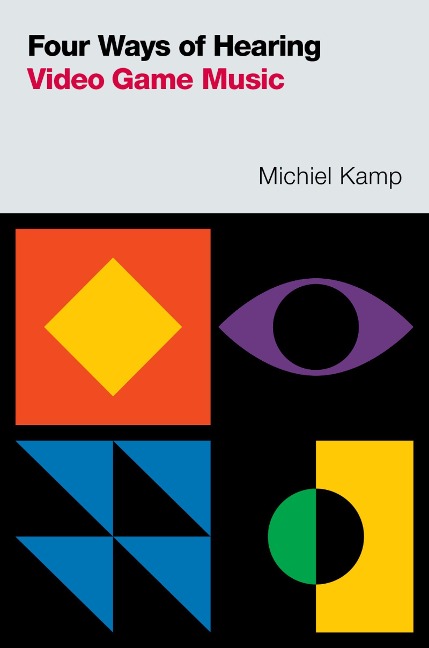
Four Ways of Hearing Video Game Music offers a novel account of the ways in which video games invite us to hear and listen to their music. By taking a phenomenological approach to characterize music in video games, author Michiel Kamp asks what it is we hear in the music when we play a game. Drawing on past phenomenological approaches to music as well as studies of music listening in a variety of disciplines such as aesthetics and ecological psychology, Kamp explains four main ways of hearing the same piece of music--through background, aesthetic, ludic, and semiotic hearing. As a background, music is not attended to at all, but can still be described in terms of moods, affordances, or equipment. Aesthetic hearing is a reflective attitude that invites hermeneutic interpretation; ludic hearing on the other hand invites "playing along" to the music, either through embodied movement, or in response to the music's cinematic or theatrical connotations. Finally, in semiotic hearing, Kamp argues that we hear music as transparent symbols or signals that provide information about the state of a game. The book investigates these four categories through detailed case studies of video games from a variety of eras and genres accompanied by gameplay recordings and images on a companion website.
Michiel Kamp is Assistant Professor of Musicology at Utrecht University, where he teaches on music and audio-visual media. He is co-founder of the UK-based Ludomusicology Research Group, which has organised yearly conferences on video game music in the UK and abroad since 2011. His research centres on video game music and other screen media, with a particular interest in phenomenologies and hermeneutics of listening.
Acknowledgements About the companion website Introduction: towards a phenomenology of video game music Poietic and aesthesic approaches Game design strategies and gameplay tactics Ways of hearing Phenomenology as an approach to video game music Whose phenomenology? 1. Background music Case study: StarCraft Background music as ground Background music as mood or atmosphere Background music as affordance Background music as equipment Conclusions 2. Aesthetic music Case study: Minecraft Having an aesthetic experience Nostalgic hearing Hearing beauty in virtual nature Authored musical moments Aesthetic listening as interpretation Conclusions 3. Ludic Music Affect, or "doing this really fast is fun" Case study: Proteus Inward dancing and embodied listening Music games, synaesthesia, and glee Musical movement and emotional context Conclusions 4. Semiotic music Case study: Left 4 Dead Musical signs Musical symbols Musical signals and anticipation Broken and unestablished signs Conclusions Conclusion Hearing video game music in context Other ways of hearing A final word on hermeneutics Bibliography Index
Dieses eBook wird im PDF-Format geliefert und ist mit einem Adobe Kopierschutz (DRM) versehen. Sie können dieses eBook mit allen Geräten lesen, die das PDF-Format und den Adobe Kopierschutz (DRM) unterstützen.
Zum Beispiel mit den folgenden Geräten:
• tolino Reader
Laden Sie das eBook direkt über den Reader-Shop auf dem tolino herunter oder übertragen Sie das eBook auf Ihren tolino mit einer kostenlosen Software wie beispielsweise Adobe Digital Editions.
• Sony Reader & andere eBook Reader
Laden Sie das eBook direkt über den Reader-Shop herunter oder übertragen Sie das eBook mit der kostenlosen Software Sony READER FOR PC/Mac oder Adobe Digital Editions auf ein Standard-Lesegeräte mit epub- und Adobe DRM-Unterstützung.
• Tablets & Smartphones
Möchten Sie dieses eBook auf Ihrem Smartphone oder Tablet lesen, finden Sie hier unsere kostenlose Lese-App für iPhone/iPad und Android Smartphone/Tablets.
• PC & Mac
Lesen Sie das eBook direkt nach dem Herunterladen mit einer kostenlosen Lesesoftware, beispielsweise Adobe Digital Editions, Sony READER FOR PC/Mac oder direkt über Ihre eBook-Bibliothek in Ihrem Konto unter „Meine eBooks“ - „online lesen“.
Schalten Sie das eBook mit Ihrer persönlichen Adobe ID auf bis zu sechs Geräten gleichzeitig frei.
Bitte beachten Sie, dass die Kindle-Geräte das Format nicht unterstützen und dieses eBook somit nicht auf Kindle-Geräten lesbar ist.