Und dann auf "Zum Home-Bildschirm [+]".

Stöbern
genialokal zum Startbildschirm hinzufügen
Installieren Sie die genialokal App auf Ihrem Startbildschirm für einen schnellen Zugriff und eine komfortable Nutzung.
Installieren Sie die genialokal App auf Ihrem Startbildschirm für einen schnellen Zugriff und eine komfortable Nutzung.
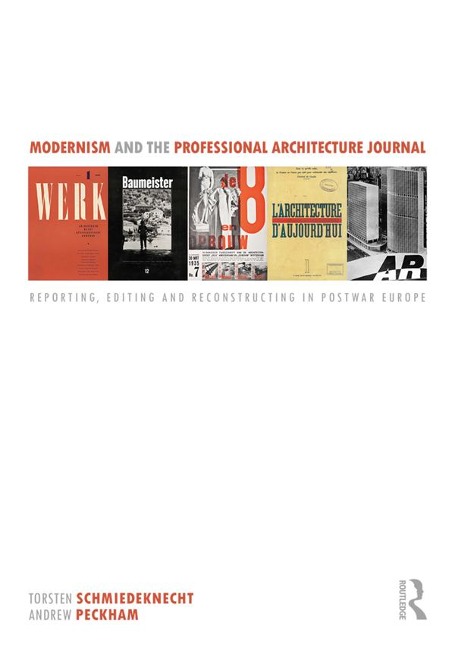
The production of this book stems from two of the editors' longstanding research interests: the representation of architecture in print media, and the complex identity of the second phase of modernism in architecture given the role it played in postwar reconstruction in Europe. While the history of postwar reconstruction has been increasingly well covered for most European countries, research investigating postwar architectural magazines and journals across Europe - their role in the discourse and production of the built environment and particularly their inter-relationship and differing conceptions of postwar architecture - is relatively undeveloped. Modernism and the Professional Architecture Journal sounds out this territory in a new collection of essays concerning the second phase of the reception and assimilation of modernism in architecture, as it was represented in professional architecture journals during the period of postwar reconstruction (1945-1968). Professional architecture journals are often seen as conduits of established facts and knowledge. The role mainstream publications play, however, in establishing 'movements', 'trends' or 'debates' tends to be undervalued. In the context of the complex undertaking of postwar reconstruction, the shortage of resources, political uncertainty and the biographical complexities of individual architects, the chapters on key European architecture journals collected here reveal how modernist architecture, and its discourse, was perceived and disseminated in different European countries.
Torsten Schmiedeknecht teaches design, history and theory at the School of Architecture, University of Liverpool, UK. His research interests include the representation of architecture in print media; rationalism in architecture; and architectural competitions. He is the co-editor of The Rationalist Reader, Rationalist Traces, An Architect's Guide to Fame and Fame and Architecture. He is currently working on an RIBA-funded project about the representation of (modern) architecture in children's literature. Andrew Peckham teaches architecture at the University of Westminster, UK. He has co-edited, with Hannah Lewi, a series of annual anthology issues of The Journal of Architecture (2016-2018) and is currently editing a book on teaching 'studio': The Intrinsic and Extrinsic City. His Architecture and its Imprint is due for publication in 2018.
Introduction Torsten Schmiedeknecht and Andrew Peckham 1. Swiss Journals 1940-1965: mirroring the difficult departure into modernity Christoph Allenspach 2. Postwar Editorial Conversations in Germany: Baumeister and Baukunst und Werkform Torsten Schmiedeknecht 3. The Free Bird and Its Cages: Dutch architectural journals in the first decade after the Second World War Herman van Bergeijk 4. Nation Building: Sweden's modernisation and the autonomy of the profession Claes Caldenby 5. Visual Sensibility and the Search for Form: the Architectural Review in postwar Britain Andrew Higgott 6. Axe or Mirror? Architectural journals in postwar Hungary András Ferkai 7. Periodicals and the Return to Modernity after the Spanish Civil War: Arquitectura, Hogar y Architectura and Nueva Forma Ana Esteban Maluenda 8. The Greek Vision of Postwar Modernity Panayotis Tournikiotis 9. Architecture d'aujord'hui, the André Bloc years Nicholas Bullock 10. Against the Contingencies of Italian Society: issues of historical continuity and doscontinuity in Italy's postwar architectural periodicals Paolo Scrivano 11. The After-Life of the Architectural Journal Andrew Peckham
Dieses eBook wird im PDF-Format geliefert und ist mit einem Adobe Kopierschutz (DRM) versehen. Sie können dieses eBook mit allen Geräten lesen, die das PDF-Format und den Adobe Kopierschutz (DRM) unterstützen.
Zum Beispiel mit den folgenden Geräten:
• tolino Reader
Laden Sie das eBook direkt über den Reader-Shop auf dem tolino herunter oder übertragen Sie das eBook auf Ihren tolino mit einer kostenlosen Software wie beispielsweise Adobe Digital Editions.
• Sony Reader & andere eBook Reader
Laden Sie das eBook direkt über den Reader-Shop herunter oder übertragen Sie das eBook mit der kostenlosen Software Sony READER FOR PC/Mac oder Adobe Digital Editions auf ein Standard-Lesegeräte mit epub- und Adobe DRM-Unterstützung.
• Tablets & Smartphones
Möchten Sie dieses eBook auf Ihrem Smartphone oder Tablet lesen, finden Sie hier unsere kostenlose Lese-App für iPhone/iPad und Android Smartphone/Tablets.
• PC & Mac
Lesen Sie das eBook direkt nach dem Herunterladen mit einer kostenlosen Lesesoftware, beispielsweise Adobe Digital Editions, Sony READER FOR PC/Mac oder direkt über Ihre eBook-Bibliothek in Ihrem Konto unter „Meine eBooks“ - „online lesen“.
Schalten Sie das eBook mit Ihrer persönlichen Adobe ID auf bis zu sechs Geräten gleichzeitig frei.
Bitte beachten Sie, dass die Kindle-Geräte das Format nicht unterstützen und dieses eBook somit nicht auf Kindle-Geräten lesbar ist.