Und dann auf "Zum Home-Bildschirm [+]".

Stöbern
genialokal zum Startbildschirm hinzufügen
Installieren Sie die genialokal App auf Ihrem Startbildschirm für einen schnellen Zugriff und eine komfortable Nutzung.
Installieren Sie die genialokal App auf Ihrem Startbildschirm für einen schnellen Zugriff und eine komfortable Nutzung.

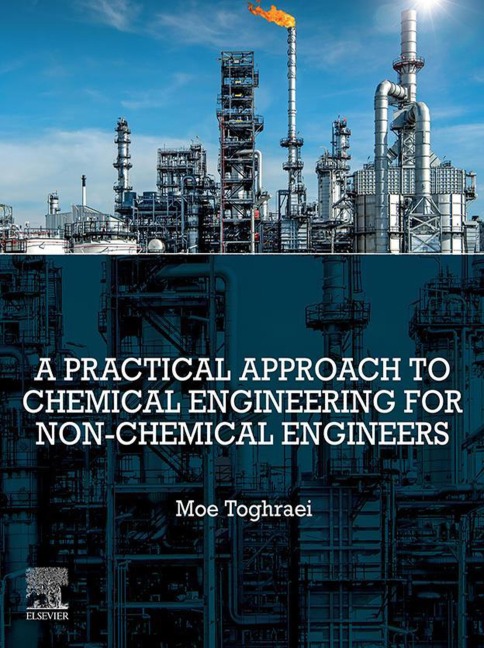
A Practical Approach to Chemical Engineering for Non-Chemical Engineers is aimed at people who are dealing with chemical engineers or those who are involved in chemical processing plants. The book demystifies complicated chemical engineering concepts through daily life examples and analogies. It contains many illustrations and tables that facilitate quick and in-depth understanding of the concepts handled in the book. By studying this book, practicing engineers (non-chemical), professionals, technicians and other skilled workers will gain a deeper understanding of what chemical engineers say and ask for.The book is also useful for engineering students who plan to get into chemical engineering and want to know more on the topic and any related jargon.
- Provides numerous graphs, images, sketches, tables, help better understanding of concepts in a visual way
- Describes complicated chemical engineering concepts by daily life examples and analogies, rather than by formula
- Includes a virtual tour of an imaginary process plant
- Explains the majority of units in chemical engineering
Moe Toghraei, M.Sc., P.Eng. is Process Engineer who has more than 25 years' experience in chemical engineering, and more than 20 years' experience in teaching. He has in-depth knowledge in project management skills including, man-hour estimation, budgeting, scheduling, and planning. Currently he is an independent Project/Process Engineer. Up to 2011 he was Lead Engineer with CH2M and Jacobs, Calgary, Alberta, Lead Process Specialist with Worley Parsons; Calgary, Alberta. He authored the book "Piping and instrumentation diagram development published with Wiley-AIChE in 2019. He developed and instructed in-class training courses on "Water treatment in the oil industry, "De-Oiling: Oil Removal From Water, "P&ID: Reading & Interpretation, "Practical Process Control: A P&ID Approach, "Pressure Safety Valves, and online training courses on "Process Engineering for Control Practitioners", "Process Engineering for Control Practitioners", "Chemical Engineering for non-chemical engineers.
Part 1: Chemical Engineering and Process Industries1. Process Industry Elements: Equipment and Pipes 2. Process Industry Elements: Utilities3. Process Industry Elements: Instrumentation and ControlPart 2: Chemical Engineers' toolbox4. Discipline Deliverables5. Standards and Codes6. Concepts of materials 7. Principles of Material Change8. Concepts of Equipment and PipesPart 3: Unit Operations and process units9. Common Principles of Conversions10. Unit Operations: Mechanical Separations11. Unit Operations: Mass transfer-based separations12. Process Units: Reactions13. Unit Operations: Dealing with discrete form of materials14. Process Plant DesignPart 4: Chemical engineering activities as a social action15. Risk Management16. Economical aspects17. Health Requirements18. Safety Requirements of Plants19. Environment Concerns20. Material of Construction and CorrosionAppendices: Brief explanation of chemical engineering courses1. Fluid Mechanic2. Heat Transfer3. Mass Transfer4. Thermodynamics