Und dann auf "Zum Home-Bildschirm [+]".

Stöbern
genialokal zum Startbildschirm hinzufügen
Installieren Sie die genialokal App auf Ihrem Startbildschirm für einen schnellen Zugriff und eine komfortable Nutzung.
Installieren Sie die genialokal App auf Ihrem Startbildschirm für einen schnellen Zugriff und eine komfortable Nutzung.
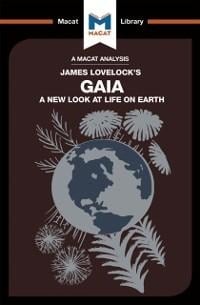
Gaia: A New Look At Life on Earth may continue to divide opinion, but nobody can deny that the book offers a powerful insight into the creative thinking of its author, James E. Lovelock. Published in 1979, Gaia offered a radically new hypothesis: the Earth, Lovelock argued, is a living entity. Together, the planet and all its separate living organisms form a single self-regulating body, sustaining life and helping it evolve through time. Lovelock sees humans as no more special than other elements of the planet, railing against the once widely-held belief that the good of mankind is the only thing that matters. Despite being seen as radical, and even idiotic on its publication, a version of Lovelock's viewpoint has found resonance in contemporary debates about the environment and climate, and has now broadly come to be accepted by modern thinkers. As man's effects on the climate become increasingly extreme, more and more elements of the Earth's self-regulation seem to be unveiled - forcing scientists to ask how far the planet might be able to go in order self-regulate effectively. Indeed, despite its far-fetched elements, Lovelock's Gaia thesis seems to ring more convincingly today than ever before; that it does is largely a result of the critical thinking skills that allowed Lovelock to produce novel explanations for existing evidence and, above all, to connect existing fragments of evidence together in new ways.
Dr Mohammad Shamsudduha holds a PhD in hydrogeology from University College, London. He is currently a researcher at the University College, London, Institute for Risk and Disaster Reduction.
Ways in to the text Who is James E. Lovelock? What does Gaia: A New Look at Life on Earth Say? Why does Gaia: A New Look at Life on Earth matter? Section 1: Influences Module 1: The Author and the Historical Context Module 2: Academic Context Module 3: The Problem Module 4: The Author's Contribution Section 2: Ideas Module 5: Main Ideas Module 6: Secondary Ideas Module 7: Achievement Module 8: Place in the Author's Work Section 3: Impact Module 9: The First Responses Module 10: The Evolving Debate Module 11: Impact and Influence Today Module 12: Where Next? Glossary of Terms People Mentioned in the Text Works Cited
Dieses eBook wird im PDF-Format geliefert und ist mit einem Adobe Kopierschutz (DRM) versehen. Sie können dieses eBook mit allen Geräten lesen, die das PDF-Format und den Adobe Kopierschutz (DRM) unterstützen.
Zum Beispiel mit den folgenden Geräten:
• tolino Reader
Laden Sie das eBook direkt über den Reader-Shop auf dem tolino herunter oder übertragen Sie das eBook auf Ihren tolino mit einer kostenlosen Software wie beispielsweise Adobe Digital Editions.
• Sony Reader & andere eBook Reader
Laden Sie das eBook direkt über den Reader-Shop herunter oder übertragen Sie das eBook mit der kostenlosen Software Sony READER FOR PC/Mac oder Adobe Digital Editions auf ein Standard-Lesegeräte mit epub- und Adobe DRM-Unterstützung.
• Tablets & Smartphones
Möchten Sie dieses eBook auf Ihrem Smartphone oder Tablet lesen, finden Sie hier unsere kostenlose Lese-App für iPhone/iPad und Android Smartphone/Tablets.
• PC & Mac
Lesen Sie das eBook direkt nach dem Herunterladen mit einer kostenlosen Lesesoftware, beispielsweise Adobe Digital Editions, Sony READER FOR PC/Mac oder direkt über Ihre eBook-Bibliothek in Ihrem Konto unter „Meine eBooks“ - „online lesen“.
Schalten Sie das eBook mit Ihrer persönlichen Adobe ID auf bis zu sechs Geräten gleichzeitig frei.
Bitte beachten Sie, dass die Kindle-Geräte das Format nicht unterstützen und dieses eBook somit nicht auf Kindle-Geräten lesbar ist.