Und dann auf "Zum Home-Bildschirm [+]".

Stöbern
genialokal zum Startbildschirm hinzufügen
Installieren Sie die genialokal App auf Ihrem Startbildschirm für einen schnellen Zugriff und eine komfortable Nutzung.
Installieren Sie die genialokal App auf Ihrem Startbildschirm für einen schnellen Zugriff und eine komfortable Nutzung.

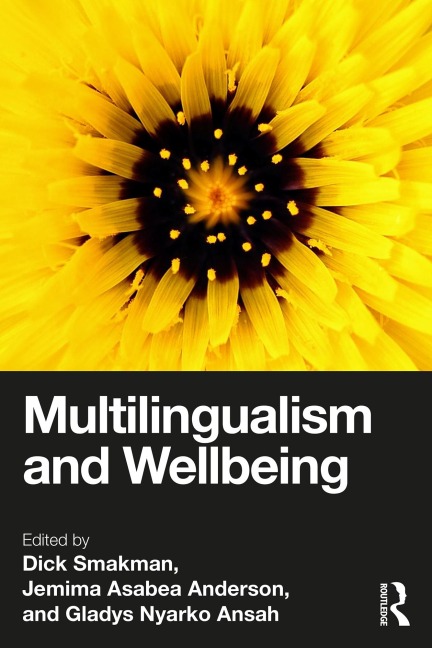
Multilingualism and Wellbeing is an innovative text that combines sociolinguistic, psychological, and philosophical approaches to explore multilingualism as a source of wellbeing. It challenges the 'monolingual bias' and the common assumption that multilingualism is solely driven by utilitarian, formal, or identity-based motivations. Across nineteen carefully edited chapters, contributors illustrate the enduring vitality of multilingualism across the globe through personal and empirical accounts, investigating diverse motivations behind its persistence. Authors present compelling evidence for multilingualism's positive impact on a person's sense of mental, social, and cultural wellbeing. With a distinctive global reach, this volume showcases multilingual experiences from regions including West Africa, the Netherlands, Georgia, Japan, and Indonesia, while also examining governmental policies that promote multilingualism - despite the practical challenges involved - offering a nuanced and balanced perspective. This ground-breaking work is essential reading for advanced students and researchers in multilingualism, language acquisition, language learning, and applied linguistics, as well as for those in related fields of sociology, psychology, and philosophy.
Dick Smakman works as a Sociolinguist for Leiden University, the Netherlands. This is his third co- edited volume, in which special attention is given to contributions on lesser- known sociolinguistic contexts, particularly those outside the Anglo- Western realm. The first two volumes in this series were Globalising Sociolinguistics: Challenging and Expanding Theory (Smakman & Heinrich, Routledge, 2015) and Urban Sociolinguistics: The City as a Linguistic Process and Experience (Smakman & Heinrich, Routledge, 2018). Jemima Asabea Anderson is a Sociolinguist at the Department of English, University of Ghana, Legon. Gladys Nyarko Ansah works as Associate Professor with the Department of English, University of Ghana. She is a cognitive/applied linguist with many research interests including the sociolinguistics of multilingualism. She co-authored a chapter on "A sociolinguistic mosaic of West Africa: challenges and prospects" in Smakman and Heinrich's 2015 book Globalising Sociolinguistics: Challenges and Expanding Theory.
Part I: 1. Wellbeing and Multilingualism 2. Multilingualism and Happiness 3. The Wellbeing of Being Multilingual in Bulgaria Part II: 4. Multilingualism in Ghana's Healthcare: A Neglected Barrier 5. Multilingualism: Happiness and Wellbeing in South-Western Nigeria and Greater Accra, Ghana 6. Multilingualism and Wellbeing: Reflections from Ghana 7. Multilingualism as a Tool for Destressing: Evidence from Northern Ghana Part III: 8. The Impact of State Language Knowledge on Georgian Ethnic Minority Student's Wellbeing 9. Conceptualization of Wellbeing: Kuleana 'Responsibility', Revitalization, and Reclamation of the Hawaiian language 10. Multilingualism and Social Wellbeing: The Sierra Leone 'Wan Pot': The Official, the Lingua Franca and the Indigenous 11. The Language Chameleon: Between Happiness and Worries about Being Bilingual in Catalonia Part IV: 12. Linguistic wellbeing in Multi-ethnic The Hague 13. Rethinking Migrants' Wellbeing in Germany through a Multilingual Lens 14. Multilingualism and Economic Wellbeing of Female Migrants in Accra 15. Verfremdung Part V: 16. Sweet Sounds of Melancholy: Brabantish as a Language of Culture 17. Multilingualism and Wellbeing in Japan: The Case of Yomitan Village in Okinawa 18. The Relation between Degree of Multilingualism and Experiences of Wellbeing in Catalonia 19. Multilingualism and Wellbeing in Timor-Leste