Und dann auf "Zum Home-Bildschirm [+]".

Stöbern
genialokal zum Startbildschirm hinzufügen
Installieren Sie die genialokal App auf Ihrem Startbildschirm für einen schnellen Zugriff und eine komfortable Nutzung.
Installieren Sie die genialokal App auf Ihrem Startbildschirm für einen schnellen Zugriff und eine komfortable Nutzung.
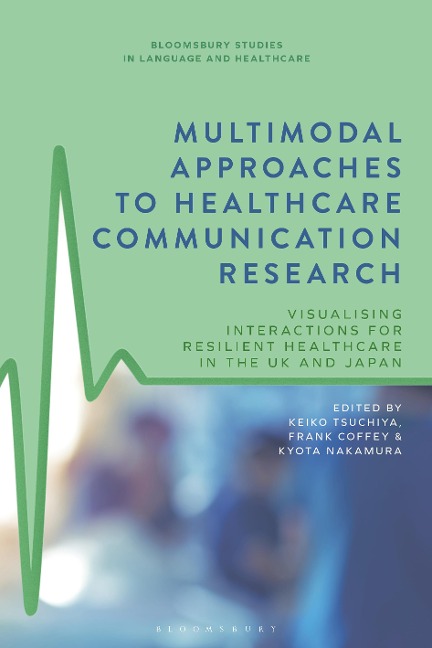
Drawing on the concept of resilient healthcare, this book explores multimodally embedded everyday practices of healthcare professionals in the UK and Japan, utilising novel technology, such as eye-tracking glasses, to inform what constitutes good practice.
Providing an interdisciplinary examination of the theories and rationales of resilient healthcare, the book engages with a range of case studies from a variety of healthcare settings in the UK and Japan and considers the application of advanced technologies for visualising healthcare interactions and implementing virtual healthcare simulation. In doing so, it showcases a number of multimodal approaches and highlights the potential benefits of multimodal and multidisciplinary approaches to healthcare communication research for enhancing resilience in their local contexts.
Keiko Tsuchiya is Associate Professor at the Graduate School of Urban Social and Cultural Studies, Yokohama City University, Japan.
Frank Coffey is Honorary Professor at Nottingham Trent University and Director of DREEAM (Department of Research and Education in Emergency Medicine Acute Medicine and Major Trauma) at Nottingham University Hospitals' NHS Trust, UK.
Kyota Nakamura is Professor at the Department of Quality and Safety in Healthcare, Yokohama City University Medical Centre, and at the Department of Clinical Quality Management, Osaka University Hospital, Japan.
Foreword, Kazue Nakajima (Osaka University Hospital, Japan)
Introduction, Keiko Tsuchiya (Yokohama City University, Japan)
Part I: Multimodal Practice for Resilient Healthcare
Case Studies in Japan
1. Resilient Performance of a Medical Team in the Critical Care Setting, Kyota Nakamura (Osaka University Hospital, Japan)
2. Novel Approaches to Identify Preventive Factors Against Falls Among Hospital Inpatients, Takeru Abe (Yokohama City University Medical Centre, Japan) and Kyota Nakamura (Osaka University Hospital, Japan)
3. Creating Interactional Spaces for Making Requests, Kyota Nakamura (Osaka University Hospital, Japan), Takuma Sakai (Matsuoka Emergency Medical Service, Japan), and Keiko Tsuchiya, (Yokohama City University, Japan)
Case Studies in the UK
4. A Multimodal Linguistic Analysis of Gaze and Active-Listenership in Emergency Department Team Interactions, Sarah Atkins (Aston University, UK) and Malgorzata Chalupnik (University of Nottingham, UK)
5. Projectability and Coordinated Actions in Emergency Care, Keiko Tsuchiya (Yokohama City University, Japan), Frank Coffey (Nottingham University Hospital NHS Trust, UK), and Alison Whitfield (Nottingham University Hospital NHS Trust, UK)
Part II: Different Approaches to Healthcare Communication and Culture
6. Understanding the Impact of Restricted Interests on the Social Interactions of Adults with Autism Spectrum Disorder, Kyoko Aizaki (Lancaster University, UK), Chris Walton (Lancaster University, UK), and Charlie Lewis (Lancaster University, UK)
7. Beyond Lingua-cultural Barriers: Co-construction of Professional Competence by Japanese and International Care Workers, Junko Mori (University of Wisconsin-Madison, USA) and Chiharu Shima, (Akita International University, Japan)
8. Silent Replies as Indicators of Shared Common Ground between a Leader and Members in an Emergency Care Team, Akira Taneichi (Yokohama City University, Japan)
9. Different Frames in Emergency Care Interactions between the UK and Japan, Keiko Tsuchiya (Yokohama City University, Japan), Akira Taneichi (Yokohama City University, Japan), Frank Coffey (Nottingham University Hospital NHS Trust, UK), and Kyota Nakamura (Osaka University Hospital, Japan)
Part III: Visual and Virtual Technologies for Healthcare Simulation
10. The Creation and Validation of a 360-degree Video-Based Situation Awareness Training and Assessment Tool for Trauma Team Leaders, Andrew Mackenzie (Nottingham Trent University, UK), Mike Vernon (Nottingham Trent University, UK), James A. C. Myers (Nottingham Trent University, UK), and Rob Hutton (Nottingham Trent University, UK)
11. Using Immersive Virtual Environment for Educational Purposes, Miharu Fuyuno (Kyushu University, Japan)
12. Capturing a Trauma Leader's Eye Gaze: a Semi-automatic Gaze-recognition Program, Takeshi Saitoh (Kyushu Institute of Technology, Japan), Keiko Tsuchiya (Yokohama City University, Japan)
Conclusion, Keiko Tsuchiya (Yokohama City University, Japan), Frank Coffey (Nottingham University Hospital NHS Trust, UK), and Kyota Nakamura (Osaka University Hospital, Japan)
References
Index
Dieses eBook wird im PDF-Format geliefert und ist mit einem Adobe Kopierschutz (DRM) versehen. Sie können dieses eBook mit allen Geräten lesen, die das PDF-Format und den Adobe Kopierschutz (DRM) unterstützen.
Zum Beispiel mit den folgenden Geräten:
• tolino Reader
Laden Sie das eBook direkt über den Reader-Shop auf dem tolino herunter oder übertragen Sie das eBook auf Ihren tolino mit einer kostenlosen Software wie beispielsweise Adobe Digital Editions.
• Sony Reader & andere eBook Reader
Laden Sie das eBook direkt über den Reader-Shop herunter oder übertragen Sie das eBook mit der kostenlosen Software Sony READER FOR PC/Mac oder Adobe Digital Editions auf ein Standard-Lesegeräte mit epub- und Adobe DRM-Unterstützung.
• Tablets & Smartphones
Möchten Sie dieses eBook auf Ihrem Smartphone oder Tablet lesen, finden Sie hier unsere kostenlose Lese-App für iPhone/iPad und Android Smartphone/Tablets.
• PC & Mac
Lesen Sie das eBook direkt nach dem Herunterladen mit einer kostenlosen Lesesoftware, beispielsweise Adobe Digital Editions, Sony READER FOR PC/Mac oder direkt über Ihre eBook-Bibliothek in Ihrem Konto unter „Meine eBooks“ - „online lesen“.
Schalten Sie das eBook mit Ihrer persönlichen Adobe ID auf bis zu sechs Geräten gleichzeitig frei.
Bitte beachten Sie, dass die Kindle-Geräte das Format nicht unterstützen und dieses eBook somit nicht auf Kindle-Geräten lesbar ist.