Und dann auf "Zum Home-Bildschirm [+]".

Stöbern
genialokal zum Startbildschirm hinzufügen
Installieren Sie die genialokal App auf Ihrem Startbildschirm für einen schnellen Zugriff und eine komfortable Nutzung.
Installieren Sie die genialokal App auf Ihrem Startbildschirm für einen schnellen Zugriff und eine komfortable Nutzung.



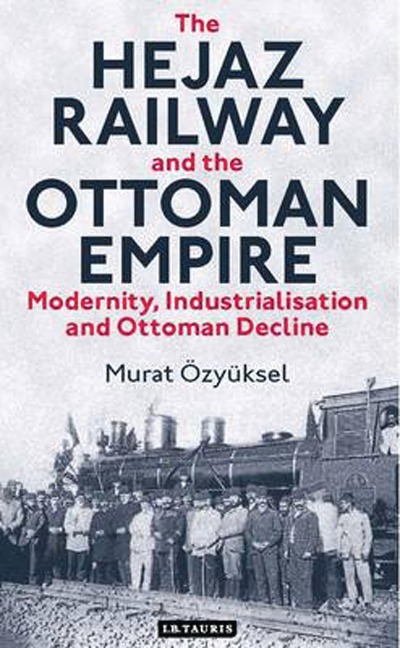
Railway expansion was symbolic of modernization in the late 19th century, and Britain, Germany and France built railways at enormous speed and reaped great commercial benefits. In the Middle East, railways were no less important and the Ottoman Empire's Hejaz Railway was the first great industrial project of the 20th century. A route running from Damascus to Mecca, it was longer than the line from Berlin to Baghdad and was designed to function as the artery of the Arab world - linking Constantinople to Arabia. Built by German engineers, and instituted by Sultan Abdul Hamid II, the railway was financially crippling for the Ottoman state and the its eventual stoppage 250 miles short of Mecca (the railway ended in Medina) was symbolic of the Ottoman Empire's crumbling economic and diplomatic fortunes. This is the first book in English on the subject, and is essential reading for those interested in Industrial History, Ottoman Studies and the geopolitics of the Middle East before World War I.
Murat Özyüksel
INTRODUCTION CHAPTER I: The Historical Development of Railway Construction in the Ottoman Empire Railway Construction in Rumelia and Anatolia 1) Internal and External Dynamics of Ottoman Railways and the British Lines 2) A Fruitless Effort: State Railways 3) The Anatolian and Baghdad Railways B. Imperialist Dilemmas and Syrian Railways 1) Origins of the French Influence in Syria and the French Railways 2) The Haifa-Damascus Railway and Other British Projects CHAPTER II: Decision to Construct the Hejaz Railway Declaration of the Imperial Firman Concerning the Hejaz Railway and Initial Reactions The Main Factors Behind the Decision to Construct the Hejaz Railway 1) Economic Factors 2) Abdülhamid's Islamist Policy 3) Religious/Political Factors 4) Military/Political Factors C.The Evolution of the Hejaz Railway Project CHAPTER III: Financing the Hejaz Railway The Donation Campaign 1) External Donations a) Donations Collected in India b) Donations Raised in Egypt and Other Islamic Countries 2) Donations Collected in the Ottoman Empire a) People and Institutions that Contributed to the Donation Campaign b) The Organization of the Donation Campaign c) The Role of the Media in the Donation Campaign B.Other Revenues C.Financial Sources Evaluated CHAPTER IV: The Construction of the Hejaz Railway The Hejaz Railway Administration Negotiations with the DHP Company The Launch of the Construction and Recruitment of the Technical Staff Provision of Railway Materials Haifa-Dera Branch Line 1) The Construction of the Line 2) The Economic Dimension of the Haifa Railway 3) Rivalry against DHP Company and the Pro-Hejaz Railway Attitude of Germans F.Inauguration of New Lines (1904-1908) G.Extraordinary Problems 1) Water 2) Fuel 3) Labor a) The Organization of the Railway Battalions b) Benefits Provided to the Workers CHAPTER V: Forces Resisting the Hejaz Railway British Obstruction of the Aqaba Line: The Tabah Crisis 1) Significance of the Aqaba Line 2) Tabah Crisis B. Attempts to Sustain the Hejaz Railway Construction 1) Significance of the Medina-Mecca and Mecca-Jeddah Lines 2) Resistance of the Bedouin 3) Resistance of the Amirs of Mecca C. French Obstruction of the Afula-Jerusalem Line D. Other Unrealized Lines and Some Additions CHAPTER VI :Were the Expectations Fulfilled? MAPS AND DOCUMENTS BIBLIOGRAPHY INDEX Administrative Dimension 1) Hejaz Railway Staff 2) Analysis of the Operating Revenues B.Religious/Political Dimension C.Military/Political Dimension 1) Pre-war Period 2) War Period 3) Arab Rebellion and the Hejaz Railway D.Economic Dimensions The Main Factors Behind the Decision to Construct the Hejaz Railway 1) Economic Factors 2) Abdülhamid's Islamist Policy 3) Religious/Political Factors 4) Military/Political Factors B.The Evolution of the Hejaz Railway Project CHAPTER III: Financing the Hejaz Railway The Donation Campaign 1) External Donations a) Donations Collected in India b) Donations Raised in Egypt and Other Islamic Countries 2) Donations Collected in the Ottoman Empire a) People and Institutions that Contributed to the Donation Campaign b) The Organization of the Donation Campaign c) The Role of the Media in the Donation Campaign B.Other Revenues C.Financial Sources Evaluated CHAPTER IV: The Construction of the Hejaz Railway The Hejaz Railway Administration Negotiations with the DHP Company The Launch of the Construction and Recruitment of the Technical Staff Provision of Railway Materials Haifa-Dera Branch Line 1) The Construction of the Line 2) The Economic Dimension of the Haifa Railway 3) Rivalry against DHP Company and the Pro-Hejaz Railway Attitude of Germans F.Inauguration of New Lines (1904-1908) G.E