Und dann auf "Zum Home-Bildschirm [+]".

Stöbern
genialokal zum Startbildschirm hinzufügen
Installieren Sie die genialokal App auf Ihrem Startbildschirm für einen schnellen Zugriff und eine komfortable Nutzung.
Installieren Sie die genialokal App auf Ihrem Startbildschirm für einen schnellen Zugriff und eine komfortable Nutzung.
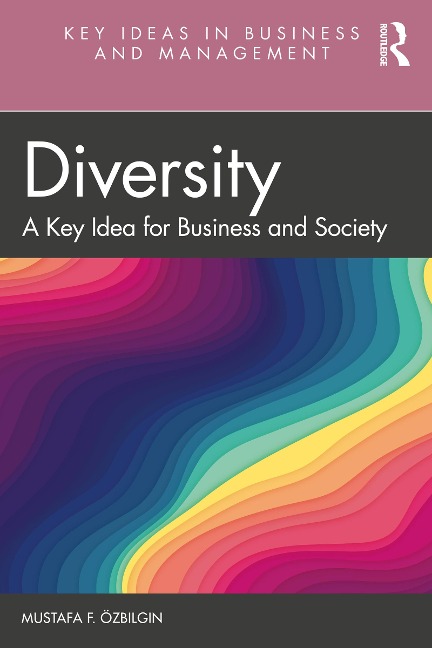
Diversity: A Key Idea for Business and Society introduces an idea that proliferates business and society, having been incorporated into mainstream theory and practice. Beyond this multidisciplinary setting, how diversity is defined, framed, managed and regulated is also exposed to considerable social, economic, political and ideological interpretation and manipulation. This volume explores definitions of diversity, its various manifestations and interdisciplinary influences that shape how diversity is researched. The text turns to workforce diversity as a particular case of diversity and explores antecedents, correlates and consequences of workforce diversity. The author considers power, inequality and intersectionality to illuminate the subject from the key manifestations, including class, gender, ethnicity, sexuality and disability. With insights from an array of fields from economics, through management to biology, the author also highlights the various cases against diversity alongside analysis of how to navigate the diversity jungle in practice. This concise, authoritative book will be essential reading for students, researchers and reflective practitioners interested in workforce diversity as well as unique supplementary reading across the social sciences.
Mustafa F. Özbilgin is Professor of Organisational Behaviour at Brunel University London, UK; Co-Chair of Management and Diversity at the University of Paris Dauphine, France; and Visiting Professor of Management at Koç University, Turkey.
Table of Contents Diversity * Forewords * Foreword by Professor Trish Greenhalgh * Foreword by Professor Kurt April * Preface * Acknowledgements * Dedication * Introduction * Chapter 1. Diversity and its origins * 1.1. Defining diversity * 1.2. How does diversity manifest? * 1.3. Categories of diversity * 1.4. Diversity and its multiple frames * 1.5. Illustrative case: the gene delusion * 1.6. Conclusion * Chapter 2. Manifestations of diversity * 2.1. Etic categories of diversity * 2.1.1. Gender diversity * 2.1.2. Ethnic diversity * 2.1.3. Sexual orientation diversity * 2.1.4. Class diversity * 2.1.5. Physical, mental and sensory diversity * 2.1.5. Interspecies diversity (biodiversity) * 2.1.6. Technodiversity (cyborg diversity) * 2.1.7. Other forms of etic diversity * 2.2. Emic forms of diversity * 2.3. Multiple categories of diversity and intersectionality * 2.4. Illustrative case: migration of diversity * 2.5. Conclusion * Chapter 3. Disciplinary influences on diversity science * 3.1. Formal sciences and diversity: emergence of diversity measurements in social sciences. * 3.2. Natural sciences and diversity: biodiversity, neurodiversity and social sciences. * 3.3. Humanities, arts and diversity: cultural de/constructions, and aesthetics of diversity * 3.4. Social sciences and diversity * 3.4.1. Psychology * 3.4.2. Sociology * 3..4.3. Political science and law * 3.4.4. Economics * 3.4.5. Business and management * 3.5 Illustrative case: interdisciplinarity and the case of Covid19 pandemic response * 3.6. Conclusion * Chapter 4. Workforce diversity and its consequences * 4.1. Diversity and performance * 4.2. Diversity and innovation * 4.3. Workplace democracy, equality, and humanisation * 4.4. The bottom line for diversity * 4.5. diversity and social responsibility: complementarity versus competition * 4.6. Diversity and sustainability * 4.7. Illustrative case: from workforce diversity to posthumanist diversity and its consequences * 4.8 Conclusion * Chapter 5. Against workforce diversity * 5.1. The dark side of diversity * 5.2. Backlash, resistance and opposition to diversity * 5.3. Totalitarian and populist objections to diversity * 5.4. Workforce diversity as a threat * 5.5. Illustrative case: denial of institutional racism in Britain * 5.6. Conclusion * Chapter 6. The management of diversity * 6.1. The strategic approach to managing diversity * 6.2. The process approach to managing diversity * 6.3. The contextual approach to managing diversity * 6.4. The multilevel approach to managing diversity * 6.5. The relational approach to managing diversity * 6.6. The maturity approach to managing diversity * 6.7. Diversity management interventions and activities * 6.8. Illustrative case: diversity management failures * 6.9. Conclusion * Chapter 7. Regulating diversity in and around organisations * 7.1. Regulation of diversity: a multilevel framework * 7.2. Regulation of diversity: a multifaceted framework * 7.2.1. Voluntary regulation of diversity * 7.2.2. Coercive regulation of diversity * 7.2.3. Relational regulation of diversity * 7.3. The new deal for regulating diversity: towards posthuman diversity * 7.3.1. Human diversity: intersectional solidarity * 7.3.2. Biodiversity: empowering environment as a legal entity * 7.3.3. Techno diversity: challenging ownership and value chains of technology * 7.4. Illustrative case: responsibilisation in a neoliberal context for posthuman diversity * 7.5. Conclusion * References *
Dieses eBook wird im PDF-Format geliefert und ist mit einem Adobe Kopierschutz (DRM) versehen. Sie können dieses eBook mit allen Geräten lesen, die das PDF-Format und den Adobe Kopierschutz (DRM) unterstützen.
Zum Beispiel mit den folgenden Geräten:
• tolino Reader
Laden Sie das eBook direkt über den Reader-Shop auf dem tolino herunter oder übertragen Sie das eBook auf Ihren tolino mit einer kostenlosen Software wie beispielsweise Adobe Digital Editions.
• Sony Reader & andere eBook Reader
Laden Sie das eBook direkt über den Reader-Shop herunter oder übertragen Sie das eBook mit der kostenlosen Software Sony READER FOR PC/Mac oder Adobe Digital Editions auf ein Standard-Lesegeräte mit epub- und Adobe DRM-Unterstützung.
• Tablets & Smartphones
Möchten Sie dieses eBook auf Ihrem Smartphone oder Tablet lesen, finden Sie hier unsere kostenlose Lese-App für iPhone/iPad und Android Smartphone/Tablets.
• PC & Mac
Lesen Sie das eBook direkt nach dem Herunterladen mit einer kostenlosen Lesesoftware, beispielsweise Adobe Digital Editions, Sony READER FOR PC/Mac oder direkt über Ihre eBook-Bibliothek in Ihrem Konto unter „Meine eBooks“ - „online lesen“.
Schalten Sie das eBook mit Ihrer persönlichen Adobe ID auf bis zu sechs Geräten gleichzeitig frei.
Bitte beachten Sie, dass die Kindle-Geräte das Format nicht unterstützen und dieses eBook somit nicht auf Kindle-Geräten lesbar ist.