Und dann auf "Zum Home-Bildschirm [+]".

Stöbern
genialokal zum Startbildschirm hinzufügen
Installieren Sie die genialokal App auf Ihrem Startbildschirm für einen schnellen Zugriff und eine komfortable Nutzung.
Installieren Sie die genialokal App auf Ihrem Startbildschirm für einen schnellen Zugriff und eine komfortable Nutzung.
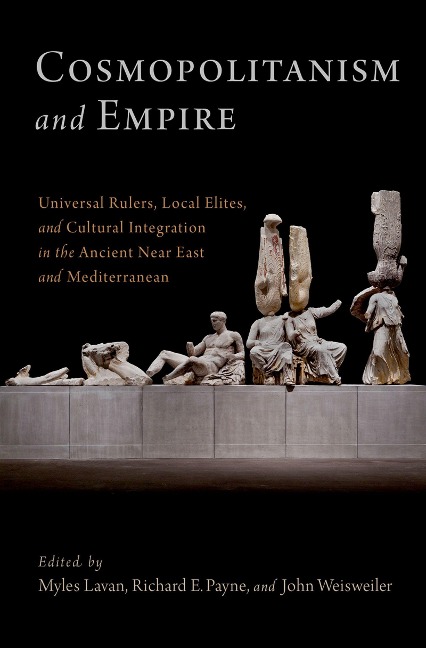
The empires of the ancient Near East and Mediterranean invented cosmopolitan politics. In the first millennia BCE and CE, a succession of territorially extensive states incorporated populations of unprecedented cultural diversity. Cosmopolitanism and Empire traces the development of cultural techniques through which empires managed difference in order to establish effective, enduring regimes of domination. It focuses on the relations of imperial elites with culturally distinct local elites, offering a comparative perspective on the varying depth and modalities of elite integration in five empires of the ancient Near East and Mediterranean. If cosmopolitanism has normally been studied apart from the imperial context, the essays gathered here show that theories and practices that enabled ruling elites to transcend cultural particularities were indispensable for the establishment and maintenance of trans-regional and trans-cultural political orders. As the first cosmopolitans, imperial elites regarded ruling over culturally disparate populations as their vocation, and their capacity to establish normative frameworks across cultural boundaries played a vital role in the consolidation of their power. Together with an introductory chapter which offers a theory and history of the relationship between empire and cosmopolitanism, the volume includes case studies of Assyrian, Seleukid, Ptolemaic, Roman, and Iranian empires that analyze encounters between ruling classes and their subordinates in the domains of language and literature, religion, and the social imaginary. The contributions combine to illustrate the dilemmas of difference that imperial elites confronted as well as their strategies for resolving the cultural contradictions that their regimes precipitated.
Myles Lavan is Senior Lecturer in Ancient History at the University of St. Andrews and author of Slaves to Rome: Paradigms of Empire in Roman Culture. Richard E. Payne is Neubauer Family Assistant Professor at the Oriental Institute and the Department of Near Eastern Languages and Civilizations at the University of Chicago and author of A State of Mixture: Christians, Zoroastrians, and Iranian Political Culture in Late Antiquity. John Weisweiler is Assistant Professor in the Department of Ancient History at the University of Tübingen.
Table of Contents
List of contributors
1. Cosmopolitan Politics: The Assimilation and Subordination of Elite Cultures Myles Lavan, Richard Payne, John Weisweiler
2. Getting Confident: The Assyrian Development of Elite Recognition Ethics Seth Richardson
3. Empire Begins at Home: Local Elites and Imperial Ideologies in Hellenistic Greece and Babylonia Kathryn Stevens
4. Hellenism, Cosmopolitanism and the Role of Babylonian Elites in the Seleucid Empire Johannes Haubold
5. Towards a Translocal Elite Culture in the Ptolemaic Empire Christelle Fischer-Bovet
6. What is Imperial Cosmopolitanism? Tamara Chin
7. "Father of the Whole Human Race": Ecumenical Language and the Limits of Elite Integration in the Early Roman Empire Myles Lavan
8. Making Romans: Citizens, Subjects and Subjectivity in Republican Empire Clifford Ando
9. From Empire to World State: Ecumenical Language and Cosmopolitan Consciousness in the Later Roman Aristocracy John Weisweiler
10. Iranian Cosmopolitanism: World Religions at the Sasanian Court Richard Payne
11. "Zum ewigen Frieden": Cosmopolitanism, Comparison and Empire Peter Fibiger Bang
Works cited Index
Dieses eBook wird im PDF-Format geliefert und ist mit einem Adobe Kopierschutz (DRM) versehen. Sie können dieses eBook mit allen Geräten lesen, die das PDF-Format und den Adobe Kopierschutz (DRM) unterstützen.
Zum Beispiel mit den folgenden Geräten:
• tolino Reader
Laden Sie das eBook direkt über den Reader-Shop auf dem tolino herunter oder übertragen Sie das eBook auf Ihren tolino mit einer kostenlosen Software wie beispielsweise Adobe Digital Editions.
• Sony Reader & andere eBook Reader
Laden Sie das eBook direkt über den Reader-Shop herunter oder übertragen Sie das eBook mit der kostenlosen Software Sony READER FOR PC/Mac oder Adobe Digital Editions auf ein Standard-Lesegeräte mit epub- und Adobe DRM-Unterstützung.
• Tablets & Smartphones
Möchten Sie dieses eBook auf Ihrem Smartphone oder Tablet lesen, finden Sie hier unsere kostenlose Lese-App für iPhone/iPad und Android Smartphone/Tablets.
• PC & Mac
Lesen Sie das eBook direkt nach dem Herunterladen mit einer kostenlosen Lesesoftware, beispielsweise Adobe Digital Editions, Sony READER FOR PC/Mac oder direkt über Ihre eBook-Bibliothek in Ihrem Konto unter „Meine eBooks“ - „online lesen“.
Schalten Sie das eBook mit Ihrer persönlichen Adobe ID auf bis zu sechs Geräten gleichzeitig frei.
Bitte beachten Sie, dass die Kindle-Geräte das Format nicht unterstützen und dieses eBook somit nicht auf Kindle-Geräten lesbar ist.