Und dann auf "Zum Home-Bildschirm [+]".

Stöbern
genialokal zum Startbildschirm hinzufügen
Installieren Sie die genialokal App auf Ihrem Startbildschirm für einen schnellen Zugriff und eine komfortable Nutzung.
Installieren Sie die genialokal App auf Ihrem Startbildschirm für einen schnellen Zugriff und eine komfortable Nutzung.
Ihr gewünschter Artikel ist in 0 Buchhandlungen vorrätig - wählen Sie hier eine Buchhandlung in Ihrer Nähe aus:


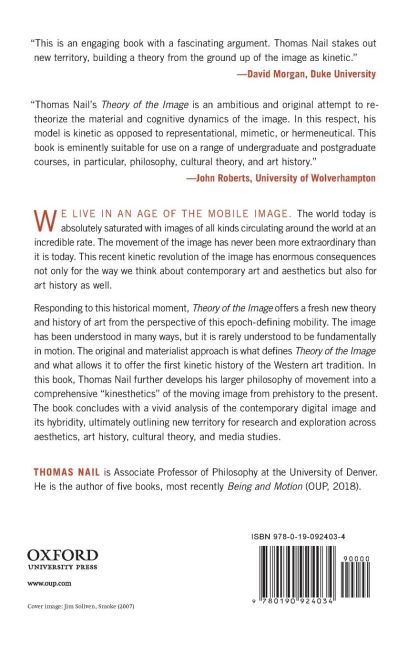
We live in an age of the mobile image. The world today is absolutely saturated with analog and digital images of all kinds circulating around the world at an incredible rate. The movement of the image has never been more extraordinary than it is today. This recent kinetic revolution of the image has hitherto unconsidered consequences not only for the way we think about contemporary art and aesthetics but also for art history as well. Responding to this historical moment, Theory of the Image offers a fresh new aesthetics and history of art from the perspective of this epoch-defining mobility. The image has been understood in many ways, but rarely, if ever, has it been understood to be, primarily and above all, in motion. This original approach is what defines Theory of the Image and what allows it to offer the first kinetic history of the Western art tradition. In this book, Thomas Nail further develops his larger philosophy of movement into a comprehensive "kinesthetics" of the moving image from prehistory to the present. The book concludes with a vivid analysis of the contemporary digital image and its hybridity, ultimately outlining new territory for research and exploration across aesthetics, art history, cultural theory, and media studies.
Thomas Nail is an Associate Professor of Philosophy at the University of Denver. He is the author of numerous works, including Theory of the Border (OUP 2016) and Being and Motion (OUP 2018).
- Introduction - Part I: Kinesthetics - 1. The Flow of Matter - 2. The Fold of Affect - 3. The Field of Art - Part II: History of the Image - I. The Functional Image - 4. Centripetal Function - 5. The Prehistoric Image - II. The Formal Image - 6. Centrifugal Form - 7. The Ancient Image I - 8. The Ancient Image II - III. The Relational Image - 9. Tensional Relation - 10. The Medieval Image I - 11. The Medieval Image II - IV. The Differential Image - 12. Elastic Difference - 13. The Modern Image I - 14. The Modern Image II - Part III: The Contemporary Image - 15. The Digital Image - 16. The Generative Image - Conclusion