Und dann auf "Zum Home-Bildschirm [+]".

Stöbern
genialokal zum Startbildschirm hinzufügen
Installieren Sie die genialokal App auf Ihrem Startbildschirm für einen schnellen Zugriff und eine komfortable Nutzung.
Installieren Sie die genialokal App auf Ihrem Startbildschirm für einen schnellen Zugriff und eine komfortable Nutzung.

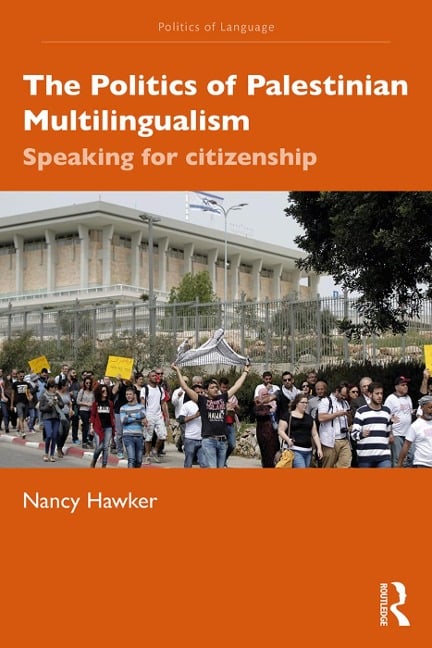
The Politics of Palestinian Multilingualism: Speaking for Citizenship provides an essential contribution to understanding the politics of Israel/Palestine through the prism of sociolinguistics and discourse analysis. Arabic-speakers who also know Hebrew resort to a range of communicative strategies for their political ideas to be heard: they either accommodate or resist the Israeli institutional suppression of Arabic. They also codeswitch and borrow from Hebrew as well as from Arabic registers and styles in order to mobilise discursive authority. On political and cultural stages, multilingual Palestinian politicians and artists challenge the existing political structures. In the late capitalist market, language skills are re-packaged as commodified resources. With new evidence from recent and historical discourse, this book is about how speakers of a marginalised, contained language engage with the political system in the idioms at their disposal. The Politics of Palestinian Multilingualism: Speaking for Citizenship is key reading for advanced students and scholars of multilingualism, language contact, ideology, and policy, within sociolinguistics, anthropology, politics, and Middle Eastern studies.
Nancy Hawker (DPhil University of Oxford 2013) has finished a postdoctoral fellowship at the University of Oxford, UK. She is a research fellow at the Aga Khan University's Institute for the Study of Muslim Civilisations, London.
Introduction: A discourse-analytical exploration of the citizenship of Palestinians Chapter 1: The contestation of Arabic on Zionist stages Chapter 2: Linguistically navigating 'mixed' social settings in contexts of segregation Chapter 3: Expressing styles for discursive authority Chapter 4: Anxious attitudes, confident practices: the ambivalence of late capitalism Conclusion: The political scientist is the sociolinguist's friend Epilogue: A personal journey through language teaching and learning ideologies Acknowledgments Appendices Bibliography Index