Und dann auf "Zum Home-Bildschirm [+]".

Stöbern
genialokal zum Startbildschirm hinzufügen
Installieren Sie die genialokal App auf Ihrem Startbildschirm für einen schnellen Zugriff und eine komfortable Nutzung.
Installieren Sie die genialokal App auf Ihrem Startbildschirm für einen schnellen Zugriff und eine komfortable Nutzung.
Ihr gewünschter Artikel ist in 0 Buchhandlungen vorrätig - wählen Sie hier eine Buchhandlung in Ihrer Nähe aus:

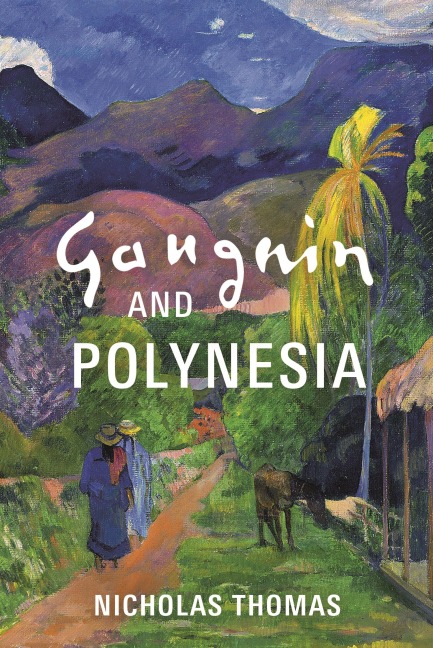
The Post-Impressionist artist and writer Paul Gauguin led an extraordinary, troubled and restlessly itinerant life; he came late to painting and spent most of his last decade in the Pacific islands of Tahiti and the Marquesas, where he produced paintings loosely based on Polynesian tradition that heralded the emergence of primitivism and would exert a profound influence on modernist artists from Picasso and Matisse to Jackson Pollock. But his art, despite its growing popularity following Gauguin's death in 1903, has provoked mixed responses: although some praise his knowledge and understanding of the Polynesian world, others are censorious, regarding elements of his work as expressions of racism, misogyny and colonial sexual exploitation, which he is seen both to have engaged in and validated through his art. In this generously illustrated life of Gauguin, Nicholas Thomas retells the artist's story for a twenty-first-century audience, giving greater consideration to the Pacific contexts of his experience, and to Pacific perspectives on his art and his legacy.
Nicholas Thomas first visited Polynesia in 1984 to undertake research in the Marquesas Islands. He has since travelled extensively in the Pacific, and written on Indigenous histories, empire and art; his books include Entangled Objects (1991), Islanders: The Pacific in the Age of Empire (2012), which was awarded the Wolfson History Prize, Oceanic Art (2018), Gauguin and Polynesia (2024), and several collaborative books with artists including John Pule and Mark Adams. Oceania, which Thomas co-curated with Peter Brunt for the Royal Academy of Arts in London and the Musée du quai Branly-Jacques Chirac in Paris in 2018-19, was acclaimed as a landmark exhibition. He has also written on contemporary art, museums, and heritage issues for the Financial Times, The Art Newspaper, Apollo, Artlink and Art Asia Pacific among other magazines and journals. Since 2006, he has been Director of the Museum of Archaeology and Anthropology at the University of Cambridge, and a Fellow of Trinity College, Cambridge.