Und dann auf "Zum Home-Bildschirm [+]".

Stöbern
genialokal zum Startbildschirm hinzufügen
Installieren Sie die genialokal App auf Ihrem Startbildschirm für einen schnellen Zugriff und eine komfortable Nutzung.
Installieren Sie die genialokal App auf Ihrem Startbildschirm für einen schnellen Zugriff und eine komfortable Nutzung.

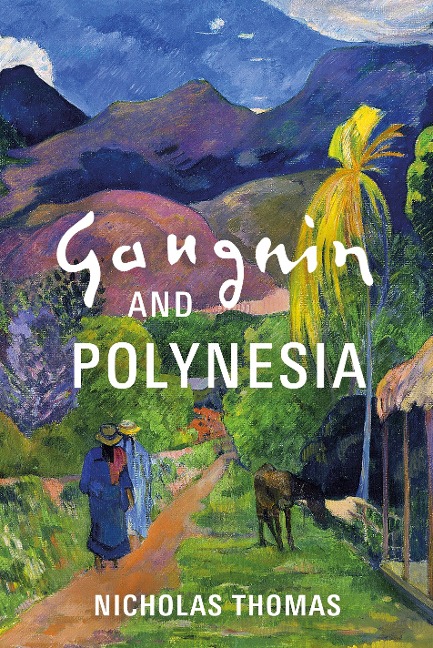
Paul Gauguin is commonly regarded as one of the greatest modern artists. He is renowned for resplendent, mythic imagery from Oceania, for a life of restless travel and for his supposed immersion in Polynesian life. But he has long been regarded ambivalently, and in recent years both Gauguin's sexual behaviour, and his paintings, have been considered exploitative.
Gauguin and Polynesia offers a fresh view on the artist, not from the perspective of European art history, but from the contemporary vantage point of the region - Oceania - which he so famously moved to. Gauguin's art is revealed, for the first time, to be richer and more eclectic than has been recognised. The artist indeed did invent enigmatic and symbolic images, but he also depicted Polynesia's colonial modernity, acknowledging the life of the time and the dignity and power of some of the Islanders he encountered.
Gauguin and Polynesia neither celebrates nor condemns an extraordinary painter, who at times denounced and at other times affirmed the French empire that shaped his own life and the places he moved between. It is a revelation, of a formative artist of modern life, and of multicultural worlds in the making.
Nicholas Thomas first visited Polynesia in 1984 to undertake research in the Marquesas Islands. He has since travelled extensively in the Pacific, and written on Indigenous histories, empire and art; his books include Entangled Objects (1991), Islanders: The Pacific in the Age of Empire (2012), which was awarded the Wolfson History Prize, Oceanic Art (2018), Gauguin and Polynesia (2024), and several collaborative books with artists including John Pule and Mark Adams.
Oceania, which Thomas co-curated with Peter Brunt for the Royal Academy of Arts in London and the Musée du quai Branly-Jacques Chirac in Paris in 2018-19, was acclaimed as a landmark exhibition. He has also written on contemporary art, museums, and heritage issues for the Financial Times, The Art Newspaper, Apollo, Artlink and Art Asia Pacific among other magazines and journals.
Since 2006, he has been Director of the Museum of Archaeology and Anthropology at the University of Cambridge, and a Fellow of Trinity College, Cambridge.