Und dann auf "Zum Home-Bildschirm [+]".

Stöbern
genialokal zum Startbildschirm hinzufügen
Installieren Sie die genialokal App auf Ihrem Startbildschirm für einen schnellen Zugriff und eine komfortable Nutzung.
Installieren Sie die genialokal App auf Ihrem Startbildschirm für einen schnellen Zugriff und eine komfortable Nutzung.
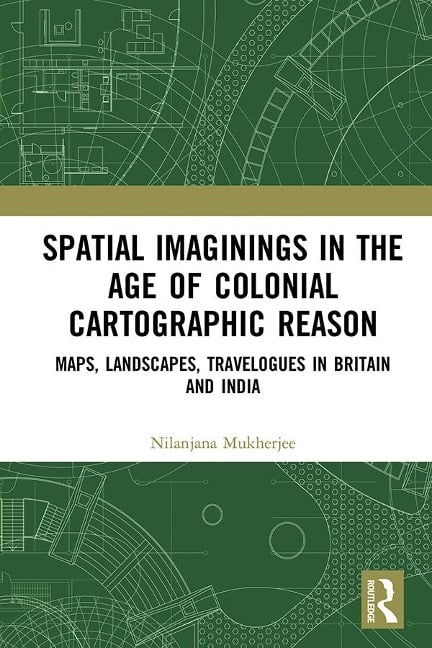
This volume explores how India as a geographical space was constructed by the British colonial regime in visual and material terms. It demonstrates the instrumentalisation of cultural artefacts such as landscape paintings, travel literature and cartography, as spatial practices overtly carrying scientific truth claims, to materially produce artificial spaces that reinforced power relations. It sheds light on the primary dominance of cartographic reason in the age of European Enlightenment which framed aesthetic and scientific modes of representation and imagination. The author cross-examines this imperial gaze as a visual perspective which bore the material inscriptions of a will to assert, possess and control. The distinguishing theme in this study is the production of India as a new geography sourced from Britain's own interaction with its rural outskirts and domination in its fringes. This book: - Addresses the concept of "production of space" to study the formulation of a colonial geography which resulted in the birth of a new place, later a nation; - Investigates a generative period in the formation of British India c. 1750-1850 as a colonial territory vis-à-vis its representation and reiteration in British maps, landscape paintings and travel writings; - Brings Great Britain and British India together on one plane not only in terms of the physical geo-spaces but also in the excavation of critical domains by alluding to critics from both spaces; - Seeks to understand the pictorial grammar that legitimised the expansive British imperial cartographic gaze as the dominant narrative which marginalised all other existing local ideas of space and inhabitation. Rethinking colonial constructions of modern India, this volume will be of immense interest to scholars and researchers of modern history, cultural geography, colonial studies, English literature, cultural studies, art, visual studies and area studies.
Nilanjana Mukherjee is Assistant Professor at the Department of English, Shaheed Bhagat Singh College, University of Delhi. Her earlier publications include Mapping India: Transitions and Transformations 18th-19th Centuries (co-edited with Sutapa Dutta, 2019). She has also received the Meenakshi Mukherjee Memorial Prize for the year 2014 from the Indian Association of Commonwealth Languages and Literature for her article titled "Drawing Roads/Building Empire: Space and Circulation in Charles D'Oyly's Indian Landscapes" published in South Asia: Journal of South Asian Studies, Vol. 37. She is also a former Charles Wallace India Trust Visiting Fellow at the Institute of Advanced Studies in the Humanities and Centre for South Asian Studies, University of Edinburgh, UK.
Introduction: maps, landscapes, travelogues: spatial articulation and the imperial eyes PART I Cartographic imagination 1 Maps: the onset and dominance of cartographic reason 2 Mapping India: Rennell and Lambton PART II Landscapes of control 3 Estates, gardens and enclosures: aesthetic framing of British landscapes 4 Framing India: Chinnery and D'Oyly PART III Narrativising travel 5 Place and identity: travel narratives in the making of Britain 6 Narrating India: Hodges, Heber, Fraser and Hooker Postscript Bibliography
Dieses eBook wird im PDF-Format geliefert und ist mit einem Adobe Kopierschutz (DRM) versehen. Sie können dieses eBook mit allen Geräten lesen, die das PDF-Format und den Adobe Kopierschutz (DRM) unterstützen.
Zum Beispiel mit den folgenden Geräten:
• tolino Reader
Laden Sie das eBook direkt über den Reader-Shop auf dem tolino herunter oder übertragen Sie das eBook auf Ihren tolino mit einer kostenlosen Software wie beispielsweise Adobe Digital Editions.
• Sony Reader & andere eBook Reader
Laden Sie das eBook direkt über den Reader-Shop herunter oder übertragen Sie das eBook mit der kostenlosen Software Sony READER FOR PC/Mac oder Adobe Digital Editions auf ein Standard-Lesegeräte mit epub- und Adobe DRM-Unterstützung.
• Tablets & Smartphones
Möchten Sie dieses eBook auf Ihrem Smartphone oder Tablet lesen, finden Sie hier unsere kostenlose Lese-App für iPhone/iPad und Android Smartphone/Tablets.
• PC & Mac
Lesen Sie das eBook direkt nach dem Herunterladen mit einer kostenlosen Lesesoftware, beispielsweise Adobe Digital Editions, Sony READER FOR PC/Mac oder direkt über Ihre eBook-Bibliothek in Ihrem Konto unter „Meine eBooks“ - „online lesen“.
Schalten Sie das eBook mit Ihrer persönlichen Adobe ID auf bis zu sechs Geräten gleichzeitig frei.
Bitte beachten Sie, dass die Kindle-Geräte das Format nicht unterstützen und dieses eBook somit nicht auf Kindle-Geräten lesbar ist.