Und dann auf "Zum Home-Bildschirm [+]".

Stöbern
genialokal zum Startbildschirm hinzufügen
Installieren Sie die genialokal App auf Ihrem Startbildschirm für einen schnellen Zugriff und eine komfortable Nutzung.
Installieren Sie die genialokal App auf Ihrem Startbildschirm für einen schnellen Zugriff und eine komfortable Nutzung.
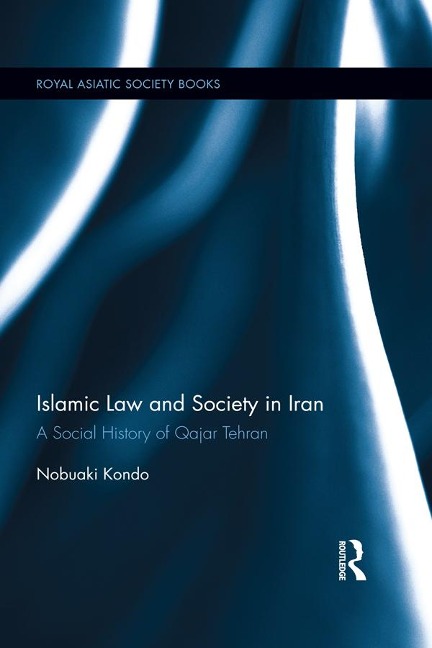
The relationship between Islamic law and society is an important issue in Iran under the Islamic Republic. Although Islamic law was a pivotal element in the traditional Iranian society, no comprehensive research has been made until today. This is because modern reformers emphasized the lack of rule of law in nineteenth-century Iran. However, a legal system did exist, and Islamic law was a substantial part of it. This is the first book on the relationship between Islamic law and the Iranian society during the nineteenth century. The author explores the legal aspects of urban society in Iran and provides the social context in which political process occurred and examines how authorities applied law in society, how people utilized the law, and how the law regulated society. Based on rich archival sources including court records and private deeds from Qajar Tehran, this book explores how Islamic law functioned in Iranian society. The judicial system, sharia court, and religious endowments (vaqf) are fully discussed, and the role of 'ulama as legal experts is highlighted throughout the book. It challenges nationalist and modernist views on nineteenth-century Iran and provides a unique model in terms of the relationship between Islamic law and society, which is rather different from the Ottoman case. Providing an understanding of this legal system in Iran and its role in society, this book offers a basis for assessing the motives and results of modern reforms as well as the modernist discourse. This book will be of interest to students of Middle Eastern and Iranian Studies.
Nobuaki Kondo is a Professor at Research Institute for Languages and Cultures of Asia and Africa, Tokyo University of Foreign Studies. His research interests cover early modern history of Iran and the Persianate societies. His most important publication is Persian Documents (Routledge, 2003).
Introduction 1. Historical Development of Tehran 2. Judicial System 3.Shari'a Court 4. Actual Dispute: Case of Double Vaqf 5. Attestations and Transactions in Shari'a Courts 6. Vaqfs in Tehran 7. Vaqf and Private Property 8. Transformation of Vaqfs Conclusion
Dieses eBook wird im PDF-Format geliefert und ist mit einem Adobe Kopierschutz (DRM) versehen. Sie können dieses eBook mit allen Geräten lesen, die das PDF-Format und den Adobe Kopierschutz (DRM) unterstützen.
Zum Beispiel mit den folgenden Geräten:
• tolino Reader
Laden Sie das eBook direkt über den Reader-Shop auf dem tolino herunter oder übertragen Sie das eBook auf Ihren tolino mit einer kostenlosen Software wie beispielsweise Adobe Digital Editions.
• Sony Reader & andere eBook Reader
Laden Sie das eBook direkt über den Reader-Shop herunter oder übertragen Sie das eBook mit der kostenlosen Software Sony READER FOR PC/Mac oder Adobe Digital Editions auf ein Standard-Lesegeräte mit epub- und Adobe DRM-Unterstützung.
• Tablets & Smartphones
Möchten Sie dieses eBook auf Ihrem Smartphone oder Tablet lesen, finden Sie hier unsere kostenlose Lese-App für iPhone/iPad und Android Smartphone/Tablets.
• PC & Mac
Lesen Sie das eBook direkt nach dem Herunterladen mit einer kostenlosen Lesesoftware, beispielsweise Adobe Digital Editions, Sony READER FOR PC/Mac oder direkt über Ihre eBook-Bibliothek in Ihrem Konto unter „Meine eBooks“ - „online lesen“.
Schalten Sie das eBook mit Ihrer persönlichen Adobe ID auf bis zu sechs Geräten gleichzeitig frei.
Bitte beachten Sie, dass die Kindle-Geräte das Format nicht unterstützen und dieses eBook somit nicht auf Kindle-Geräten lesbar ist.