Und dann auf "Zum Home-Bildschirm [+]".

Stöbern
genialokal zum Startbildschirm hinzufügen
Installieren Sie die genialokal App auf Ihrem Startbildschirm für einen schnellen Zugriff und eine komfortable Nutzung.
Installieren Sie die genialokal App auf Ihrem Startbildschirm für einen schnellen Zugriff und eine komfortable Nutzung.
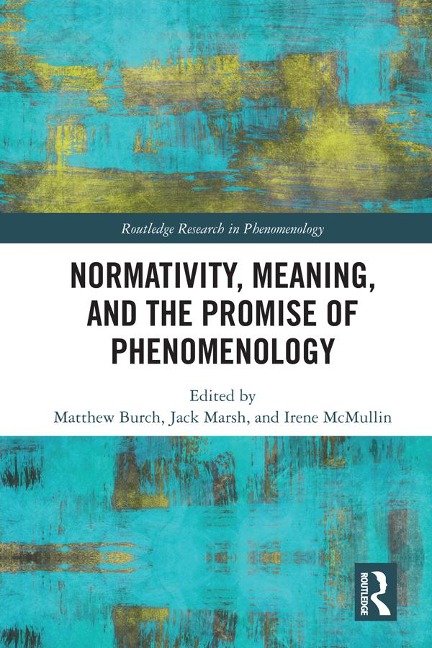
The aim of this volume is to critically assess the philosophical importance of phenomenology as a method for studying the normativity of meaning and its transcendental conditions. Using the pioneering work of Steven Crowell as a springboard, phenomenologists from all over the world examine the promise of phenomenology for illuminating long-standing problems in epistemology, the philosophy of mind, action theory, the philosophy of religion, and moral psychology. The essays are unique in that they engage with the phenomenological tradition not as a collection of authorities to whom we must defer, or a set of historical artifacts we must preserve, but rather as a community of interlocutors with views that bear on important issues in contemporary philosophy. The book is divided into three thematic sections, each examining different clusters of issues aimed at moving the phenomenological project forward. The first section explores the connection between normativity and meaning, and asks us to rethink the relation between the factual realm and the categories of validity in terms of which things can show up as what they are. The second section examines the nature of the self that is capable of experiencing meaning. It includes essays on intentionality, agency, consciousness, naturalism, and moral normativity. The third section addresses questions of philosophical methodology, examining if and why phenomenology should have priority in the analysis of meaning. Finally, the book concludes with an afterword written by Steven Crowell. Normativity, Meaning, and the Promise of Phenomenology will be a key resource for students and scholars interested in the phenomenological tradition, the transcendental tradition from Kant to Davidson, and existentialism. Additionally, its forward-looking focus yields crucial insights into pressing philosophical problems that will appeal to scholars working across all areas of the discipline.
Matthew Burch is a philosophy lecturer at the University of Essex. His research interests lie at the intersection of phenomenology and the cognitive and social sciences. He has published in Inquiry, The European Journal of Philosophy, and Phenomenology and the Cognitive Sciences. He is currently a Research Fellow with the Independent Social Research Foundation. Jack Marsh is a St. Leonard's Scholar in Religion at the University of St. Andrews. He is the author of Saying Violence: Levinas, Chauvinism, Disinterest (forthcoming). His work has appeared in many journals, including Philosophy and Social Criticism, Levinas Studies, and Philosophy Today. Irene McMullin teaches philosophy at the University of Essex. She specializes in Ethics and 20th Century European philosophy. In 2013 she published Time and the Shared World: Heidegger on Social Relations. Her second book, Existential Flourishing: A Phenomenology of the Virtues, is forthcoming.
Introduction Matthew Burch, Jack Marsh, and Irene McMullin Section I: Normativity, Meaning, and the Limits of Phenomenology 1. Constitutive, Prescriptive, Technical or Ideal? On the Ambiguity of the Term 'Norm' Sara Heinämaa 2. The Space of Meaning, Phenomenology, and the Normative Turn Leslie MacAvoy 3. Mind, Meaning and Metaphysics: Another Look Dan Zahavi 4. Ground, Background, and Rough Ground: Dreyfus, Wittgenstein, and Phenomenology David Cerbone 5. Inauthentic Theologizing and Phenomenological Method Martin Kavka Section II: Sources of Normativity 6. Intentionality and (Moral) Normativity John Drummond 7. The Sources of Practical Normativity Reconsidered - with Kant and Levinas Inga Römer 8. Resoluteness and Gratitude for the Good Irene McMullin Section III: Normativity and Nature 9. On Being a Human Self Mark Okrent 10. Normativity with a Human Face: Placing Intentional Norms and Intentional Agents back in Nature Glenda Satne & Bernardo Ainbinder 11. World-Articulating Animals Joseph Rouse Section IV: Attuned Agency 12. Moods as Active Joe Schear 13. Against Our Better Judgment Matthew Burch 14. Everyday Eros: Toward a Phenomenology of Erotic Inception Jack Marsh Section V: Epistemic Normativity 15. Normativity and Knowledge Walter Hopp 16. Appearance, Judgment, and Norms Charles Siewert 17. Husserl's and Heidegger's Transcendental Projects: From the Natural Attitude to Functioning Intentionality Dermot Moran Afterword A Philosophy of Mind: Phenomenology, Normativity, and Meaning Steven Crowell
Dieses eBook wird im PDF-Format geliefert und ist mit einem Adobe Kopierschutz (DRM) versehen. Sie können dieses eBook mit allen Geräten lesen, die das PDF-Format und den Adobe Kopierschutz (DRM) unterstützen.
Zum Beispiel mit den folgenden Geräten:
• tolino Reader
Laden Sie das eBook direkt über den Reader-Shop auf dem tolino herunter oder übertragen Sie das eBook auf Ihren tolino mit einer kostenlosen Software wie beispielsweise Adobe Digital Editions.
• Sony Reader & andere eBook Reader
Laden Sie das eBook direkt über den Reader-Shop herunter oder übertragen Sie das eBook mit der kostenlosen Software Sony READER FOR PC/Mac oder Adobe Digital Editions auf ein Standard-Lesegeräte mit epub- und Adobe DRM-Unterstützung.
• Tablets & Smartphones
Möchten Sie dieses eBook auf Ihrem Smartphone oder Tablet lesen, finden Sie hier unsere kostenlose Lese-App für iPhone/iPad und Android Smartphone/Tablets.
• PC & Mac
Lesen Sie das eBook direkt nach dem Herunterladen mit einer kostenlosen Lesesoftware, beispielsweise Adobe Digital Editions, Sony READER FOR PC/Mac oder direkt über Ihre eBook-Bibliothek in Ihrem Konto unter „Meine eBooks“ - „online lesen“.
Schalten Sie das eBook mit Ihrer persönlichen Adobe ID auf bis zu sechs Geräten gleichzeitig frei.
Bitte beachten Sie, dass die Kindle-Geräte das Format nicht unterstützen und dieses eBook somit nicht auf Kindle-Geräten lesbar ist.