Und dann auf "Zum Home-Bildschirm [+]".

Stöbern
genialokal zum Startbildschirm hinzufügen
Installieren Sie die genialokal App auf Ihrem Startbildschirm für einen schnellen Zugriff und eine komfortable Nutzung.
Installieren Sie die genialokal App auf Ihrem Startbildschirm für einen schnellen Zugriff und eine komfortable Nutzung.
Ihr gewünschter Artikel ist in 0 Buchhandlungen vorrätig - wählen Sie hier eine Buchhandlung in Ihrer Nähe aus:

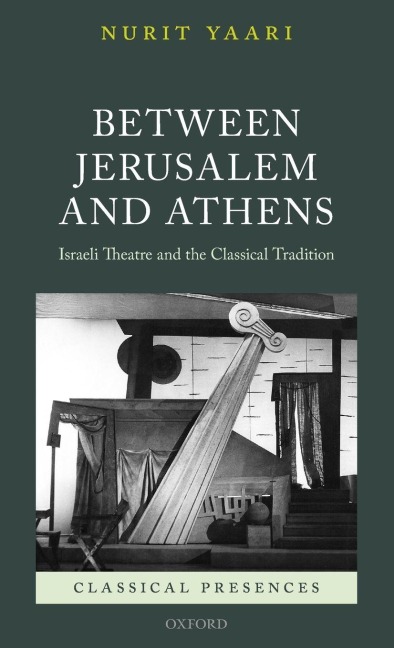
How does a theatrical tradition emerge in the fields of dramatic writing and artistic performance? How can a culture in which theatre played no part in the past create a theatrical tradition in the modern world? How do political and social conditions affect the encounter between cultures, and what role do they play in creating a theatre with a distinctive identity? This volume attempts to answer these and other questions in the first in-depth study of the reception of ancient Greek drama in Israeli theatre over the last 70 years. Exploring how engagement with classical culture has shaped the evolution of Israel's theatrical identity, it draws on both dramatic and aesthetic issues - from mise en scene to 'post dramatic' performance - and offers ground-breaking analysis of a wide range of translations and adaptations of Greek drama, as well as new writing inspired by Greek antiquity. The detailed discussion of how the performances of these works were created and staged at key points in the development of Israeli culture not only sheds new light on the reception of ancient Greek drama in an important theatrical and cultural context, but also offers a new and illuminating perspective on artistic responses to the fateful political, social, and cultural events in Israel's recent history.
Nurit Yaari is Professor of Theatre Studies in the Department of Theatre Arts within the David and Yolanda Katz Faculty of the Arts at Tel Aviv University. She previously held a Visiting Professorship at INALCO (Institut National des Langues et Civilisations Orientales) in Paris. She has published widely in Hebrew, English, and French on contemporary French theatre, Israeli theatre, and on the reception of Greek tragedy in Israeli theatre and modern dance, including the monograph Le théâtre de Hanokh Levin: Ensemble à l'ombre des canons (Editions Théâtrales, 2008), and the edited collection Inter-Art Journey: Exploring the Common Grounds of the Arts. Studies in Honor of Eli Rozik (Sussex Academic, 2015). Professor Yaari is also currently serving as an artistic consultant for the Khan Theatre of Jerusalem.
- Frontmatter
- List of Illustrations
- 1: Introduction
- Between Athens and Jerusalem
- Weaving together histories and traditions
- Israeli theatre and its audiences
- A survey of scholarship
- Scope of the study
- Book structure
- 2: Habima: Outsidedness as a catalyst of creativity
- First encounters with the Greek Classical repertoire
- In lieu of summary: The Nissim Aloni effect
- 3: The Cameri: In search of local theatrical identity
- A Modern Hebrew theatre in Tel Aviv
- Summary
- 4: Experimentations: Putting the aesthetics of performance into practice
- Aryeh Sachs: Experimenting with ritual theatre
- Yossi Yizraely: Experimentations with stage imagery
- Edna Shavit: Experiments with Classicism
- Summary
- 5: Aristophanes and the Occupied Territories
- Text and socio-political context
- Hanoch Levin: Contention, defiance, and protest
- Summary
- 6: The Trojan War and Israeli-Palestinian conflict
- Theatrical responses to the Six Day War (1967)
- Theatrical responses to the Lebanon War (1981)
- Summary
- 7: Lysistrata: Between entertainment and protest
- Lysistrata on the Israeli stages
- Summary
- 8: Nissim Aloni: Oedipus Tyrannus in an immigrant society
- The myth of King Oedipus: Migrant and autochthon
- Summary
- 9: Hanoch Levin: From ancient myths to modern tragedy
- Israel in the aftermath of the Six Day War (1967)
- Levin's dialogue with Euripides
- Levin's dialogue with Aeschylus: The Moaners (1999)
- Summary
- 10: Classical presences and 'post dramatic' performances
- Ruth Kanner: Processing communal grief
- Troy revisited in the third millennium
- Ilan Ronen: Theatre as a memory machine
- Rina Yerushalmi: Lessons of the past
- Hanan Snir: From politics to psychodrama
- Summary
- 11: The Classical tradition in university theatre
- First encounters: Sophocles' Antigone (1969)
- From theory to practice: Yizraely reads Aristotle
- Research and practice: Greek tragedy
- In lieu of summary: The General and the Sea (2015)
- 12: Israeli theatre: A snapshot of today and future prospects
- Appendix: Performances of Greek and Roman drama in Israel
- Endmatter
- Bibliography
- Index