Und dann auf "Zum Home-Bildschirm [+]".

Stöbern
genialokal zum Startbildschirm hinzufügen
Installieren Sie die genialokal App auf Ihrem Startbildschirm für einen schnellen Zugriff und eine komfortable Nutzung.
Installieren Sie die genialokal App auf Ihrem Startbildschirm für einen schnellen Zugriff und eine komfortable Nutzung.
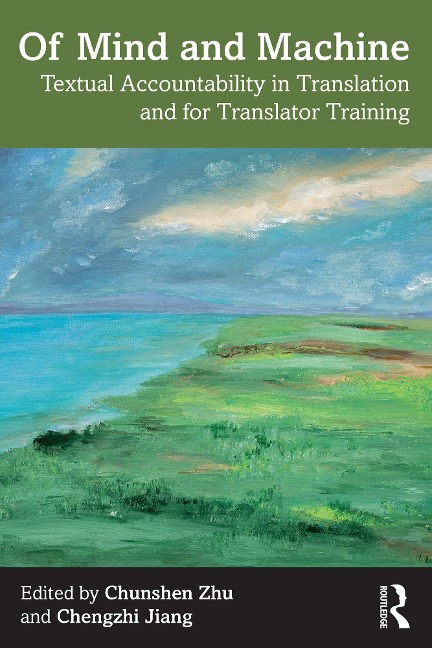
Of Mind and Machine provides a broad perspective on multi-level dialogic engagements between text and reader as seen from the use of language in presenting information to generate a discursive experience in various sociocultural settings. The book observes contexts such as national literature in translation, diplomatic speech events, visual-verbal inter-semiotic translation, second language learning, interpreter training, and computer-aided teaching of translation and bilingual writing. These present a unifying interest in textual accountability between form, function, and effect that has been examined from a dual perspective of rhetoric and pragmatics. The research embodies a significant prospect of integration of academic originality with technological innovation to advance language education in the present digital era. Theoretically well-founded, the book does not confine itself to a self-contained system of conceptions and methods. Instead, it demonstrates a rich variety of research possibilities in support of theorisation and education in the field of language and translation studies. This edited volume is primarily intended for advanced undergraduates, postgraduates, researchers, and teachers within the fields of language and translation, applied linguistics, and discourse analysis.
Chunshen Zhu is Professor of Translation Studies at the Chinese University of Hong Kong (Shenzhen). Chengzhi Jiang is Associate Professor of Translation Studies at Wuhan University.
List of Figures and Tables List of Contributors Preface Acknowledgments PART I 1. Rhetoric as the antistrophos of pragmatics: Towards a 'Competition of Cooperation' in the study of language use 2. Translation criticism and the active presence of Chinese literature in the world 3. Dancing with ideology: Grammatical metaphor and identity presentation in translation 4. Bilingual and intersemiotic representation of distance(s) in Chinese landscape painting: From yi ('meaning') to yi ('freedom') 5. A study of yes/no questions in English and Chinese: With special reference to Chinese EFL learners' understanding of their forms and functions 6. The speech-act nature of interpreting and its implications for interpreter training PART II 7. ClinkNotes: Towards a corpus-based, machine-aided program of translation teaching 8. A corpus-based, machine-aided mode of translator training: ClinkNotes and beyond 9. Towards a textual accountability-driven mode of computer-aided translator training: Rationale, design, and development of an online teaching and self-learning platform 10. Making connections through knowledge nodes in translator training: On a computer-assisted pedagogical approach to literary translation Index
Dieses eBook wird im PDF-Format geliefert und ist mit einem Adobe Kopierschutz (DRM) versehen. Sie können dieses eBook mit allen Geräten lesen, die das PDF-Format und den Adobe Kopierschutz (DRM) unterstützen.
Zum Beispiel mit den folgenden Geräten:
• tolino Reader
Laden Sie das eBook direkt über den Reader-Shop auf dem tolino herunter oder übertragen Sie das eBook auf Ihren tolino mit einer kostenlosen Software wie beispielsweise Adobe Digital Editions.
• Sony Reader & andere eBook Reader
Laden Sie das eBook direkt über den Reader-Shop herunter oder übertragen Sie das eBook mit der kostenlosen Software Sony READER FOR PC/Mac oder Adobe Digital Editions auf ein Standard-Lesegeräte mit epub- und Adobe DRM-Unterstützung.
• Tablets & Smartphones
Möchten Sie dieses eBook auf Ihrem Smartphone oder Tablet lesen, finden Sie hier unsere kostenlose Lese-App für iPhone/iPad und Android Smartphone/Tablets.
• PC & Mac
Lesen Sie das eBook direkt nach dem Herunterladen mit einer kostenlosen Lesesoftware, beispielsweise Adobe Digital Editions, Sony READER FOR PC/Mac oder direkt über Ihre eBook-Bibliothek in Ihrem Konto unter „Meine eBooks“ - „online lesen“.
Schalten Sie das eBook mit Ihrer persönlichen Adobe ID auf bis zu sechs Geräten gleichzeitig frei.
Bitte beachten Sie, dass die Kindle-Geräte das Format nicht unterstützen und dieses eBook somit nicht auf Kindle-Geräten lesbar ist.