Und dann auf "Zum Home-Bildschirm [+]".

Stöbern
genialokal zum Startbildschirm hinzufügen
Installieren Sie die genialokal App auf Ihrem Startbildschirm für einen schnellen Zugriff und eine komfortable Nutzung.
Installieren Sie die genialokal App auf Ihrem Startbildschirm für einen schnellen Zugriff und eine komfortable Nutzung.
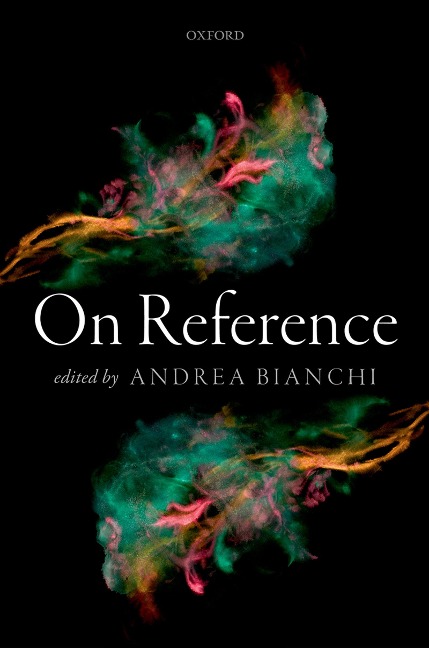
Most of the times we open our mouth to communicate, we talk about things. This can happen because (some of) the linguistic expressions we use have semantic properties that connect them to extra-linguistic entities. Thanks to these properties, they may be used by us to refer to things. Or, as we may also say, they themselves refer to things, though in certain cases they do so only relative to a context of use. But how can we characterize the semantic properties in question? What exactly is reference? Philosophers have been trying to answer these questions at least since Plato's Cratylus, but not until the last century, when language occupied center-stage in philosophy, did the problem come to be felt as really pressing. In the last decade of the nineteenth century, Gottlob Frege produced an account of reference that set the stage for the contemporary discussion. Nevertheless, around 1970 a number of powerful arguments against it were produced by Saul Kripke and others. As a result, many philosophers began to look at reference from a new perspective, which highlighted the crucial role played by wordly historical facts that may be unknown to the speakers. This semantic revolution, however, left us with a number of open problems. The eighteen original essays collected in this volume deal with many of these problems, thus contributing to our understanding of the nature of reference, its role in cognition, and the place it should be given in semantic theory.
Andrea Bianchi is an Associate Professor in Philosophy of Language at the Università degli Studi di Parma
- Introduction - Open Problems on Reference - I. The Nature of Reference - 1: Christopher Gauker: The Illusion of Semantic Reference - 2: Diego Marconi: Reference and Theories of Meaning as Use - 3: Edouard Machery, Justin Sytsma, and Max Deutsch: Speaker's Reference and Cross-Cultural Semantics - 4: Genoveva Martí: Reference Without Cognition - 5: Andrea Bianchi: Repetition and Reference - 6: Michael Devitt: Should Proper Names Still Seem So Problematic? - II. Reference and Cognition - 7: Antonio Capuano: Thinking About an Individual - 8: Marga Reimer: Drawing, Seeing, Referring: Reflections on Macbeth's Dagger - 9: John Perry: The Cognitive Contribution of Names - III. Reference and Semantics - 10: Ernesto Napoli: Names As Predicates? - 11: Robin Jeshion: Names Not Predicates - 12: Delia G. Fara: 'Literal' Uses of Proper Names - 13: Robin Jeshion: A Rejoinder to Fara's 'Literal' Uses of Proper Names' - 14: Marco Santambrogio: Empty Names, Propositions, and Attitude Ascriptions - 15: Ángel Pinillos: Millianism, Relationism, and Attitude Ascriptions - 16: Sam Cumming: The Dilemma of Indefinites - 17: Joseph Almog, Paul Nichols, and Jessica Pepp: A Unified Treatment of (Pro-) Nominals in Ordinary English - 18: Edward L. Keenan: Individuals Explained Away
Dieses eBook wird im PDF-Format geliefert und ist mit einem Adobe Kopierschutz (DRM) versehen. Sie können dieses eBook mit allen Geräten lesen, die das PDF-Format und den Adobe Kopierschutz (DRM) unterstützen.
Zum Beispiel mit den folgenden Geräten:
• tolino Reader
Laden Sie das eBook direkt über den Reader-Shop auf dem tolino herunter oder übertragen Sie das eBook auf Ihren tolino mit einer kostenlosen Software wie beispielsweise Adobe Digital Editions.
• Sony Reader & andere eBook Reader
Laden Sie das eBook direkt über den Reader-Shop herunter oder übertragen Sie das eBook mit der kostenlosen Software Sony READER FOR PC/Mac oder Adobe Digital Editions auf ein Standard-Lesegeräte mit epub- und Adobe DRM-Unterstützung.
• Tablets & Smartphones
Möchten Sie dieses eBook auf Ihrem Smartphone oder Tablet lesen, finden Sie hier unsere kostenlose Lese-App für iPhone/iPad und Android Smartphone/Tablets.
• PC & Mac
Lesen Sie das eBook direkt nach dem Herunterladen mit einer kostenlosen Lesesoftware, beispielsweise Adobe Digital Editions, Sony READER FOR PC/Mac oder direkt über Ihre eBook-Bibliothek in Ihrem Konto unter „Meine eBooks“ - „online lesen“.
Schalten Sie das eBook mit Ihrer persönlichen Adobe ID auf bis zu sechs Geräten gleichzeitig frei.
Bitte beachten Sie, dass die Kindle-Geräte das Format nicht unterstützen und dieses eBook somit nicht auf Kindle-Geräten lesbar ist.