Und dann auf "Zum Home-Bildschirm [+]".

Stöbern
genialokal zum Startbildschirm hinzufügen
Installieren Sie die genialokal App auf Ihrem Startbildschirm für einen schnellen Zugriff und eine komfortable Nutzung.
Installieren Sie die genialokal App auf Ihrem Startbildschirm für einen schnellen Zugriff und eine komfortable Nutzung.
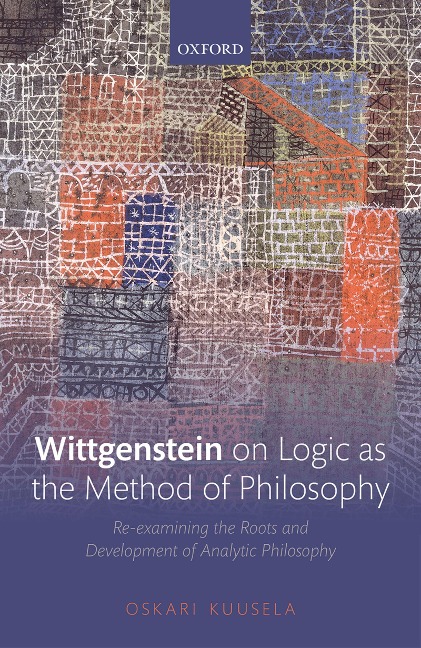
In Wittgenstein on Logic as the Method of Philosophy, Oskari Kuusela examines Wittgenstein's early and late philosophies of logic, situating their philosophical significance in early and middle analytic philosophy with particular reference to Frege, Russell, Carnap, and Strawson. He argues that not only the early but also the later Wittgenstein sought to further develop the logical-philosophical approaches of his contemporaries. Throughout his career Wittgenstein's aim was to resolve problems with and address the limitations of Frege's and Russell's accounts of logic and their logical methodologies so as to achieve the philosophical progress that originally motivated the logical-philosophical approach. By re-examining the roots and development of analytic philosophy, Kuusela seeks to open up covered up paths for the further development of analytic philosophy. Offering a novel interpretation of the philosopher, he explains how Wittgenstein extends logical methodology beyond calculus-based logical methods and how his novel account of the status of logic enables one to do justice to the complexity and richness of language use and thought while retaining rigour and ideals of logic such as simplicity and exactness. In addition, this volume outlines the new kind of non-empiricist naturalism developed in Wittgenstein's later work and explaining how his account of logic can be used to dissolve the long-standing methodological dispute between the ideal and ordinary language schools of analytic philosophy. It is of interest to scholars, researchers, and advance students of philosophy interested in engaging with a number of scholarly debates.
Oskari Kuusela is a Senior Lecturer in Philosophy at the University of East Anglia. The main foci of his work are philosophical methodology, the philosophy of logic and language, history of analytic philosophy, and ethics. He is the author of The Struggle against Dogmatism (Harvard 2008) and Key Terms in Ethics (Continuum 2010), co-editor of Wittgenstein and His Interpreters (Blackwell-Wiley 2007) and The Oxford Handbook of Wittgenstein (Oxford 2011), and has two forthcoming books: Wittgenstein and Phenomenology (Routledge) and Ethics in the Wake of Wittgenstein (Routledge).
- Introduction - 1: Frege's and Russell's new logic: the promise of philosophical progress - 2: The Tractatus' philosophy of logic and the logocentric predicament - 3: The Tractatus' philosophy of logic and Carnap - 4: Ideality and reality: beyond apriorism, empiricism and conventionalism - 5: The method of language-games as a method of logic - 6: Non-empiricist naturalism: the uses of natural history in logic - 7: Resolving the dispute between ideal and ordinary language approaches - Epilogue
Dieses eBook wird im PDF-Format geliefert und ist mit einem Adobe Kopierschutz (DRM) versehen. Sie können dieses eBook mit allen Geräten lesen, die das PDF-Format und den Adobe Kopierschutz (DRM) unterstützen.
Zum Beispiel mit den folgenden Geräten:
• tolino Reader
Laden Sie das eBook direkt über den Reader-Shop auf dem tolino herunter oder übertragen Sie das eBook auf Ihren tolino mit einer kostenlosen Software wie beispielsweise Adobe Digital Editions.
• Sony Reader & andere eBook Reader
Laden Sie das eBook direkt über den Reader-Shop herunter oder übertragen Sie das eBook mit der kostenlosen Software Sony READER FOR PC/Mac oder Adobe Digital Editions auf ein Standard-Lesegeräte mit epub- und Adobe DRM-Unterstützung.
• Tablets & Smartphones
Möchten Sie dieses eBook auf Ihrem Smartphone oder Tablet lesen, finden Sie hier unsere kostenlose Lese-App für iPhone/iPad und Android Smartphone/Tablets.
• PC & Mac
Lesen Sie das eBook direkt nach dem Herunterladen mit einer kostenlosen Lesesoftware, beispielsweise Adobe Digital Editions, Sony READER FOR PC/Mac oder direkt über Ihre eBook-Bibliothek in Ihrem Konto unter „Meine eBooks“ - „online lesen“.
Schalten Sie das eBook mit Ihrer persönlichen Adobe ID auf bis zu sechs Geräten gleichzeitig frei.
Bitte beachten Sie, dass die Kindle-Geräte das Format nicht unterstützen und dieses eBook somit nicht auf Kindle-Geräten lesbar ist.