Und dann auf "Zum Home-Bildschirm [+]".

Stöbern
genialokal zum Startbildschirm hinzufügen
Installieren Sie die genialokal App auf Ihrem Startbildschirm für einen schnellen Zugriff und eine komfortable Nutzung.
Installieren Sie die genialokal App auf Ihrem Startbildschirm für einen schnellen Zugriff und eine komfortable Nutzung.
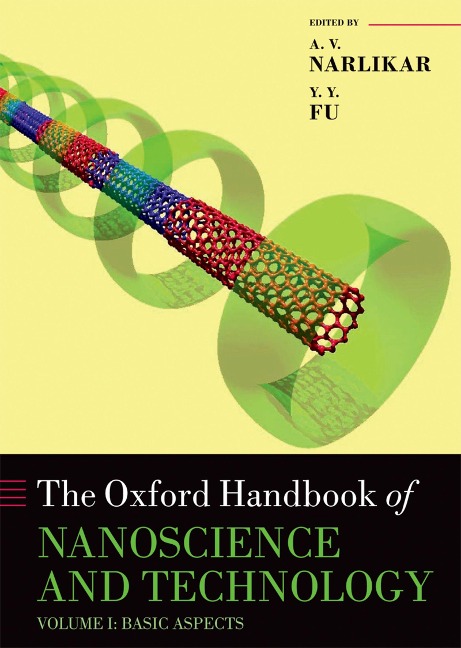
This is an agenda-setting and high-profile book that presents an authoritative and cutting-edge analysis of nanoscience and technology. The Oxford Handbook of Nanoscience and Technology provides a comprehensive and accessible overview of the major achievements in different aspects of this field. The Handbook comprises 3 volumes, structured thematically, with 25 chapters each. Volume I presents fundamental issues of basic physics, chemistry, biochemistry, tribology etc. of nanomaterials. Volume II focuses on the progress made with host of nanomaterials including DNA and protein based nanostructures. Volume III highlights engineering and related developments, with a focus on frontal application areas. All chapters are written by noted international experts in the field. The book should be useful for final year undergraduates specializing in the field. It should prove indispensable to graduate students, and serious researchers from academic and industrial sectors working in the field of Nanoscience and Technology from different disciplines including Physics, Chemistry, Biochemistry, Biotechnology, Medicine, Materials Science, Metallurgy, Ceramics, Information Technology as well as Electrical, Electronic and Computational Engineering.
Dr A.V. Narlikar took his Ph.D. in superconductivity at Cambridge University. He has worked in the field of superconductivity and nanostructures for more than 45 years. He is a Fellow of the Indian Academy of Sciences, National Academy of Sciences (India) and Indian National Science Academy. He has held many visiting appointments at various international universities and previously for many years he served as the Director Grade Scientist at the National Physical Laboratory, New Delhi, India.
Dr. Yunyi Fu is currently a Professor of Department of Microelectronics, Peking University. He received his Ph.D. in Materials Science and Engineering from Shanghai Jiao Tong University (SJTU) in 1998, and then worked as a postdoctoral research fellow at University of Science and Technology Beijing, and Peking University. He has been JSPS Research Fellow at Tohoku University in Japan and a visiting scholar at the Hong Kong University of Science & Technology.
- 1: Supriyo Datta: Nanoelectronic Devices: A Unified View - 2: M.-V. Fernández-Serra and X. Blase: Electronic and Transport Properties of Doped Silicon Nanowires - 3: Roksana Golizadeh-Mojarad and Supriyo Datta: NEGF-Based Models for Dephasing in Quantum Transport - 4: George Kirczenow: Molecular Nanowires and their Properties as Electrical Conductors - 5: Jan M van Ruitenbeek: Quasi-Ballistic Electron Transport in Atomic Wires - 6: Takahiro Yamamoto, Kazuyuki Watanabe, and Satoshi Watanabe: Thermal Transport of Small Systems - 7: Maria Stamenova and Stefano Sanvito: Atomistic Spin Dynamics - 8: M.O. Blunt, A. Stannard, E. Pauliac-Vaujour, C.P. Martin, Ioan Vancea, Milovan Suvakov, Uwe Thiele, Bosiljka Tadic, and P. Moriarty: Patterns and Pathways in Nanoparticle Self-Organisation - 9: Arie van Houselt and Harold J.W. Zandvliet: Self-Organizing Atom Chains - 10: Nian Lin and Sebastian Stepanow: Design Low Dimension Nanostructures at Surfaces by Supramolecular Chemistry - 11: E. Bertel and A. Menzel: Nanostructured Surfaces: Dimensionally Constrained Electrons and Correlation - 12: Adolf Winkler: Reaction Studies on Nanostructured Surfaces - 13: S.K.Biswas: Nanotribology - 14: S.Y. Zhou and A. Lanzara: The Electronic Structure of Epitaxial Graphene - A View from Angle-Resolved Photoemission Spectroscopy - 15: Jinlong Yang and Qunxiang Li: Theoretical Simulations of Scanning Tunneling Microscope Images and Spectra of Nanostructures - 16: R. Graupner and F. Hauke: Functionalization of Single-Walled Carbon Nanotubes: Chemistry and Characterization - 17: Mauro Boero and Masaru Tateno: Quantum Theoretical Aproaches to Proteins and Nucleic Acids - 18: J. D. Burton and E. Y. Tsymbal: Magnetoresistive Phenomena in Nanoscale Magnetic Contacts - 19: A. Kanda, Y. Ootuka, K. Kadowaki, and F.M. Peeters: Novel Superconducting States in Nanoscale Superconductors - 20: E. Ozbay, G. Ozkan, and K. Aydin: Left Handed Metamaterials - A Review - 21: Sergei Sergeenkov: 2D Arrays of Josephson Nanocontacts and Nanogranular Superconductors - 22: Dvira Segal, Petr Král, and Moshe Shapiro: Theory, Experiment and Applications of Tubular Image States - 23: K. S. Thygesen and A. Rubio: Correlated Electron Transport in Molecular Junctions - 24: Branislav K. Nikolic, Liviu P. Zárbo, and Satofumi Souma: Spin Currents in Semiconductor Nanostructures: A Nonequilibrium Green Function Approach - 25: Sven Stafstrom and Mikael Unge: Disorder Induced Electron Localization in Molecular Based Materials
Dieses eBook wird im PDF-Format geliefert und ist mit einem Adobe Kopierschutz (DRM) versehen. Sie können dieses eBook mit allen Geräten lesen, die das PDF-Format und den Adobe Kopierschutz (DRM) unterstützen.
Zum Beispiel mit den folgenden Geräten:
• tolino Reader
Laden Sie das eBook direkt über den Reader-Shop auf dem tolino herunter oder übertragen Sie das eBook auf Ihren tolino mit einer kostenlosen Software wie beispielsweise Adobe Digital Editions.
• Sony Reader & andere eBook Reader
Laden Sie das eBook direkt über den Reader-Shop herunter oder übertragen Sie das eBook mit der kostenlosen Software Sony READER FOR PC/Mac oder Adobe Digital Editions auf ein Standard-Lesegeräte mit epub- und Adobe DRM-Unterstützung.
• Tablets & Smartphones
Möchten Sie dieses eBook auf Ihrem Smartphone oder Tablet lesen, finden Sie hier unsere kostenlose Lese-App für iPhone/iPad und Android Smartphone/Tablets.
• PC & Mac
Lesen Sie das eBook direkt nach dem Herunterladen mit einer kostenlosen Lesesoftware, beispielsweise Adobe Digital Editions, Sony READER FOR PC/Mac oder direkt über Ihre eBook-Bibliothek in Ihrem Konto unter „Meine eBooks“ - „online lesen“.
Schalten Sie das eBook mit Ihrer persönlichen Adobe ID auf bis zu sechs Geräten gleichzeitig frei.
Bitte beachten Sie, dass die Kindle-Geräte das Format nicht unterstützen und dieses eBook somit nicht auf Kindle-Geräten lesbar ist.