Und dann auf "Zum Home-Bildschirm [+]".

Stöbern
genialokal zum Startbildschirm hinzufügen
Installieren Sie die genialokal App auf Ihrem Startbildschirm für einen schnellen Zugriff und eine komfortable Nutzung.
Installieren Sie die genialokal App auf Ihrem Startbildschirm für einen schnellen Zugriff und eine komfortable Nutzung.
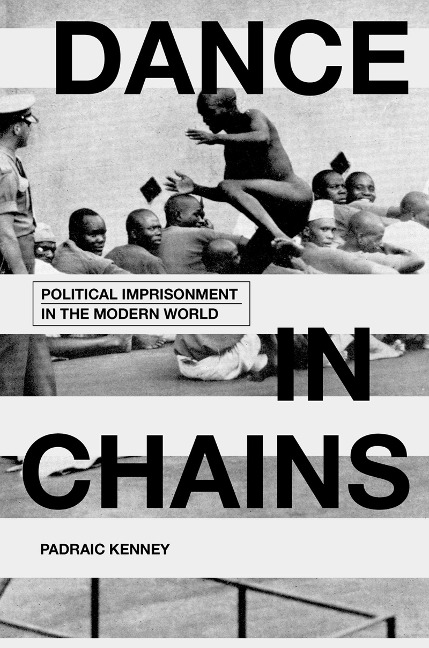
States around the world imprison people for their beliefs or politically-motivated actions. Oppositional movements of all stripes celebrate their comrades behind bars. Yet they are more than symbols of repression and human rights. Dance in Chains examines the experiences of political prisoners themselves in order to understand who they are, what they do, and why it matters. This is the first book to trace the history of modern political imprisonment from its origins in the mid-nineteenth century. The letters, diaries, and memoirs of political prisoners, as well as the records of regime policies, relate the contest in the prison cell to political conflicts between regime and opposition. Padraic Kenney draws on examples from regimes ranging from communist and fascist to colonial and democratic, including Ireland, the United Kingdom, Poland, and South Africa. They include the Fenian Brotherhood, imprisoned in England and Ireland in the 1860s, and their successors during the Irish War of Independence and the Northern Ireland Troubles; Afrikaaners suspected of treason during the Boer War; socialists fighting for Polish freedom in the Russian Empire, and then Communists denouncing "bourgeois" rule in newly-independent Poland; the opponents of apartheid South Africa and stalinist Poland; and those imprisoned by the United States in Guantanamo Bay detention camp today. Some prisons are well-known; in others, inmates suffered in obscurity. Through self-organization, education, and actions ranging from solitary non-cooperation to mass hunger strikes, these prisoners transform their incarceration and counter states' efforts to control them. While considering the international movements that have sought to publicize the plight of political prisoners, Dance in Chains examines the actions of the prisoners themselves to find universal answers to questions about the meaning and purpose of their imprisonment.
Padraic Kenney is Professor of History and International Studies at Indiana University. He is the author of The Burdens of Freedom: Eastern Europe since 1989, A Carnival of Revolution: Central Europe, 1989, and Rebuilding Poland: Workers and Communists, 1945-1950. He has served as president of the Association for Slavic, East European, and Eurasian Studies.
Acknowledgments Introduction: Where a Free Man Can Abide With Honor Chapter 1: "But I have no wish to be Discharged": When Imprisonment Became Political Chapter 2: Night and Fog: The Regime and its Prisoners Chapter 3: "Everyone learned prison": Becoming a Political Prisoner Chapter 4: "You have the consolation of being very much in the fight": Representing the Cause in Prison Chapter 5: "How to Free Your Prisoner": The Personal and the Political of International Prisoner Support Chapter 6: "A Close-Knit Group, Chosen With Care": Community and Order in the Political Camp and Prison Chapter 7: "I was Confusing The Prison": The Contest in the Cell Chapter 8: "Why wouldn't I laugh, when I win either way?": The Hunger Strike Chapter 9: Captive Academy: How Prison Forges Politics Conclusion: A Recaptured Narrative Epilogue: Today's Political Prison Notes Index
Dieses eBook wird im PDF-Format geliefert und ist mit einem Adobe Kopierschutz (DRM) versehen. Sie können dieses eBook mit allen Geräten lesen, die das PDF-Format und den Adobe Kopierschutz (DRM) unterstützen.
Zum Beispiel mit den folgenden Geräten:
• tolino Reader
Laden Sie das eBook direkt über den Reader-Shop auf dem tolino herunter oder übertragen Sie das eBook auf Ihren tolino mit einer kostenlosen Software wie beispielsweise Adobe Digital Editions.
• Sony Reader & andere eBook Reader
Laden Sie das eBook direkt über den Reader-Shop herunter oder übertragen Sie das eBook mit der kostenlosen Software Sony READER FOR PC/Mac oder Adobe Digital Editions auf ein Standard-Lesegeräte mit epub- und Adobe DRM-Unterstützung.
• Tablets & Smartphones
Möchten Sie dieses eBook auf Ihrem Smartphone oder Tablet lesen, finden Sie hier unsere kostenlose Lese-App für iPhone/iPad und Android Smartphone/Tablets.
• PC & Mac
Lesen Sie das eBook direkt nach dem Herunterladen mit einer kostenlosen Lesesoftware, beispielsweise Adobe Digital Editions, Sony READER FOR PC/Mac oder direkt über Ihre eBook-Bibliothek in Ihrem Konto unter „Meine eBooks“ - „online lesen“.
Schalten Sie das eBook mit Ihrer persönlichen Adobe ID auf bis zu sechs Geräten gleichzeitig frei.
Bitte beachten Sie, dass die Kindle-Geräte das Format nicht unterstützen und dieses eBook somit nicht auf Kindle-Geräten lesbar ist.