Und dann auf "Zum Home-Bildschirm [+]".

Stöbern
genialokal zum Startbildschirm hinzufügen
Installieren Sie die genialokal App auf Ihrem Startbildschirm für einen schnellen Zugriff und eine komfortable Nutzung.
Installieren Sie die genialokal App auf Ihrem Startbildschirm für einen schnellen Zugriff und eine komfortable Nutzung.
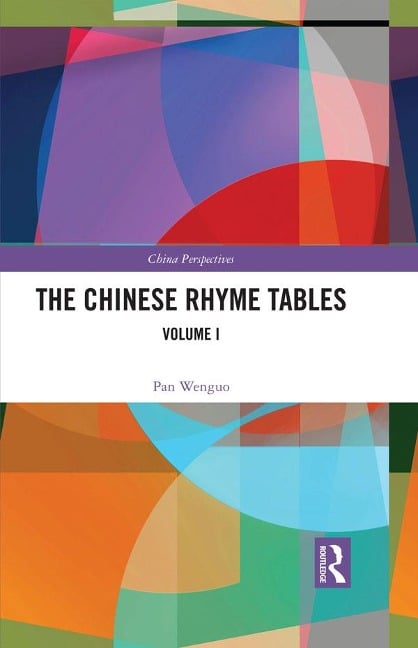
As the first volume of a two- volume set that studies Chinese rhyme tables, this book focuses on their emergence, development, structure, and patterns. Rhyme tables are a tabulated tool constituted by phonological properties, which help indicate the pronunciation of sinograms or Chinese characters, marking a precise and systematic account of the Chinese phonological system. This volume first discusses the emergence of the model and factors that determined its formation and evolution, including the Chinese tradition of the rhyme dictionary and the introduction of Buddhist scripts. The second part analyzes the structure and arrangement patterns of rhyme tables in detail, giving insights into the nature of "division" (deng): the classification and differentiation of speech sounds, of vital significance in the reconstruction of middle Chinese. The author argues that deng has nothing to do with vowel aperture or other phonetic features but is a natural result of rhyme table arrangement. He also reexamines the principles for irregular cases (menfa rules) and categorizes the 20 rules into three types. The book will appeal to scholars and students who are studying linguistics, Chinese phonology, and Sinology.
Pan Wenguo is a tenured professor and doctoral supervisor at East China Normal University and the honorary president of the Chinese Association for Comparative Studies between English and Chinese. He is a renowned linguist and has a significant impact on fields of Chinese linguistics, including sinogram ontology, word formation, rhyme divisions, and Chinese-English comparative studies, translation theory and practice, and linguistic philosophy.
List of Figures List of Tables List of Abbreviations Foreward to the Chinese Edition Introduction Part I: When Was the Rhyme Table Born? 1. Traditional Views on the Issue 2. The Debate on This Issue in Recent Years and Its Progress 3. Views that the Yùnjìng Originated from the Sòng dynasty According to "Yùnjìng yánjiu" 4. Determining the Era in Which Rhyme Tables were Produced 5. Analysis of the Development of Rhyme Dictionaries in the Suí and Táng Dynasties 6. Problems in the Qièyùn and the Understanding of It in the Táng dynasty 7. The Historical Process of the Generation of Rhyme Tables 8. The Relationship Between Ryme Tbles, Buddhism and Snogram Initials 9. Rhyme tables and the Shouwen yùnxué cánjuàn Part II: The methods with which rhyme tables were arranged 10. How was the question proposed? 11. The Concept of Division and the Birth of Rhyme Tables 12. The Nature of the Phonology of the Qièyùn 13. The Conditions Satisfied when Rhyme Tables were Arranged 14. The Method of Arranging the Rhyme Tables 15. A New View of Ménfa Rules Bibliography Index
Dieses eBook wird im PDF-Format geliefert und ist mit einem Adobe Kopierschutz (DRM) versehen. Sie können dieses eBook mit allen Geräten lesen, die das PDF-Format und den Adobe Kopierschutz (DRM) unterstützen.
Zum Beispiel mit den folgenden Geräten:
• tolino Reader
Laden Sie das eBook direkt über den Reader-Shop auf dem tolino herunter oder übertragen Sie das eBook auf Ihren tolino mit einer kostenlosen Software wie beispielsweise Adobe Digital Editions.
• Sony Reader & andere eBook Reader
Laden Sie das eBook direkt über den Reader-Shop herunter oder übertragen Sie das eBook mit der kostenlosen Software Sony READER FOR PC/Mac oder Adobe Digital Editions auf ein Standard-Lesegeräte mit epub- und Adobe DRM-Unterstützung.
• Tablets & Smartphones
Möchten Sie dieses eBook auf Ihrem Smartphone oder Tablet lesen, finden Sie hier unsere kostenlose Lese-App für iPhone/iPad und Android Smartphone/Tablets.
• PC & Mac
Lesen Sie das eBook direkt nach dem Herunterladen mit einer kostenlosen Lesesoftware, beispielsweise Adobe Digital Editions, Sony READER FOR PC/Mac oder direkt über Ihre eBook-Bibliothek in Ihrem Konto unter „Meine eBooks“ - „online lesen“.
Schalten Sie das eBook mit Ihrer persönlichen Adobe ID auf bis zu sechs Geräten gleichzeitig frei.
Bitte beachten Sie, dass die Kindle-Geräte das Format nicht unterstützen und dieses eBook somit nicht auf Kindle-Geräten lesbar ist.