Und dann auf "Zum Home-Bildschirm [+]".

Stöbern
genialokal zum Startbildschirm hinzufügen
Installieren Sie die genialokal App auf Ihrem Startbildschirm für einen schnellen Zugriff und eine komfortable Nutzung.
Installieren Sie die genialokal App auf Ihrem Startbildschirm für einen schnellen Zugriff und eine komfortable Nutzung.
Ihr gewünschter Artikel ist in 0 Buchhandlungen vorrätig - wählen Sie hier eine Buchhandlung in Ihrer Nähe aus:

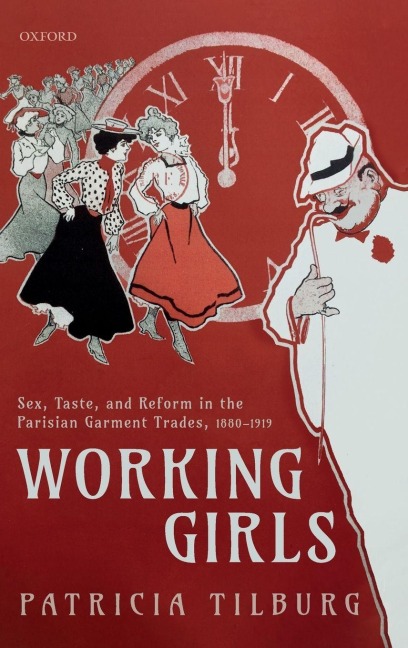
As the twentieth century dawned and France entered an era of extraordinary labor activism and industrial competition, an insistently romantic vision of the Parisian garment worker was deployed by politicians, reformers, and artists to manage anxieties about economic and social change. Nostalgia about a certain kind of France was written onto the bodies of the capital's couture workers throughout French pop culture from the 1880s to the 1930s. And the midinettes-as these women were called- were written onto the geography of Paris itself, by way of festivals, monuments, historic preservation, and guide books. The idealized working Parisienne stood in for, at once, the superiority of French taste and craft, and the political (and sexual) subordination of French women and labour. But she was also the public face of more than 80,000 real working women whose demands for better labour conditions were inflected, distorted, and, in some cases, amplified by this ubiquitous Romantic type in the decades straddling World War I. Working Girls bridges cultural histories of the Parisian imaginary and histories of French labour, and puts them in raucous dialogue with one another: a letter by a nineteen-year-old seamstress, a speech by a government minister; a frothy Parisian guide by a bon vivant, the minutes of a union meeting; a bawdy cafe-concert song, a policy brief on garment working conditions.
Patricia Tilburg is James B. Duke Professor of History and Gender & Sexuality Studies at Davidson College. She is the author of Colette's Republic: Work, Gender, and Popular Culture in France, 1870-1914 (2009).
Introduction
1: From Grisette to Midinette: The Garment Worker in French Popular Culture
2: 'Without Rival': Workingwomen, Regulation, and Taste in the belle époque Garment Industry
3: 'Notre Petite Amie': Charpentier's Oeuvre de Mimi Pinson, 1900-1914
4: 'An Appetite to Be Pretty': Garment workers, lunch reform, and the Parisian picturesque in the belle époque
5: 'They are nothing but birdbrains!': The Midinette on strike, 1901-1919
6: Mimi Pinson Goes to War: Sex, Taste, and the Patrie, 1914-1918
Conclusion