Und dann auf "Zum Home-Bildschirm [+]".

Stöbern
genialokal zum Startbildschirm hinzufügen
Installieren Sie die genialokal App auf Ihrem Startbildschirm für einen schnellen Zugriff und eine komfortable Nutzung.
Installieren Sie die genialokal App auf Ihrem Startbildschirm für einen schnellen Zugriff und eine komfortable Nutzung.
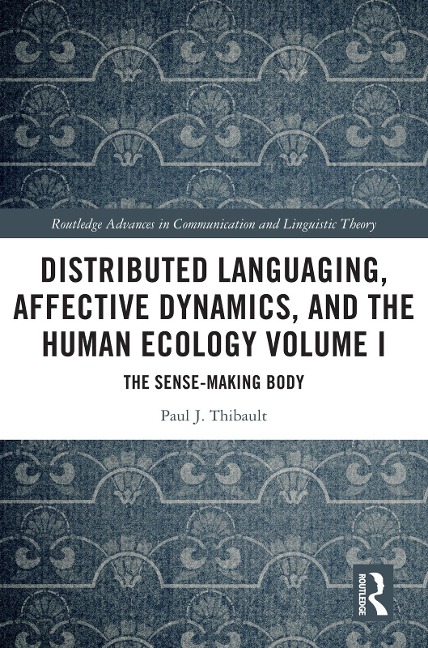
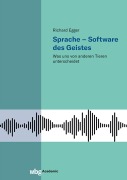
Language plays a central role in human life. However, the term 'language' as defined in the language sciences of the 20th century and the traditions these have drawn on, have arguably, limited our thinking about what language is and does. The two inter-linked volumes of Thibault's study articulate crucially important aspects of an emerging new perspective shift on language - the Distributed Language view - that is now receiving more and more attention internationally. Rejecting the classical view that the fundamental architecture of language can be localized as a number of inter-related levels of formal linguistic organization that function as the coded inputs and outputs to each other, the distributed language view argues that languaging behaviour is a bio-cultural organisation of process that is embodied, multimodal, and integrated across multiple space-time scales. Thibault argues that we need to think of human languaging as the distinctively human mode of our becoming and being selves in the extended human ecology and the kinds of experiencing that this makes possible. Paradoxically, this also means thinking about language in non-linguistic ways that break the grip of the conventional meta-languages for thinking about human languaging. Thibault's book grounds languaging in process theory: languaging and the forms of experience it actualizes is always an event, not a thing that we 'use'. In taking a distinctively interdisciplinary approach, the book relates dialogical theories of human sense-making to the distributed view of human cognition, to recent thinking about distributed language, to ecological psychology, and to languaging as inter-individual affective dynamics grounded in the subjective lives of selves. In taking this approach, the book considers the coordination of selves in social encounters, the emergent forms of self-reflexivity that characterise these encounters, and the implications for how we think of and live our human sociality, not as something that is mediated by over-arching codes and systems, but as emerging from the endogenous subjectivities of selves when they seek to coordinate with other selves and with the situations, artefacts, social institutions, and technologies that populate the extended human ecology. The two volumes aim to bring our understanding of human languaging closer to human embodiment, experience, and feeling while also showing how languaging enables humans to transcend local circumstances and thus to dialogue with cultural tradition. Volume 1 focuses on the shorter timescales of bodily dynamics in languaging activity. Volume II integrates the shorter timescales of body dynamics to the longer cultural-historical timescales of the linguistic and cultural norms and patterns to which bodily dynamics are integrated.
Paul J. Thibault, who grew up in Newcastle, Australia and completed his PhD under Michael Halliday's supervision at the University of Sydney in 1984, is Professor in linguistics and communication studies at the University of Agder, Kristiansand, Norway. He was Hans Christian Andersen Academy Visiting Professor at the University of Southern Denmark, Odense (2015-2018). He has held academic posts in Australia, China, Italy, and Hong Kong. His research interests and publications are in the areas of applied and general linguistics, development, distributed language and cognition, graphics and interactivity, human-animal interaction, human interactivity, learning, multimodality, narrative, social theory, learning theory and teaching and learning in higher education, philosophy of language, philosophy of mind, systemic-functional linguistics. He is also currently working on two new books entitled The Linguistic Imagination and Language, Body, World: A critical rereading of Hjelmslev. He is currently on the editorial boards of six international journals. With Mark King at UNSW Sydney, Australia, he is developing theoretical frameworks and methodological tools for the study of human learning in tertiary settings using the perspectives of distributed cognition, eye tracking, interactivity, and Multimodal Event Analysis. With Anthony Baldry, he is developing the idea of multimodal ecological literacy. He has a deep interest in ecological questions since he was seven years old. He believes that the predominantly mechanistic theories of human cognition and semiosis need to be replaced by a new account of what it means to be a living, feeling human self in the human ecology.
Introduction 1. Value 2. Flow 3. Melody 4. Sense-making Conclusion
Dieses eBook wird im PDF-Format geliefert und ist mit einem Adobe Kopierschutz (DRM) versehen. Sie können dieses eBook mit allen Geräten lesen, die das PDF-Format und den Adobe Kopierschutz (DRM) unterstützen.
Zum Beispiel mit den folgenden Geräten:
• tolino Reader
Laden Sie das eBook direkt über den Reader-Shop auf dem tolino herunter oder übertragen Sie das eBook auf Ihren tolino mit einer kostenlosen Software wie beispielsweise Adobe Digital Editions.
• Sony Reader & andere eBook Reader
Laden Sie das eBook direkt über den Reader-Shop herunter oder übertragen Sie das eBook mit der kostenlosen Software Sony READER FOR PC/Mac oder Adobe Digital Editions auf ein Standard-Lesegeräte mit epub- und Adobe DRM-Unterstützung.
• Tablets & Smartphones
Möchten Sie dieses eBook auf Ihrem Smartphone oder Tablet lesen, finden Sie hier unsere kostenlose Lese-App für iPhone/iPad und Android Smartphone/Tablets.
• PC & Mac
Lesen Sie das eBook direkt nach dem Herunterladen mit einer kostenlosen Lesesoftware, beispielsweise Adobe Digital Editions, Sony READER FOR PC/Mac oder direkt über Ihre eBook-Bibliothek in Ihrem Konto unter „Meine eBooks“ - „online lesen“.
Schalten Sie das eBook mit Ihrer persönlichen Adobe ID auf bis zu sechs Geräten gleichzeitig frei.
Bitte beachten Sie, dass die Kindle-Geräte das Format nicht unterstützen und dieses eBook somit nicht auf Kindle-Geräten lesbar ist.