Und dann auf "Zum Home-Bildschirm [+]".

Stöbern
genialokal zum Startbildschirm hinzufügen
Installieren Sie die genialokal App auf Ihrem Startbildschirm für einen schnellen Zugriff und eine komfortable Nutzung.
Installieren Sie die genialokal App auf Ihrem Startbildschirm für einen schnellen Zugriff und eine komfortable Nutzung.
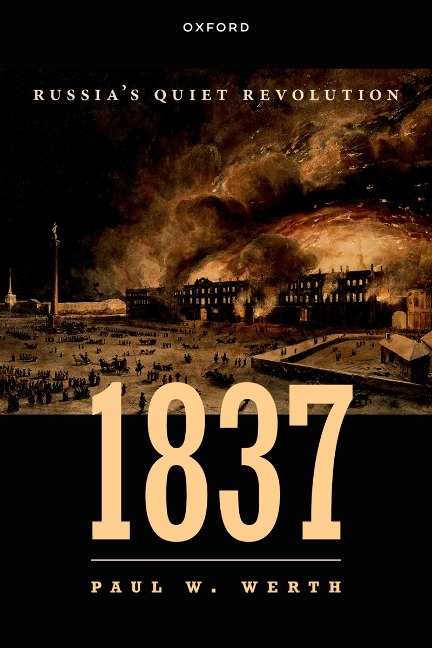
Historians often think of Russia before the 1860s in terms of conservative stasis, when the "gendarme of Europe" secured order beyond the country's borders and entrenched the autocratic system at home. This book offers a profoundly different vision of Russia under Nicholas I. Drawing on an extensive array of sources, it reveals that many of modern Russia's most distinctive and outstanding features can be traced back to an inconspicuous but exceptional year. Russia became what it did, in no small measure, because of 1837.
The catalogue of the year's noteworthy occurrences extends from the realms of culture, religion, and ideas to those of empire, politics, and industry. Exploring these diverse issues and connecting seemingly divergent historical actors, Paul W. Werth reveals that the 1830s in Russia were a period of striking dynamism and consequence, and that 1837 was pivotal for the country's entry into the modern age. From the romantic death of Russia's greatest poet Alexander Pushkin in January to a colossal fire at the Winter Palace in December, Russia experienced much that was astonishing in 1837: the railway and provincial press appeared, Russian opera made its debut, Orthodoxy pushed westward, the first Romanov visited Siberia-and much else besides. The cumulative effect was profound. The country's integration accelerated, and a Russian nation began to emerge, embodied in new institutions and practices, within the larger empire. The result was a quiet revolution, after which Russia would never be the same.
Paul Werth is Professor in the Department of History at the University of Nevada, Las Vegas. He has held research fellowships in the US, Germany, and Japan, and in 2010-15 he was an editor of the journal Kritika: Explorations in Russian and Eurasian History. His previous research focused on the problems of religion and empire in Russian History, and in 2014 he published The Tsar's Foreign Faiths: Toleration and the Fate of Religious Freedom in Imperial Russia with OUP. Earlier research convinced him of the importance for Russian history of the 1830s-and 1837, in particular.
- Introduction - 1: He Fell, Slandered by Rumor - 2: A Life for the Tsar, an Opera for the Nation - 3: Philosophical Madness - 4: In the Flesh - 5: Provinces Animated - 6: Guardians of the Benighted - 7: Think More About Camels - 8: Orthodoxy Marches West - 9: A Unicorn, Violent but Submissive - 10: Northern Phoenix - Conclusion
Dieses eBook wird im PDF-Format geliefert und ist mit einem Adobe Kopierschutz (DRM) versehen. Sie können dieses eBook mit allen Geräten lesen, die das PDF-Format und den Adobe Kopierschutz (DRM) unterstützen.
Zum Beispiel mit den folgenden Geräten:
• tolino Reader
Laden Sie das eBook direkt über den Reader-Shop auf dem tolino herunter oder übertragen Sie das eBook auf Ihren tolino mit einer kostenlosen Software wie beispielsweise Adobe Digital Editions.
• Sony Reader & andere eBook Reader
Laden Sie das eBook direkt über den Reader-Shop herunter oder übertragen Sie das eBook mit der kostenlosen Software Sony READER FOR PC/Mac oder Adobe Digital Editions auf ein Standard-Lesegeräte mit epub- und Adobe DRM-Unterstützung.
• Tablets & Smartphones
Möchten Sie dieses eBook auf Ihrem Smartphone oder Tablet lesen, finden Sie hier unsere kostenlose Lese-App für iPhone/iPad und Android Smartphone/Tablets.
• PC & Mac
Lesen Sie das eBook direkt nach dem Herunterladen mit einer kostenlosen Lesesoftware, beispielsweise Adobe Digital Editions, Sony READER FOR PC/Mac oder direkt über Ihre eBook-Bibliothek in Ihrem Konto unter „Meine eBooks“ - „online lesen“.
Schalten Sie das eBook mit Ihrer persönlichen Adobe ID auf bis zu sechs Geräten gleichzeitig frei.
Bitte beachten Sie, dass die Kindle-Geräte das Format nicht unterstützen und dieses eBook somit nicht auf Kindle-Geräten lesbar ist.