Und dann auf "Zum Home-Bildschirm [+]".

Stöbern
genialokal zum Startbildschirm hinzufügen
Installieren Sie die genialokal App auf Ihrem Startbildschirm für einen schnellen Zugriff und eine komfortable Nutzung.
Installieren Sie die genialokal App auf Ihrem Startbildschirm für einen schnellen Zugriff und eine komfortable Nutzung.
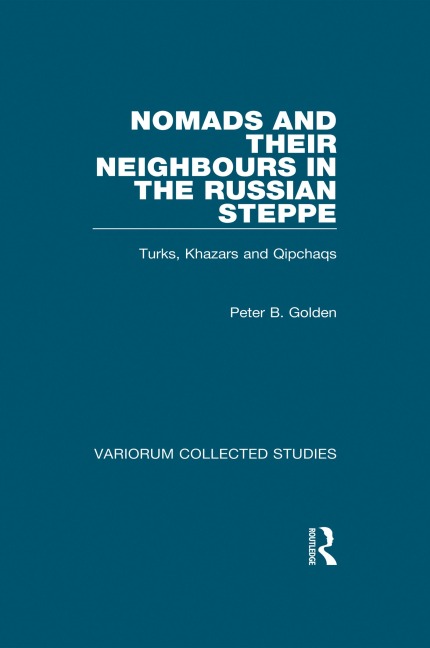
The western steppelands of Central Eurasia, stretching from the Danube, through the modern Ukraine and southern Russia, to the Caspian, have historically been the meeting ground of Inner Asian pastoral nomads and the agrarian societies of Eastern Europe and the Caucasus. This volume deals, firstly, with the interaction of the nomads with their sedentary neighbours - the Kievan Rus' state and the medieval polities of Transcaucasia, Georgia in particular - in the period from the 6th century to the advent of the Mongols. Second, it looks at questions of nomadic ethnogenesis (Oghuz, Hungarian, Qipchaq), at the evolution of nomadic political traditions and the heritage of the Turk empire, and at aspects of indigenous nomadic religious traditions together with the impact of foreign religions on the nomads - notably the conversion of the Khazars to Judaism. A number of articles focus on the Qipchaqs, a powerful confederation of complex Inner Asian origins that played a crucial role in the history of Christian Eastern Europe and Transcaucasia and the Muslim world between the 11th and 13th centuries.
Contents: Foreword; PEOPLES AND CULTURES: Imperial ideology and the sources of political unity amongst the pre-Cinggisid nomads of Western Eurasia; Turkic calques in medieval Eastern Slavic; Khazaria and Judaism; NOMADS AND THEIR NEIGHBOURS: The Turkic peoples and Caucasia; The migrations of the Oguz; The question of the Rus' Qaganate; Aspects of the nomadic factor in the economic development of Kievan Rus'; The Cernii Klobouci; The Qipchaqs: The Qipcaqs of medieval Eurasia: an example of stateless adaptation in the Steppes; The Polovci Dikii; Cumanica I: the Qipcaqs in Georgia; Cumanica II : the Ã-lberli (Ã-lperli): the fortunes and misfortunes of an inner Asian nomadic clan; Cumanica III: Urusoba; Wolves, dogs and Qipcaq religion; Index.
Dieses eBook wird im PDF-Format geliefert und ist mit einem Adobe Kopierschutz (DRM) versehen. Sie können dieses eBook mit allen Geräten lesen, die das PDF-Format und den Adobe Kopierschutz (DRM) unterstützen.
Zum Beispiel mit den folgenden Geräten:
• tolino Reader
Laden Sie das eBook direkt über den Reader-Shop auf dem tolino herunter oder übertragen Sie das eBook auf Ihren tolino mit einer kostenlosen Software wie beispielsweise Adobe Digital Editions.
• Sony Reader & andere eBook Reader
Laden Sie das eBook direkt über den Reader-Shop herunter oder übertragen Sie das eBook mit der kostenlosen Software Sony READER FOR PC/Mac oder Adobe Digital Editions auf ein Standard-Lesegeräte mit epub- und Adobe DRM-Unterstützung.
• Tablets & Smartphones
Möchten Sie dieses eBook auf Ihrem Smartphone oder Tablet lesen, finden Sie hier unsere kostenlose Lese-App für iPhone/iPad und Android Smartphone/Tablets.
• PC & Mac
Lesen Sie das eBook direkt nach dem Herunterladen mit einer kostenlosen Lesesoftware, beispielsweise Adobe Digital Editions, Sony READER FOR PC/Mac oder direkt über Ihre eBook-Bibliothek in Ihrem Konto unter „Meine eBooks“ - „online lesen“.
Schalten Sie das eBook mit Ihrer persönlichen Adobe ID auf bis zu sechs Geräten gleichzeitig frei.
Bitte beachten Sie, dass die Kindle-Geräte das Format nicht unterstützen und dieses eBook somit nicht auf Kindle-Geräten lesbar ist.