Und dann auf "Zum Home-Bildschirm [+]".

Stöbern
genialokal zum Startbildschirm hinzufügen
Installieren Sie die genialokal App auf Ihrem Startbildschirm für einen schnellen Zugriff und eine komfortable Nutzung.
Installieren Sie die genialokal App auf Ihrem Startbildschirm für einen schnellen Zugriff und eine komfortable Nutzung.
Ihr gewünschter Artikel ist in 0 Buchhandlungen vorrätig - wählen Sie hier eine Buchhandlung in Ihrer Nähe aus:

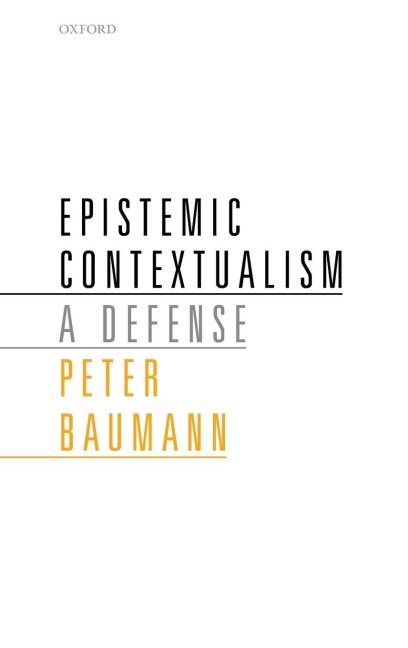
Peter Baumann develops and defends a distinctive version of epistemic contextualism, the view that the truth conditions or the meaning of knowledge attributions of the form "S knows that p" can vary with the context of the attributor. The first part of the book examines arguments for contextualism and develops Baumann's version. The first chapter deals with the argument from cases and ordinary usage; the following two chapters address "theoretical" arguments, from reliability and from luck. The second part of the book discusses the problems contextualism faces, to which it must respond, and provides an extension of contextualism beyond epistemology. Chapter 4 discusses "lottery-scepticism" and argues for a contextualist response. Chapter 5 is dedicated to a homemade problem for contextualism: a threat of inconsistency. Baumann argues for a way out and for a version of contextualism that can underwrite this solution. Chapter 6 proposes a contextualist account of responsibility: The concept of knowledge is not the only one which allows for a contextualist analysis and it is important to explore structural analogies in other areas of philosophy. The third part of the book is focused on some major objections to contextualism and alternative views, namely subject-sensitive invariantism, contrastivism and relativism.
Peter Baumann is a Professor of Philosophy at Swarthmore College. He went to University in Göttingen (Germany) and Paris (Sorbonne; IEP). He received all of his degrees at the University of Göttingen. He has taught at the University of Göttingen, Hamburg University (Germany), Swarthmore College (USA), the University of Aberdeen (UK), and Wooster College (USA). From 1993-1995, he was a visiting fellow at the Philosophy Department at Stanford University.
Introduction
Arguments
1: The Argument From Cases: Standard Contextualism and Standards Contextualism
2: The Argument from Reliability: Reference Classes and Another Aspect of Contexts
3: The Argument from Luck: The Role of Descriptions
Problems and Extensions
4: Scepticism, Lotteries and Contextualist Solutions
5: Cross-Context Attributions and the Knowability Problem: Does Contextualism Lead to a Contradiction?
6: Beyond Knowledge: Action and Responsibility
Objections and Alternatives
7: Objections
8: Alternatives?