Und dann auf "Zum Home-Bildschirm [+]".

Stöbern
genialokal zum Startbildschirm hinzufügen
Installieren Sie die genialokal App auf Ihrem Startbildschirm für einen schnellen Zugriff und eine komfortable Nutzung.
Installieren Sie die genialokal App auf Ihrem Startbildschirm für einen schnellen Zugriff und eine komfortable Nutzung.
Ihr gewünschter Artikel ist in 0 Buchhandlungen vorrätig - wählen Sie hier eine Buchhandlung in Ihrer Nähe aus:

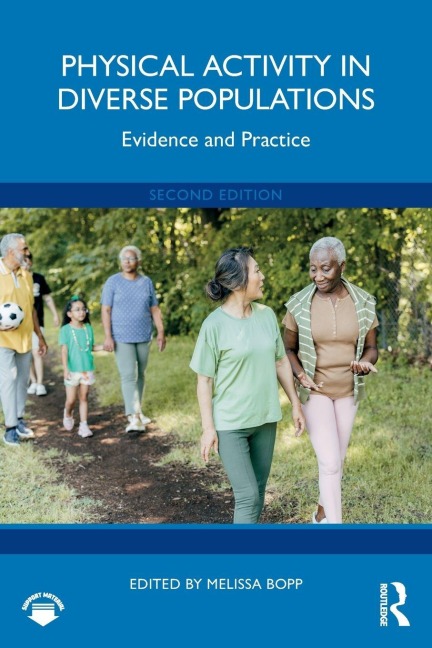
Now in a fully revised and updated new edition, this book examines how social determinants such as race, ethnicity, socioeconomic status, sexual orientation, gender identity and disability can impact on physical activity and its associated health outcomes.
Melissa Bopp is a professor of kinesiology at Pennsylvania State University, USA. Her research expertise includes how community, environment, and policy influence and promote physical activity participation in diverse, underserved, and under-resourced populations. She has published extensively in this area and conducted countless studies to examine physical activity disparities. Dr Bopp has been teaching undergraduate and graduate students about health disparities and diverse populations for more than 20 years.
1. Introduction to Physical Activity and Health Disparities. 2. Theories of Behavior, Social Identity, and Disparity Relevant to Physical Activity. 3. Development of Culturally Appropriate Strategies for Promoting Physical Activity. 4. Physical Activity among African American/Black Populations. 5. Physical Activity among Latinos. 6. Physical Activity among Asian Americans. 7. Physical Activity among Native American Peoples. 8. Physical Activity among Native Hawai'ians and Pacific Islanders. 9. Physical Activity among Low Socioeconomic Status Populations. 10. Physical Activity among Rural Populations. 11. Physical Activity among Sexual Minority Populations. 12. Physical Activity among the Trans and Gender Diverse Population. 13. Physical Activity among Military Veterans. 14. Physical Activity among Physically Disabled Populations. 15. Physical Activity among Diverse Populations Internationally. 16. Future Directions for Addressing Physical Activity in Diverse Populations.