Und dann auf "Zum Home-Bildschirm [+]".

Stöbern
genialokal zum Startbildschirm hinzufügen
Installieren Sie die genialokal App auf Ihrem Startbildschirm für einen schnellen Zugriff und eine komfortable Nutzung.
Installieren Sie die genialokal App auf Ihrem Startbildschirm für einen schnellen Zugriff und eine komfortable Nutzung.
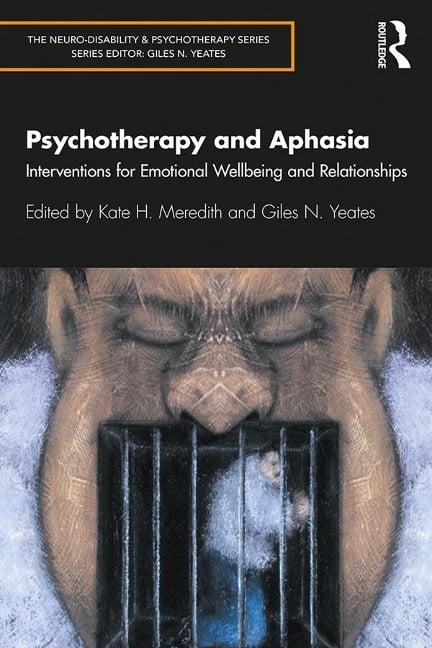
Psychotherapy and Aphasia: Interventions for Emotional Wellbeing and Relationships is an exciting international collaboration among clinical neuropsychologists, speech and language therapists and family therapists that details a range of innovative psychotherapeutic interventions to enable people with communication disorders and their families to access meaningful support. People with aphasia and other acquired communication disorders can face significant challenges accessing emotional support. Many traditional forms of psychotherapy are based on spoken language, rendering it inaccessible for many people with communication disorders. But the book details a range of techniques that move away from reliance on spoken language, including total communication strategies, the use of meaningful objects, experiential process, group experience and mind-body practices. Featuring clinical examples which cover a range of stroke and neurology service contexts, the book includes contributions from a range of therapeutic models; from speech and language therapy and family therapy to clinical neuropsychology, cognitive-behavioural, systemic, narrative and mind-body traditions. It therefore provides clinicians with a wide-range of practical and theoretical tools to explore when supporting survivors who experience psychological distress during rehabilitation. It is the only book aimed at both speech and language therapists and psychotherapists, and will open up new pathways to support.
Kate H. Meredith worked as a speech and language therapist in acquired brain injury and neurology services for 15 years, retraining as a family and systemic psychotherapist to support families with the relational impact of communication disorders. Kate currently works in child and adolescent mental health services and independently in Cardiff. Dr Giles N. Yeates is Editor of the journal and book series Neuro-Disability and Psychotherapy, in addition to the Brain Injury book series (Routledge). As a clinical neuropsychologist in community neuro-rehabilitation, his clinical work and research focus on the innovation of psychological therapies and support of relationships following acquired brain injury. Dr Yeates is currently innovating the use of Tai Ji in neuro-rehabilitation.
Editors' foreword KATE H. MEREDITH, GILES N. YEATES 1 Time to step up: a call for the speech pathology profession to utilise stepped psychological care for people with aphasia post stroke BROOKE RYAN, LINDA WORRALL, JASVINDER SEKHON, CAROLINE BAKER, MARCELLA CARRAGHER, JAYCIE BOHAN, EMMA POWER, MIRANDA ROSE, NINA SIMMONS-MACKIE, LEANNE TOGHER, IAN KNEEBONE 2 The importance of syntax in making meaning and emotional adjustment: a brief psychodynamically oriented intervention in receptive aphasia AONGHUS RYAN 3 A personal construct psychology approach to aphasia CATHY SPARKES 4 Supporting families with aphasia to explore relationships KATE H. MEREDITH 5 A preliminary study of "Laboratorio di Conversazione Narrativa": group psychotherapy supporting communication for people with aphasia STEFANO MONTE, MARISTELLA CRIELESI, MARCELLA DI PIETRO, MARIATERESA MATERA, KATE H. MEREDITH, ROSSELLA MUÒ 6 Structured narrative therapy for children with acquired brain injury and severe communication difficulties ALISON PERKINS 7 Mindfulness interventions for people with aphasia - case evidence from individual and group therapy formats MARISTELLA CRIELESI, LAUREN ROCHE, GIULIA MONOPOLI, GILES N. YEATES, STEFANO MONTE 8 The potential contribution of mind-body interventions within psychological support following aphasia: a conceptual review and case study GILES N. YEATES Index
Dieses eBook wird im PDF-Format geliefert und ist mit einem Adobe Kopierschutz (DRM) versehen. Sie können dieses eBook mit allen Geräten lesen, die das PDF-Format und den Adobe Kopierschutz (DRM) unterstützen.
Zum Beispiel mit den folgenden Geräten:
• tolino Reader
Laden Sie das eBook direkt über den Reader-Shop auf dem tolino herunter oder übertragen Sie das eBook auf Ihren tolino mit einer kostenlosen Software wie beispielsweise Adobe Digital Editions.
• Sony Reader & andere eBook Reader
Laden Sie das eBook direkt über den Reader-Shop herunter oder übertragen Sie das eBook mit der kostenlosen Software Sony READER FOR PC/Mac oder Adobe Digital Editions auf ein Standard-Lesegeräte mit epub- und Adobe DRM-Unterstützung.
• Tablets & Smartphones
Möchten Sie dieses eBook auf Ihrem Smartphone oder Tablet lesen, finden Sie hier unsere kostenlose Lese-App für iPhone/iPad und Android Smartphone/Tablets.
• PC & Mac
Lesen Sie das eBook direkt nach dem Herunterladen mit einer kostenlosen Lesesoftware, beispielsweise Adobe Digital Editions, Sony READER FOR PC/Mac oder direkt über Ihre eBook-Bibliothek in Ihrem Konto unter „Meine eBooks“ - „online lesen“.
Schalten Sie das eBook mit Ihrer persönlichen Adobe ID auf bis zu sechs Geräten gleichzeitig frei.
Bitte beachten Sie, dass die Kindle-Geräte das Format nicht unterstützen und dieses eBook somit nicht auf Kindle-Geräten lesbar ist.