Und dann auf "Zum Home-Bildschirm [+]".

Stöbern
genialokal zum Startbildschirm hinzufügen
Installieren Sie die genialokal App auf Ihrem Startbildschirm für einen schnellen Zugriff und eine komfortable Nutzung.
Installieren Sie die genialokal App auf Ihrem Startbildschirm für einen schnellen Zugriff und eine komfortable Nutzung.
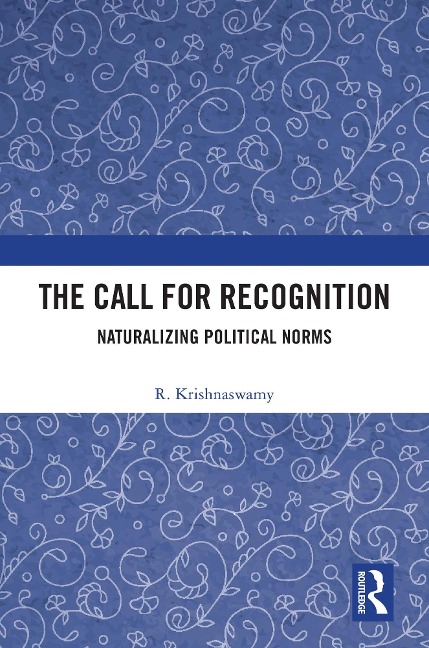
This book builds a case for how social norms are neither mere conventions nor are they merely anthropological phenomena, which are relativistic. In other words, it talks about how socio-political norms are built out of our natural social behaviour but at the same time also have objective normative validity. The volume puts forth an alternative model called the recognitional model which can help us address some of the socio-political concerns we face in today's world. It addresses the problem with a purely legalistic framework of addressing social injustice in that law, due its universalistic assumptions, regarding human nature, tends to glide over the particular differences that might exist between people. This book discusses how we know that in our daily lives, we value people not only because that person is a legal human being but also because that person is our father, mother, our teacher, etc. There is a whole network of acts of social respect that we engage in with the other in our social sphere which the legal framework can't quite capture. This volume sheds light on the political consequence of legal reasoning in that it is formalistic in the sense that legal relations can't successfully codify the immediate epistemic context from which social identities emerge. An introspective work, this book will be of great interest to scholars and researchers of linguistics, political philosophy, law and human rights, and social theory.
R. Krishnaswamy is Associate Professor and Co-Director for the Centre for Social and Political Research, O.P. Jindal Global University, India. He has a Ph.D. from the University of Delhi in Philosophy. He has held a research fellowship at the University of Carleton, Ottawa, Canada. He has recently been a HESP/CEU post-doctoral fellow in the Philosophy Department at Central European University, Budapest, Hungary (now in Vienna). His research interests criss-cross across various disciplines. He works on issues related to the philosophy of mind and language.
1. Introduction 2. Situating Recognition 3. Pluralism and Social Recognition 4. A Critique of Modern Institutions 5. Towards a New Ethical Paradigm 6. Socio-Natural Embeddedness 7. Socio-cultural Norms in the Public Place 8. Towards a Naturalistic Paradigm of Norms 9. Conclusion: Lifeworld, Norms and Politics. References.
Dieses eBook wird im PDF-Format geliefert und ist mit einem Adobe Kopierschutz (DRM) versehen. Sie können dieses eBook mit allen Geräten lesen, die das PDF-Format und den Adobe Kopierschutz (DRM) unterstützen.
Zum Beispiel mit den folgenden Geräten:
• tolino Reader
Laden Sie das eBook direkt über den Reader-Shop auf dem tolino herunter oder übertragen Sie das eBook auf Ihren tolino mit einer kostenlosen Software wie beispielsweise Adobe Digital Editions.
• Sony Reader & andere eBook Reader
Laden Sie das eBook direkt über den Reader-Shop herunter oder übertragen Sie das eBook mit der kostenlosen Software Sony READER FOR PC/Mac oder Adobe Digital Editions auf ein Standard-Lesegeräte mit epub- und Adobe DRM-Unterstützung.
• Tablets & Smartphones
Möchten Sie dieses eBook auf Ihrem Smartphone oder Tablet lesen, finden Sie hier unsere kostenlose Lese-App für iPhone/iPad und Android Smartphone/Tablets.
• PC & Mac
Lesen Sie das eBook direkt nach dem Herunterladen mit einer kostenlosen Lesesoftware, beispielsweise Adobe Digital Editions, Sony READER FOR PC/Mac oder direkt über Ihre eBook-Bibliothek in Ihrem Konto unter „Meine eBooks“ - „online lesen“.
Schalten Sie das eBook mit Ihrer persönlichen Adobe ID auf bis zu sechs Geräten gleichzeitig frei.
Bitte beachten Sie, dass die Kindle-Geräte das Format nicht unterstützen und dieses eBook somit nicht auf Kindle-Geräten lesbar ist.