Und dann auf "Zum Home-Bildschirm [+]".

Stöbern
genialokal zum Startbildschirm hinzufügen
Installieren Sie die genialokal App auf Ihrem Startbildschirm für einen schnellen Zugriff und eine komfortable Nutzung.
Installieren Sie die genialokal App auf Ihrem Startbildschirm für einen schnellen Zugriff und eine komfortable Nutzung.
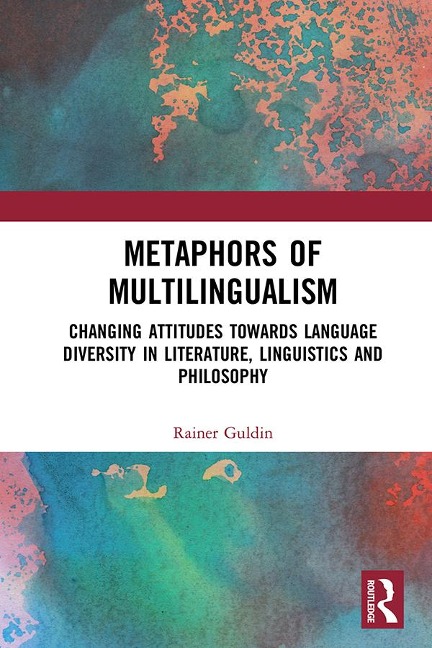
Metaphors of Multilingualism explores changing attitudes towards multilingualism by focusing on shifts both in the choice and in the use of metaphors. Rainer Guldin uses linguistics, philosophy, literature, literary theory and related disciplines to trace the radical redefinition of multilingualism that has taken place over the last decades. This overall change constitutes a paradigmatic shift. However, despite the emergence of the new paradigm, the traditional monolingual point of view is still significantly influencing present-day attitudes towards multilingualism. Consequently, the emergent paradigm has to be studied in close connection with its predecessor. This book is the first extensive attempt to provide a critical overview of the key metaphors that organize current perceptions of multilingualism. Instead of an exhaustive list of possible metaphors of multilingualism, the emphasis is on three closely interrelated and overlapping clusters that play a central role in both paradigms: organic metaphors of the body, kinship and gender metaphors, as well as spatial metaphors. The examples are taken from different languages, among them French, German, Chinese, Japanese, Spanish and Brazilian Portuguese. This is ground-breaking reading for scholars and researchers in the fields of linguistics, literature, philosophy, media studies, anthropology, history and cultural studies.
Rainer Guldin is lecturer for German Culture and Language at the Faculties of Communication Sciences and Economics of the Università della Svizzera Italiana in Lugano (Switzerland). His publications include Vilém Flusser (1920-1991). Ein Leben in der Bodenlosigkeit. Biographie (2017) and Translation as Metaphor (2016).
Preface Introduction Part I Bodies 1. The Patched-Up Face of Multilingualism 2. Organic Metaphors of Language 3. Grotesque Body Images 4. Body Parts: Tongues and Eyes 5. The Embodied Plurilingual Self Part II Family Ties 6. Mother-Tongues and Linguistic Family Trees 7. Beyond Bilingual Bigamy 8. Interlingual Predicaments 9. Linguistic Promiscuity and Incestuous Bisexualism 10. Adoptive and Stepmother Tongues Part III Spaces 11. Territorializing National Languages 12. The Centrifugal Forces of Variation and Stratification 13. Continents and Archipelagos 14. The Ocean of Heteroglossia 15. Networks and Constellations Conclusion References Index
Dieses eBook wird im PDF-Format geliefert und ist mit einem Adobe Kopierschutz (DRM) versehen. Sie können dieses eBook mit allen Geräten lesen, die das PDF-Format und den Adobe Kopierschutz (DRM) unterstützen.
Zum Beispiel mit den folgenden Geräten:
• tolino Reader
Laden Sie das eBook direkt über den Reader-Shop auf dem tolino herunter oder übertragen Sie das eBook auf Ihren tolino mit einer kostenlosen Software wie beispielsweise Adobe Digital Editions.
• Sony Reader & andere eBook Reader
Laden Sie das eBook direkt über den Reader-Shop herunter oder übertragen Sie das eBook mit der kostenlosen Software Sony READER FOR PC/Mac oder Adobe Digital Editions auf ein Standard-Lesegeräte mit epub- und Adobe DRM-Unterstützung.
• Tablets & Smartphones
Möchten Sie dieses eBook auf Ihrem Smartphone oder Tablet lesen, finden Sie hier unsere kostenlose Lese-App für iPhone/iPad und Android Smartphone/Tablets.
• PC & Mac
Lesen Sie das eBook direkt nach dem Herunterladen mit einer kostenlosen Lesesoftware, beispielsweise Adobe Digital Editions, Sony READER FOR PC/Mac oder direkt über Ihre eBook-Bibliothek in Ihrem Konto unter „Meine eBooks“ - „online lesen“.
Schalten Sie das eBook mit Ihrer persönlichen Adobe ID auf bis zu sechs Geräten gleichzeitig frei.
Bitte beachten Sie, dass die Kindle-Geräte das Format nicht unterstützen und dieses eBook somit nicht auf Kindle-Geräten lesbar ist.