Und dann auf "Zum Home-Bildschirm [+]".

Stöbern
genialokal zum Startbildschirm hinzufügen
Installieren Sie die genialokal App auf Ihrem Startbildschirm für einen schnellen Zugriff und eine komfortable Nutzung.
Installieren Sie die genialokal App auf Ihrem Startbildschirm für einen schnellen Zugriff und eine komfortable Nutzung.
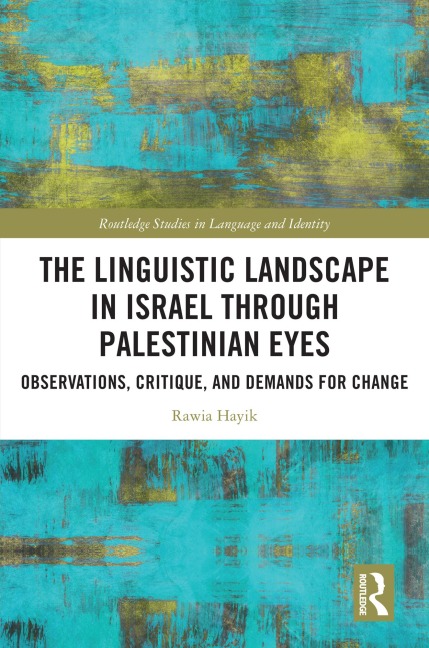
This book uses a sociolinguistic framework to explore how language serves as a marker of national identity in conflict zones, focusing on the dystopian representation of Arabic as a minority language in Israel through the perspectives of Israeli Palestinian students. Using a documentary photography research tool, PhotoVoice, minoritized college students from Northern Israel were invited to document and reflect on the signage in their area. Content analysis of students' reflections revealed not only a problematic linguistic reality in which the presence of Arabic was limited and inaccurate, but also their experience of the space as local inhabitants. The book chapters shed light on their profound perceptions and aspirations as passers-by toward the (mis)representation of their native language in the country. The contribution of the book lies in demonstrating the potential of the innovative tool PhotoVoice in developing awareness of the explicit and implicit messages delivered through linguistic landscapes. It encourages action for achieving utopian, more inclusive linguistic realities where minority languages are appropriately represented.
Rawia Hayik is a senior lecturer in and head of the English Department at Sakhnin Academic College for Teacher Education, Israel. She finished her PhD in the Literacy, Culture, and Language Education Department at Indiana University in the United States. Recently, she served as a visiting scholar in the Near Eastern Languages and Cultures department at UCLA, USA. Her research interests include critical pedagogies in the Palestinian-Israeli EFL classroom, multicultural children's literature, the linguistic landscape, and professional identities of prospective English teachers.
Preface Introduction 1) Background: Arabic in Israel 2) The Linguistic Landscape Reality in Israel 3) The Linguistic Landscape Reality in Israel through the Arab 4) Theoretical Framework 5) Methodology 6) Data analysis 6a) On official signs 6b) The Absence of Arabic from commercial signs produced by Arab business owners 6c) Religious signs Conclusion
Dieses eBook wird im PDF-Format geliefert und ist mit einem Adobe Kopierschutz (DRM) versehen. Sie können dieses eBook mit allen Geräten lesen, die das PDF-Format und den Adobe Kopierschutz (DRM) unterstützen.
Zum Beispiel mit den folgenden Geräten:
• tolino Reader
Laden Sie das eBook direkt über den Reader-Shop auf dem tolino herunter oder übertragen Sie das eBook auf Ihren tolino mit einer kostenlosen Software wie beispielsweise Adobe Digital Editions.
• Sony Reader & andere eBook Reader
Laden Sie das eBook direkt über den Reader-Shop herunter oder übertragen Sie das eBook mit der kostenlosen Software Sony READER FOR PC/Mac oder Adobe Digital Editions auf ein Standard-Lesegeräte mit epub- und Adobe DRM-Unterstützung.
• Tablets & Smartphones
Möchten Sie dieses eBook auf Ihrem Smartphone oder Tablet lesen, finden Sie hier unsere kostenlose Lese-App für iPhone/iPad und Android Smartphone/Tablets.
• PC & Mac
Lesen Sie das eBook direkt nach dem Herunterladen mit einer kostenlosen Lesesoftware, beispielsweise Adobe Digital Editions, Sony READER FOR PC/Mac oder direkt über Ihre eBook-Bibliothek in Ihrem Konto unter „Meine eBooks“ - „online lesen“.
Schalten Sie das eBook mit Ihrer persönlichen Adobe ID auf bis zu sechs Geräten gleichzeitig frei.
Bitte beachten Sie, dass die Kindle-Geräte das Format nicht unterstützen und dieses eBook somit nicht auf Kindle-Geräten lesbar ist.