Und dann auf "Zum Home-Bildschirm [+]".

Stöbern
genialokal zum Startbildschirm hinzufügen
Installieren Sie die genialokal App auf Ihrem Startbildschirm für einen schnellen Zugriff und eine komfortable Nutzung.
Installieren Sie die genialokal App auf Ihrem Startbildschirm für einen schnellen Zugriff und eine komfortable Nutzung.
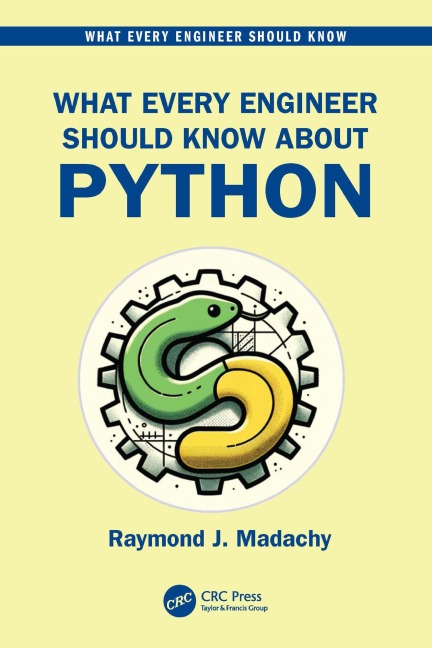
Engineers across all disciplines can benefit from learning Python. This powerful programming language enables engineers to enhance their skill sets and perform more sophisticated work in less time, whether in engineering analysis, system design and development, integration and testing, machine learning and other artificial intelligence applications, project management, or other areas. What Every Engineer Should Know About Python offers students and practicing engineers a straightforward and practical introduction to Python for technical programming and broader uses to enhance productivity. It focuses on the core features of Python most relevant to engineering tasks, avoids computer science jargon, and emphasizes writing useful software while effectively leveraging generative AI. - Features examples tied to real-world engineering scenarios that are easily adapted - Explains how to leverage the vast ecosystem of open-source Python packages for scientific applications, rather than developing new software from scratch - Covers the incorporation of Python into engineering designs and systems, whether web-based, desktop, or embedded - Provides guidance on optimizing generative AI with Python, including case study examples - Describes software tool environments and development practices for the rapid creation of high-quality software - Demonstrates how Python can improve personal and organizational productivity through workflow automation - Directs readers to further resources for exploring advanced Python features This practical and concise book serves as a self-contained introduction for engineers and readers from scientific disciplines who are new to programming or to Python.
Raymond Madachy, Ph.D., is a Professor in the Systems Engineering Department at the Naval Postgraduate School. He has over 30 years of experience working in industry, academia, and consulting in technical and management positions. He received his B.S. in Mechanical Engineering from the University of Dayton, an M.S in System Science from University of California, San Diego, and his Ph.D. in Industrial and Systems Engineering from the University of Southern California. His research interests include system cost modeling, affordability and tradespace analysis, modeling and simulation of systems and software engineering processes, integrating systems engineering and software engineering disciplines, and systems modeling tool environments for digital engineering. He recently created and is lead developer for the open-source Python Modeling Library (PyML) for system modeling. His books include Software Process Dynamics, Software Cost Estimation with COCOMO II, Software Cost Estimation Metrics Manual for Defense Systems, and What Every Engineer Should Know about Modeling and Simulation, and he is currently writing Systems Engineering Principles for Software Engineers.
i. Front Matter. 0. Introduction. 1. Language Overview. 2. General Purpose Scientific and Utility Libraries. 3. Engineering Analysis Examples. 4. Python Applications. 5. Processes and Tools. End Matter I. Appendix A: Keywords and Built-in Functions. End Matter II. References.
Dieses eBook wird im PDF-Format geliefert und ist mit einem Adobe Kopierschutz (DRM) versehen. Sie können dieses eBook mit allen Geräten lesen, die das PDF-Format und den Adobe Kopierschutz (DRM) unterstützen.
Zum Beispiel mit den folgenden Geräten:
• tolino Reader
Laden Sie das eBook direkt über den Reader-Shop auf dem tolino herunter oder übertragen Sie das eBook auf Ihren tolino mit einer kostenlosen Software wie beispielsweise Adobe Digital Editions.
• Sony Reader & andere eBook Reader
Laden Sie das eBook direkt über den Reader-Shop herunter oder übertragen Sie das eBook mit der kostenlosen Software Sony READER FOR PC/Mac oder Adobe Digital Editions auf ein Standard-Lesegeräte mit epub- und Adobe DRM-Unterstützung.
• Tablets & Smartphones
Möchten Sie dieses eBook auf Ihrem Smartphone oder Tablet lesen, finden Sie hier unsere kostenlose Lese-App für iPhone/iPad und Android Smartphone/Tablets.
• PC & Mac
Lesen Sie das eBook direkt nach dem Herunterladen mit einer kostenlosen Lesesoftware, beispielsweise Adobe Digital Editions, Sony READER FOR PC/Mac oder direkt über Ihre eBook-Bibliothek in Ihrem Konto unter „Meine eBooks“ - „online lesen“.
Schalten Sie das eBook mit Ihrer persönlichen Adobe ID auf bis zu sechs Geräten gleichzeitig frei.
Bitte beachten Sie, dass die Kindle-Geräte das Format nicht unterstützen und dieses eBook somit nicht auf Kindle-Geräten lesbar ist.