Und dann auf "Zum Home-Bildschirm [+]".

Stöbern
genialokal zum Startbildschirm hinzufügen
Installieren Sie die genialokal App auf Ihrem Startbildschirm für einen schnellen Zugriff und eine komfortable Nutzung.
Installieren Sie die genialokal App auf Ihrem Startbildschirm für einen schnellen Zugriff und eine komfortable Nutzung.
Ihr gewünschter Artikel ist in 0 Buchhandlungen vorrätig - wählen Sie hier eine Buchhandlung in Ihrer Nähe aus:

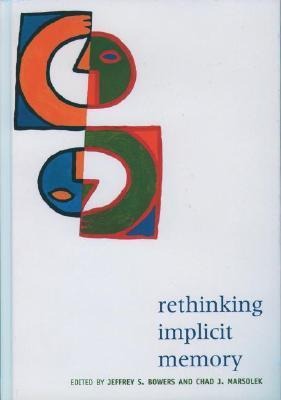
Implicit memory can be characterized as the influence of a previously memorized piece of information on a task, without the explicit or deliberate attempt to recall the memory. This volume is unique in presenting a whole new approach to understanding one of the most exciting and important issues in psychology and neuroscience. Written for postgraduate students and researchers in cognitive psychology and cognitive neuroscience, this is a book that will have a great influence on the direction that future research in this field takes.
Jeffrey S Bowers,
currently lecturing at Bristol University in the Department of Experimental Psychology, Educated at the University of Toronto and the University of Arizona, he left Toronto and went to University of Minnesota as a Graduate student wirkign with M J Nissen. From there he moved to U Arizona and then took a post doctoral fellowship aqt the Montreal Neurological Institute and Centre Hospitalier, Cote-Des-Neiges. He then moved to Rice University where he was an assistant professor.
Chad J Marsolek
gained his BA cumma sum laude from Minnesota University, from where he went to Harvard to do his masters in Cognitive Psychology. He remained at Harvard to get his PhD, also in cognitive psychology. From there he went to the University of Arizona as an assistant professor of psychology, in the Neuroscience program. He is currently an assistant professor in the center for cognitive sciences at the University of Minnesota. He has a number of academic awards and fellowships.
GENERAL VIEWS ON PRIMING; 1. Reconstructing implicit memory; 2. Developing theories of priming with an eye on function; 3. What is priming and why?; PRIMING EMBEDDED IN WORD AND OBJECT RECOGNITION; 4. A connectionist perspective on repetition priming; 5. REMI and ROUSE: Quantitative models for long-term and short-term priming in perceptual identification; 6. What the repetition priming methodology reveals about morphological aspects of word recognition; 7. Visual recognition and priming of incomplete objects: the influence of stimulus and task demands; 8. Font-specific memory: More than meets the eye?; 9. Abstractness and specificity in spoken word recognition: Indexical and allophonic variability in long-term repetition priming; 10. Speech perception and implicity memory: evidence for detailed episodic encoding of phonetic events; PRIMING AND MEMORY; 11. On the construction of behaviour and subjective experience: The production and evaluation of performance; 12. Associative repetition priming: A selective review and theoretical implications; 13. Familiarity in an implicit and explicit memory task: A common mechanism; 14. Implicit memory for new associations: types of conceptual representations; 15. Commentary