Und dann auf "Zum Home-Bildschirm [+]".

Stöbern
genialokal zum Startbildschirm hinzufügen
Installieren Sie die genialokal App auf Ihrem Startbildschirm für einen schnellen Zugriff und eine komfortable Nutzung.
Installieren Sie die genialokal App auf Ihrem Startbildschirm für einen schnellen Zugriff und eine komfortable Nutzung.
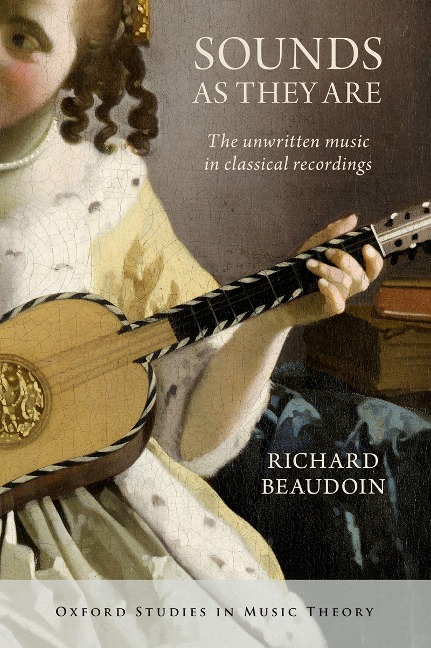
In a recording, what sounds count as music? Sounds made by a musician's body--including inhales, finger taps, and grunts--have for decades been dismissed as extraneous noises. In Sounds as They Are: The unwritten music in classical recordings, author Richard Beaudoin pioneers a field of inquiry into non-notated sounds in recordings of classical music, recognizing often-overlooked sounds made by the bodies of performers and their recording equipment as music. Beaudoin classifies such sounds via inclusive track analysis (ITA), a bold new theory based on a comprehensive census of audible events on a given recording, and then codifies their musical function. He builds a typology across four large categories: sounds of breath (inhaling and exhaling), sounds of touch (guitar squeaks, piano pedals), sounds of effort (grunting and moaning), and surface noise (on early recording formats). Breaths are shown to be as complex and diverse as chords. Touch sounds create empathy with listeners. Effortful vocalizations reveal connections between music-making and sex. The measurement of surface noise reveals moments of synchronization with the meter of the recorded piece. He draws analogies between unwritten music and painting, photography, poetry, psychology, and government. The book's methodology is intertwined with the aesthetics and ethics of non-notated sounds: who is allowed to make them, and how they are received by listeners, critics, and scholars. Beaudoin uncovers insidious inequalities across music studies and the recording industry, including the silencing of body and breath sounds along lines of gender and race. Sounds as They Are demonstrates the expressive, interpretive, and embodied possibilities that emerge when all sounds are valued coequally and asks music theory to face a simple truth: that all sounds deserve recognition.
Richard Beaudoin analyses audio recordings and uses his research to create scholarship and compose new music. He has held posts as Preceptor in Music at Harvard University, The Joseph E. and Grace W. Valentine Visiting Assistant Professor of Music at Amherst College, and Visiting Research Fellow at the Royal Academy of Music, London. He is currently Assistant Professor of Music at Dartmouth College.
Acknowledgements INTRODUCTION Four octaves and one breath Defining unwritten music Why classical recordings? Categorizing unwritten music Five notes CHAPTER 1. The Aesthetics and Ethics of Unwritten Music Sound recordings as documents Questioning "intelligent suppression" Everything that sounds simultaneously An unwritten note A series of enigmatic clicks A decisive inhale Five analogies The reception of unwritten music The empathetic dimension CHAPTER 2. Sounds of Breath Breath sounds as music Breath as rhetoric Breath as anacrusis Breath as expectation Breath within motive Breath as climax Breath as phrase marker Breath as narration CHAPTER 3. Sounds of Touch Touch sounds as music Fingernails and motive Foreshadowing fingertips Dancing fingerfalls Squeaking shifts Percussive valve clacks Chair creaks Podium stamps Timbral damper pedals CHAPTER 4. Sounds of Effort Sounded effort as music Sound, sex, and somaesthetics Climactic exertions 1: The exultant holler Climactic exertions 2: The tense moan Climactic exertions 3: Grunt lead Intimate exertions 1: Subtle vocalizing Intimate exertions 2: Emphatic panting Intimate exertions 3: Stifled grunting A thoroughgoing growl Moans as indicators of phrase Grunts unheard CHAPTER 5. Surface Noise Surface noise as music Listening with Recordings as carta Six modes of interaction Performance-centricity Narrative asynchrony Ekphrastic (non)coincidence Expressive synchronicity Metaphoric development Surface noise-centricity CHAPTER 6. Inclusive Track Analysis Attentional flexibility Reading what was never written Inclusive track analysis: A pragmatic framework Beyond classical tracks Les sons tels qu'ils sont Discography Bibliography Index
Dieses eBook wird im PDF-Format geliefert und ist mit einem Adobe Kopierschutz (DRM) versehen. Sie können dieses eBook mit allen Geräten lesen, die das PDF-Format und den Adobe Kopierschutz (DRM) unterstützen.
Zum Beispiel mit den folgenden Geräten:
• tolino Reader
Laden Sie das eBook direkt über den Reader-Shop auf dem tolino herunter oder übertragen Sie das eBook auf Ihren tolino mit einer kostenlosen Software wie beispielsweise Adobe Digital Editions.
• Sony Reader & andere eBook Reader
Laden Sie das eBook direkt über den Reader-Shop herunter oder übertragen Sie das eBook mit der kostenlosen Software Sony READER FOR PC/Mac oder Adobe Digital Editions auf ein Standard-Lesegeräte mit epub- und Adobe DRM-Unterstützung.
• Tablets & Smartphones
Möchten Sie dieses eBook auf Ihrem Smartphone oder Tablet lesen, finden Sie hier unsere kostenlose Lese-App für iPhone/iPad und Android Smartphone/Tablets.
• PC & Mac
Lesen Sie das eBook direkt nach dem Herunterladen mit einer kostenlosen Lesesoftware, beispielsweise Adobe Digital Editions, Sony READER FOR PC/Mac oder direkt über Ihre eBook-Bibliothek in Ihrem Konto unter „Meine eBooks“ - „online lesen“.
Schalten Sie das eBook mit Ihrer persönlichen Adobe ID auf bis zu sechs Geräten gleichzeitig frei.
Bitte beachten Sie, dass die Kindle-Geräte das Format nicht unterstützen und dieses eBook somit nicht auf Kindle-Geräten lesbar ist.