Und dann auf "Zum Home-Bildschirm [+]".

Stöbern
genialokal zum Startbildschirm hinzufügen
Installieren Sie die genialokal App auf Ihrem Startbildschirm für einen schnellen Zugriff und eine komfortable Nutzung.
Installieren Sie die genialokal App auf Ihrem Startbildschirm für einen schnellen Zugriff und eine komfortable Nutzung.
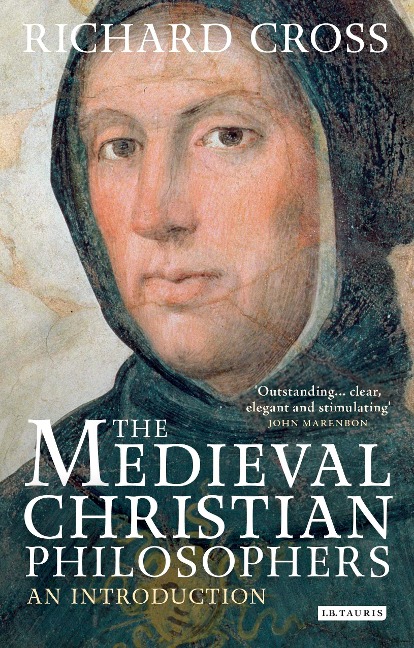
The High Middle Ages were remarkable for their coherent sense of 'Christendom': of people who belonged to a homogeneous Christian society marked by uniform rituals of birth and death and worship. That uniformity, which came under increasing strain as national European characteristics became more pronounced, achieved perhaps its most perfect intellectual expression in the thought of the western Christian thinkers who are sometimes called 'scholastic theologians'. These philosophers produced (during roughly the period 1050-1350 CE) a cohesive body of work from their practice of theology as an academic discipline in the university faculties of their day. Richard Cross' elegant and stylish textbook - designed specifically for modern-day undergraduate use on medieval theology and philosophy courses - offers the first focused introduction to these thinkers based on the individuals themselves and their central preoccupations.
The book discusses influential figures like Abelard, Peter Lombard and Hugh of St Victor; the use made by Aquinas of Aristotle; the mystical theology of Bonaventure; Robert Grosseteste's and Roger Bacon's interest in optics; the complex metaphysics of Duns Scotus; and the political thought of Marsilius of Padua and William of Ockham. Key themes of medieval theology, including famous axioms like 'Ockham's Razor', are here made fully intelligible and transparent.
Richard Cross is John O'Brien Professor of Philosophy at the University of Notre Dame. He has published widely on the history of philosophical theology, and his books include Duns Scotus (1999), The Metaphysics of the Incarnation (2002) and Duns Scotus on God (2005).
Preface
Introduction: Institutions and Sources
Part I: CONSOLIDATION
Chapter 1. Anselm of Canterbury (1033 - 1109)
Chapter 2. From 1100 to 1200
Peter Abelard
Gilbert of Poitiers
Bernard of Clairvaux
The Victorines
Peter Lombard
Part II: REVOLUTION
Chapter 3. From 1200 to 1277
Robert Grosseteste
William of Auvergne
Alexander of Hales
Albert the Great
Bonaventure
Roger Bacon
The Paris Arts Faculty
Chapter 4. Thomas Aquinas (c.1225 - 74)
Part III: INNOVATION
Chapter 5: From 1277 to 1300
Correctorium literature
Henry of Ghent
Peter Olivi
Giles of Rome
Godfrey of Fontaines
Chapter 6. Duns Scotus (c.1266 - 1308)
Part IV: SIMPLIFICATION
Chapter 7. William of Ockham (c. 1287 - 1347)
Chapter 8. From 1310 to 1350
Durand of St Pourcain (and Hervaeus Natalis)
Peter Auriol
Ockham's Oxonian contemporaries, followers, and opponents
Nicholas of Autrecourt
Epilogue. Retrospection: John Wyclif (c.1330 - 84)
Glossary
Bibliography
Index
Dieses eBook wird im PDF-Format geliefert und ist mit einem Adobe Kopierschutz (DRM) versehen. Sie können dieses eBook mit allen Geräten lesen, die das PDF-Format und den Adobe Kopierschutz (DRM) unterstützen.
Zum Beispiel mit den folgenden Geräten:
• tolino Reader
Laden Sie das eBook direkt über den Reader-Shop auf dem tolino herunter oder übertragen Sie das eBook auf Ihren tolino mit einer kostenlosen Software wie beispielsweise Adobe Digital Editions.
• Sony Reader & andere eBook Reader
Laden Sie das eBook direkt über den Reader-Shop herunter oder übertragen Sie das eBook mit der kostenlosen Software Sony READER FOR PC/Mac oder Adobe Digital Editions auf ein Standard-Lesegeräte mit epub- und Adobe DRM-Unterstützung.
• Tablets & Smartphones
Möchten Sie dieses eBook auf Ihrem Smartphone oder Tablet lesen, finden Sie hier unsere kostenlose Lese-App für iPhone/iPad und Android Smartphone/Tablets.
• PC & Mac
Lesen Sie das eBook direkt nach dem Herunterladen mit einer kostenlosen Lesesoftware, beispielsweise Adobe Digital Editions, Sony READER FOR PC/Mac oder direkt über Ihre eBook-Bibliothek in Ihrem Konto unter „Meine eBooks“ - „online lesen“.
Schalten Sie das eBook mit Ihrer persönlichen Adobe ID auf bis zu sechs Geräten gleichzeitig frei.
Bitte beachten Sie, dass die Kindle-Geräte das Format nicht unterstützen und dieses eBook somit nicht auf Kindle-Geräten lesbar ist.