Und dann auf "Zum Home-Bildschirm [+]".

Stöbern
genialokal zum Startbildschirm hinzufügen
Installieren Sie die genialokal App auf Ihrem Startbildschirm für einen schnellen Zugriff und eine komfortable Nutzung.
Installieren Sie die genialokal App auf Ihrem Startbildschirm für einen schnellen Zugriff und eine komfortable Nutzung.
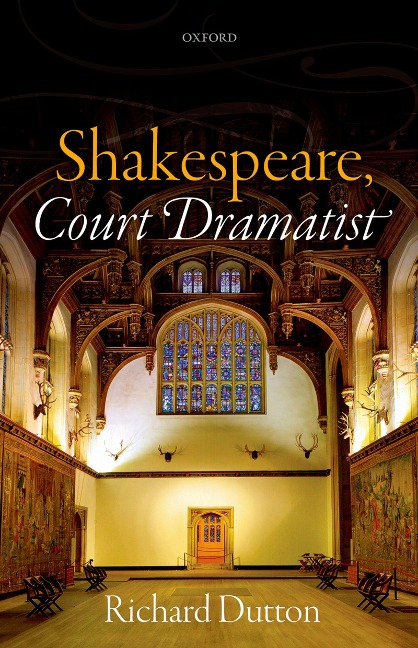
Shakespeare, Court Dramatist centres around the contention that the courts of both Elizabeth I and James I loomed much larger in Shakespeare's creative life than is usually appreciated. Richard Dutton argues that many, perhaps most, of Shakespeare's plays have survived in versions adapted for court presentation, where length was no object (and indeed encouraged) and rhetorical virtuosity was appreciated. The first half of the study examines the court's patronage of the theatre during Shakespeare's lifetime and the crucial role of its Masters of the Revels, who supervised all performances there (as well as censoring plays for public performance). Dutton examines the emergence of the Lord Chamberlain's Men and the King's Men, to whom Shakespeare was attached as their 'ordinary poet', and reviews what is known about the revision of plays in the early modern period. The second half of the study focuses in detail on six of Shakespeare's plays which exist in shorter, less polished texts as well as longer, more familiar ones: Henry VI Part II and III, Romeo and Juliet, Henry V, Hamlet, and The Merry Wives of Windsor. Dutton argues that they are not cut down from those familiar versions, but poorly reported originals which Shakespeare revised for court performance into what we know best today. More localized revisions in such plays as Titus Andronicus, Richard II, and Henry IV Part II can also best be explained in this context. The court, Richard Dutton argues, is what made Shakespeare Shakespeare.
Richard Dutton was educated at King's College, Cambridge and the University of Nottingham. He taught for many years at Lancaster University. Since 2003 he has been Humanities Distinguished Professor of English at The Ohio State University, where he served as chair of the English department from 2009 to 2013. He has published numerous monographs, scholarly editions, and edited collections relating to the early modern period, mostly focusing on the censorship of the drama, the authors Shakespeare and Ben Jonson, and theatre history.
- Introduction - Part 1: Playing and the Court - 1: Shakespeare, Patronage, and the Court - 2: Court Revels and Their Masters - 3: Line Lengths, Playing Times, and Ben Jonson - 4: The Revision of Early Modern Play Texts - a: The Revision of Plays in Shakespeare's Day - b: Thinking About the Revision of Shakespeare's Texts in Modern Times - Part 2: Shakespeare's Multiple Texts - 5: More Sophisticated Histories - a: The Famous Victories of Shakespeare's Henry V - b: 2 and 3 Henry VI -- A True Contention - 6: Augmentations - a: Romeo and Juliet - b: Hamlet and Succession - c: A Jacobean Merry Wives? - 7: Last Thoughts - a: Single Sequence Additions - b: Jacobean Shakespeare - Conclusions - Bibliography
Dieses eBook wird im PDF-Format geliefert und ist mit einem Adobe Kopierschutz (DRM) versehen. Sie können dieses eBook mit allen Geräten lesen, die das PDF-Format und den Adobe Kopierschutz (DRM) unterstützen.
Zum Beispiel mit den folgenden Geräten:
• tolino Reader
Laden Sie das eBook direkt über den Reader-Shop auf dem tolino herunter oder übertragen Sie das eBook auf Ihren tolino mit einer kostenlosen Software wie beispielsweise Adobe Digital Editions.
• Sony Reader & andere eBook Reader
Laden Sie das eBook direkt über den Reader-Shop herunter oder übertragen Sie das eBook mit der kostenlosen Software Sony READER FOR PC/Mac oder Adobe Digital Editions auf ein Standard-Lesegeräte mit epub- und Adobe DRM-Unterstützung.
• Tablets & Smartphones
Möchten Sie dieses eBook auf Ihrem Smartphone oder Tablet lesen, finden Sie hier unsere kostenlose Lese-App für iPhone/iPad und Android Smartphone/Tablets.
• PC & Mac
Lesen Sie das eBook direkt nach dem Herunterladen mit einer kostenlosen Lesesoftware, beispielsweise Adobe Digital Editions, Sony READER FOR PC/Mac oder direkt über Ihre eBook-Bibliothek in Ihrem Konto unter „Meine eBooks“ - „online lesen“.
Schalten Sie das eBook mit Ihrer persönlichen Adobe ID auf bis zu sechs Geräten gleichzeitig frei.
Bitte beachten Sie, dass die Kindle-Geräte das Format nicht unterstützen und dieses eBook somit nicht auf Kindle-Geräten lesbar ist.