Und dann auf "Zum Home-Bildschirm [+]".

Stöbern
genialokal zum Startbildschirm hinzufügen
Installieren Sie die genialokal App auf Ihrem Startbildschirm für einen schnellen Zugriff und eine komfortable Nutzung.
Installieren Sie die genialokal App auf Ihrem Startbildschirm für einen schnellen Zugriff und eine komfortable Nutzung.
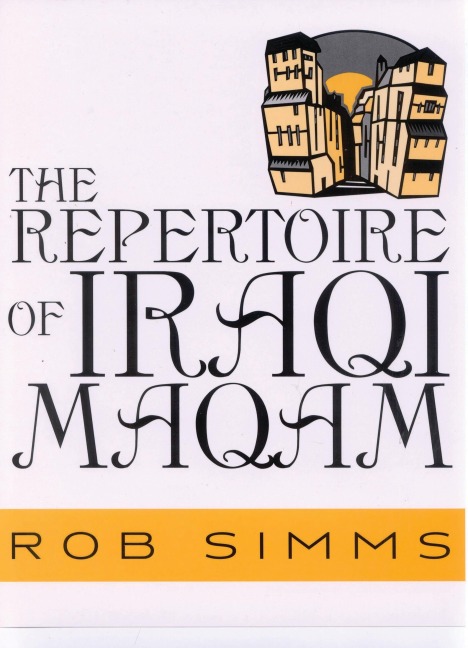
The classical music of Iraq, known as Iraqi Maqam, features classical and vernacular poetry sung by a virtuoso soloist and accompanied by a small instrumental ensemble. It is a remarkably cosmopolitan art, sharing many features with neighboring classical traditions, particularly Iranian. Its repertoire consists of orally transmitted, multi-sectioned compositions, performed with some flexibility regarding ornamentation, arrangement and development. Focusing on the period between 1930-1980, this reference offers the first comprehensive view of the musical contents of the repertoire-scalar structure, melodic materials and overall form-through various tables and musical transcriptions.
This reference consolidates information from prominent Iraqi sources and draws upon a selection of recordings by master musicians, including Rashid Qundarchi and Yusuf Omar. An introductory section provides a brief overview of pan-Middle Eastern modal theory along with an outline of the terminology, theory and practices specific to Iraqi Maqam. The main section of the work is a catalog of 40 maqams that constitute the central core of the contemporary repertoire.
The Repertoire of Iraqi Maqam aims to foster a better musical understanding of a relatively little known tradition, promote further research, and enhance appreciative listening to this inspiring facet of Iraqi culture.
Rob Simms subsisted on arts council grants and works as a freelance musician while completing his studies in music at the University of Manitoba, York University, and the University of Toronto. His research interests focus on the performer's perspective and creative processes in West Asian and West African musical traditions. He plays several instruments (including the setar, ney and kora) and is currently Assistant Professor of Music at York University in Toronto.
Chapter 1 Alphabetical Listing of Maqam Anthology
Chapter 2 Introduction
Chapter 3 Maqam in General and Iraqi Maqam in Particular
Chapter 4 An Anthology of Iraqi Maqam
Chapter 5 1 The Rast Family
Chapter 6 2 The Beyat Family
Chapter 7 3 The Husseini Family
Chapter 8 4 The Hijaz Family
Chapter 9 5 The Saba Family
Chapter 10 6 The Segah Family
Chapter 11 7 The Nawa Family
Chapter 12 8 The Ajam/Jahargah Family
Chapter 13 9 Miscellaneous Maqams
Chapter 14 Glossary
Chapter 15 Bibliography
Chapter 16 Discography
Chapter 17 General Index
Chapter 18 Index of Modes
Chapter 19 About the Author
Dieses eBook wird im PDF-Format geliefert und ist mit einem Adobe Kopierschutz (DRM) versehen. Sie können dieses eBook mit allen Geräten lesen, die das PDF-Format und den Adobe Kopierschutz (DRM) unterstützen.
Zum Beispiel mit den folgenden Geräten:
• tolino Reader
Laden Sie das eBook direkt über den Reader-Shop auf dem tolino herunter oder übertragen Sie das eBook auf Ihren tolino mit einer kostenlosen Software wie beispielsweise Adobe Digital Editions.
• Sony Reader & andere eBook Reader
Laden Sie das eBook direkt über den Reader-Shop herunter oder übertragen Sie das eBook mit der kostenlosen Software Sony READER FOR PC/Mac oder Adobe Digital Editions auf ein Standard-Lesegeräte mit epub- und Adobe DRM-Unterstützung.
• Tablets & Smartphones
Möchten Sie dieses eBook auf Ihrem Smartphone oder Tablet lesen, finden Sie hier unsere kostenlose Lese-App für iPhone/iPad und Android Smartphone/Tablets.
• PC & Mac
Lesen Sie das eBook direkt nach dem Herunterladen mit einer kostenlosen Lesesoftware, beispielsweise Adobe Digital Editions, Sony READER FOR PC/Mac oder direkt über Ihre eBook-Bibliothek in Ihrem Konto unter „Meine eBooks“ - „online lesen“.
Schalten Sie das eBook mit Ihrer persönlichen Adobe ID auf bis zu sechs Geräten gleichzeitig frei.
Bitte beachten Sie, dass die Kindle-Geräte das Format nicht unterstützen und dieses eBook somit nicht auf Kindle-Geräten lesbar ist.