Und dann auf "Zum Home-Bildschirm [+]".

Stöbern
genialokal zum Startbildschirm hinzufügen
Installieren Sie die genialokal App auf Ihrem Startbildschirm für einen schnellen Zugriff und eine komfortable Nutzung.
Installieren Sie die genialokal App auf Ihrem Startbildschirm für einen schnellen Zugriff und eine komfortable Nutzung.
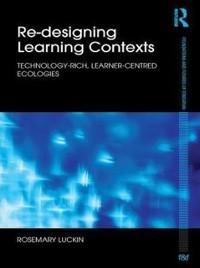
What do we mean by the word 'context' in education and how does our context influence the way that we learn? What role can technology play in enhancing learning and what is the future of technology within learning? Re-Designing Learning Contexts seeks to re-dress the lack of attention that has traditionally been paid to a learner's wider context and proposes a model to help educators and technologists develop more productive learning contexts. It defines context as the interactions between the learner and a set of inter-related resource elements that are not tied to a physical or virtual location. Context is something that belongs to an individual and that is created through their interactions in the world. Based on original, empirical research, the book considers the intersection between learning, context and technology, and explores: - the meaning of the concept of context and it's relationship to learning - the ways in which different types of technology can scaffold learning in context - the Learner-Centric 'Ecology of Resources' model of context as a framework for designing technology-rich learning environments - the importance of matching available resources to each learner's particular needs - the ways in which the learner's environment and the technologies available might change over the coming years - the potential impact of recent technological developments within computer science and artificial intelligence. This interdisciplinary study draws on a range of disciplines, including geography, anthropology, psychology, education and computing, to investigate the dynamics and potential of teacher-learner interaction within a learning continuum, and across a variety of locations. It will be of interest to those teaching, researching and thinking about the use of technology in learning and pedagogy, as well as those involved in developing technology for education and those who use it in their own teaching. For practical examples of the way the Ecology of Resources framework has been used visit: http://eorframework.pbworks.com.
Rosemary Luckin is Professor of Learner-Centred Design at the London Knowledge Lab, Institute of Education, University of London, UK. She has graduate and postgraduate qualifications in Artificial Intelligence and Cognitive Science and has taught learners in schools, colleges and universities.
Part One: Background 1. Contexts for Learning 2. Learners and Learning 3. The Role of Technology Part Two: The Ecology of Resources Model and Design Framework 4. Software Design and the Zone of Proximal Adjustment 5. Modelling a Learner's Context 6. The Ecology of Resources Method: Models and Participatory Design 7. The Ecology of Resources Design Framework Part Three: The Future of Technology Rich Learning 8. New Technologies, New Interactions? 9. New Interactions, New Opportunities for Learning
Dieses eBook wird im PDF-Format geliefert und ist mit einem Adobe Kopierschutz (DRM) versehen. Sie können dieses eBook mit allen Geräten lesen, die das PDF-Format und den Adobe Kopierschutz (DRM) unterstützen.
Zum Beispiel mit den folgenden Geräten:
• tolino Reader
Laden Sie das eBook direkt über den Reader-Shop auf dem tolino herunter oder übertragen Sie das eBook auf Ihren tolino mit einer kostenlosen Software wie beispielsweise Adobe Digital Editions.
• Sony Reader & andere eBook Reader
Laden Sie das eBook direkt über den Reader-Shop herunter oder übertragen Sie das eBook mit der kostenlosen Software Sony READER FOR PC/Mac oder Adobe Digital Editions auf ein Standard-Lesegeräte mit epub- und Adobe DRM-Unterstützung.
• Tablets & Smartphones
Möchten Sie dieses eBook auf Ihrem Smartphone oder Tablet lesen, finden Sie hier unsere kostenlose Lese-App für iPhone/iPad und Android Smartphone/Tablets.
• PC & Mac
Lesen Sie das eBook direkt nach dem Herunterladen mit einer kostenlosen Lesesoftware, beispielsweise Adobe Digital Editions, Sony READER FOR PC/Mac oder direkt über Ihre eBook-Bibliothek in Ihrem Konto unter „Meine eBooks“ - „online lesen“.
Schalten Sie das eBook mit Ihrer persönlichen Adobe ID auf bis zu sechs Geräten gleichzeitig frei.
Bitte beachten Sie, dass die Kindle-Geräte das Format nicht unterstützen und dieses eBook somit nicht auf Kindle-Geräten lesbar ist.