Und dann auf "Zum Home-Bildschirm [+]".

Stöbern
genialokal zum Startbildschirm hinzufügen
Installieren Sie die genialokal App auf Ihrem Startbildschirm für einen schnellen Zugriff und eine komfortable Nutzung.
Installieren Sie die genialokal App auf Ihrem Startbildschirm für einen schnellen Zugriff und eine komfortable Nutzung.
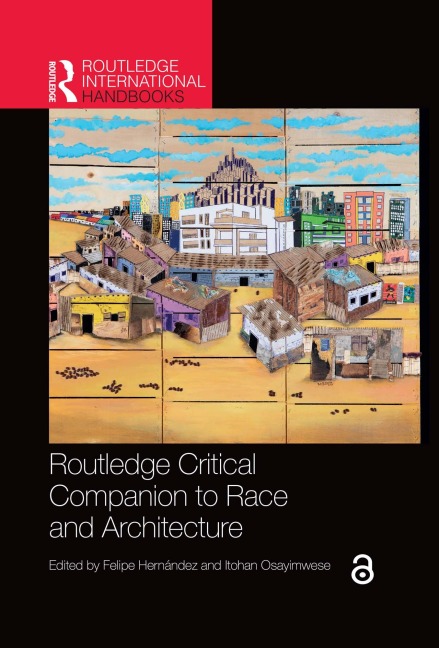
This book explores the malleability of race as a construct, one subject to continuous redefinitions in different times, cultures and places. While race has been deployed historically to establish hierarchies in a modern-colonial world, it also has acquired the capacity to challenge those hierarchies, enabling critical engagements with epistemic positions that have been excluded from univocal Eurocentric architectural narratives. The volume expands the discourse on racializing concepts and categories beyond the traditional Africa-North America axis, examining many issues that have been overlooked in the field of architecture. This broader range of topics provides for a more comprehensive understanding of how race is constructed and represented in architectural theory and practice globally. Written by an international and influential cast of contributors, the structure of the book permits a detailed revision of the most current theoretical debates on race. Each part deals with a specific challenge at a particular scale. Ultimately, the book embraces discussions about theory, urban and regional debates, architectural design at the scale of the building, history and education, exploring the concept of race in all aspects of the discipline. It is essential reading for anyone studying or working in the built environment.
Felipe Hernández, Ph.D., is a Colombian-born architect who lives and works in the United Kingdom. He serves as an Associate Professor of Architecture and Urban Studies at the University of Cambridge and is a Fellow Architect at King's College, Cambridge, where he also holds the position of Director of Studies in Architecture. Notably, he was the first Latin American to direct the Centre for Latin American Studies (CLAS) at Cambridge. Currently, he is the Director of the M.Phil. in Architecture and Urban Studies (MAUS). His research explores the intersection between architecture and urbanism under conditions of 'coloniality', seeking relevant approaches to teaching and practicing architecture mainly in the Americas. He has published extensively on postcolonial/decolonial theory, race and Modern Architecture in Latin America. Itohan Osayimwese is Chair and Associate Professor of the History of Art and Architecture and Urban Studies, and an affiliate faculty member in Africana Studies at the Center for Latin American and Caribbean Studies at Brown University. Her research analyzes how oppressive political ideologies have instrumentalized architecture, design, and material culture in Sub-Saharan Africa, the Anglo-Caribbean, and Central Europe between the eighteenth and twentieth centuries. She is the author of Colonialism and Modern Architecture in Germany (2017), and the editor of German Colonialism in Africa and its Legacies: Architecture, Art, Urbanism, and Visual Culture (2023).
Section 1: Theories of Race and Architecture 1. Environmental Determinism and Racial Supremacy at the Origins of 'Corrective' Housing in the British Colonial Context 2. Segregated Intimacies: Reading "Race" in the Archives 3. Tropical Whiteness 4. Exilic Spaces: Assimilation and Cultural Resilience in Post-War White Australia 5. Spaces of re-routing: Strategic hybrid ethnic space as method Section 2: Racialised Spaces 6. Building Vecinidad: Municipal Black Citizenship in Spanish Colonial Peru 7. Black on Black: Maroon spatial experience in Jamaica 8. Double Imaginations: Race and Cultural Infrastructure in Global Chinatown 9. Triangulating Death: The Place of the Cemetery in Johannesburg's Racialised Landscape 10. Racialised Planning: Planning Policies and Ethno-Racial Segregation in Cali, Colombia 11. Race and Sex (work) in the Modern-Colonial Urban Landscape of Cartagena de Indias, Colombia 12. The Architecture of Racialised Projection: Exploring the Politics of Israel's Built Environment Section 3: Building Race 13. Constructing Whiteness, Vincenzo Scamozzi's Humoral Villas, and L'Idea della Architettura Universale (1615) 14. Architecture and Race in the Competition for the Palazzo del Littorio in Rome 15. Transatlantic Landscapes of Enslavement 16. Ordered Spaces: Classicism and the Construction of Racial Difference in Colonial Singapore 17. Africanization of Architectural Labor in Late Colonial and Early Independent Ghana 18. "Best Places, Best Families": The Architecture of Model Tenements Designed for Black Tenants in Manhattan, 1900-1915 19. Spatial Practices of Indigenous Peoples: Challenging the Cultural Adequacy of Social Housing in Chile Section 4: Unwritten Histories 20. Interfaces Between Ethnic Discourse and Architectural Theory in the Late Soviet Union 21. Everyday Tactics of Whiteness in North Africa: Éliane Castelnau's Professional Manoeuvres in Postcolonial Morocco 22. Ethel Madison Bailey Furman: Building African American Community in Richmond, Virginia 23. Building the Athens of the South: Enslaved Craftspeople in Antebellum Nashville 24. The Architectural Patronage of Two Enslaved Africans in the Premodern Deccan: Banda -Anbar and Malik -Anbar at Daulatabad 25. Building the Fringes of Empire: Mining Companies, Transnational Experts, Race and Space in Colonial Africa 26. Involving Cities, Dialogues for White Responsibility: Learning from Guarani Mbya Long Histories of Ground Maintenance in São Paulo Section 5: Race in Architectural Education and Practice 27. Pedagogy for Others: Howard University, and an inclusive architectural pedagogy in 1970s 28. Teaching Community Planning and Systemic Racism with Oral History 29. Memorializing Black life and death: contemplative inquiry in interdisciplinary studies 30. Swing Time: The Black House in Cologne, Germany, and the Privilege of Telling Stories
Dieses eBook wird im PDF-Format geliefert und ist mit einem Adobe Kopierschutz (DRM) versehen. Sie können dieses eBook mit allen Geräten lesen, die das PDF-Format und den Adobe Kopierschutz (DRM) unterstützen.
Zum Beispiel mit den folgenden Geräten:
• tolino Reader
Laden Sie das eBook direkt über den Reader-Shop auf dem tolino herunter oder übertragen Sie das eBook auf Ihren tolino mit einer kostenlosen Software wie beispielsweise Adobe Digital Editions.
• Sony Reader & andere eBook Reader
Laden Sie das eBook direkt über den Reader-Shop herunter oder übertragen Sie das eBook mit der kostenlosen Software Sony READER FOR PC/Mac oder Adobe Digital Editions auf ein Standard-Lesegeräte mit epub- und Adobe DRM-Unterstützung.
• Tablets & Smartphones
Möchten Sie dieses eBook auf Ihrem Smartphone oder Tablet lesen, finden Sie hier unsere kostenlose Lese-App für iPhone/iPad und Android Smartphone/Tablets.
• PC & Mac
Lesen Sie das eBook direkt nach dem Herunterladen mit einer kostenlosen Lesesoftware, beispielsweise Adobe Digital Editions, Sony READER FOR PC/Mac oder direkt über Ihre eBook-Bibliothek in Ihrem Konto unter „Meine eBooks“ - „online lesen“.
Schalten Sie das eBook mit Ihrer persönlichen Adobe ID auf bis zu sechs Geräten gleichzeitig frei.
Bitte beachten Sie, dass die Kindle-Geräte das Format nicht unterstützen und dieses eBook somit nicht auf Kindle-Geräten lesbar ist.